










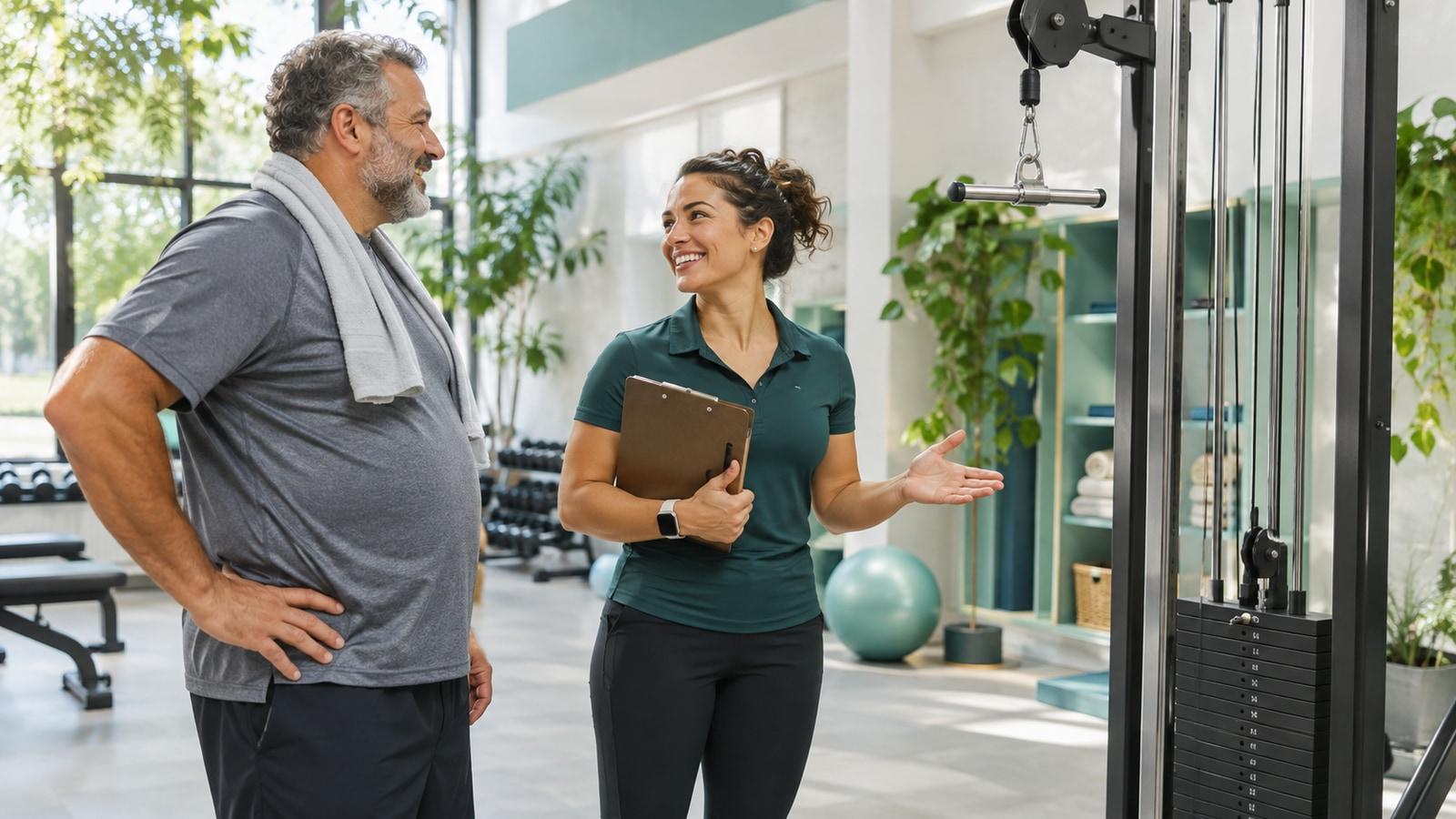
The cable station can be intimidating when you’re not sure which attachment to use or how high to set the pulley. For a triceps press-down, the setup is actually quite contained: a high pulley, a handle you can grip comfortably, and enough room to bend and straighten your elbows.
The exercise works the muscles at the back of your upper arms. You don’t need to lift the entire stack or use a complicated stance. Start light, ask for a demonstration if the equipment is unfamiliar, and give yourself time to learn the path.
Set the cable and choose a handle
Position the pulley above your head according to the machine’s instructions. A short straight bar or rope attachment can both be used on many machines. Check that the attachment is clipped securely and that the cable moves freely before selecting a weight.
If you’ve never adjusted the pulley, ask a staff member to show you the release and locking mechanism. Don’t stand directly under a heavy attachment while figuring out a latch. A clear demonstration takes less time than guessing, and different machines use different controls.
Set the pin at a light resistance. You should be able to guide the handle down and back up without leaning your whole body over it. Make sure the pin is fully inserted and the stack is at rest before changing the setting.
Find your starting position
Stand facing the machine with your feet in a comfortable, stable stance. You can put one foot slightly ahead if that helps you feel steady. Hold the bar or rope securely, with your thumbs around the attachment and your wrists in a comfortable line with your forearms.
Bring your elbows close to your sides and bend them so your hands are in front of your upper body. You should be far enough from the machine for the cable to move without rubbing against you, but not so far away that you have to reach or lean forward to hold the handle.
If standing at the machine isn’t accessible for you, ask staff whether there’s a suitable seated setup and enough room to approach. A physical therapist or trainer can help adapt the exercise to your equipment and abilities; don’t assume every cable station can be adjusted in the same way.
Press, pause, and return
Keep your upper arms near your sides as you gently press the handle down by straightening your elbows. Breathe out during the press. When your arms are comfortably straight, without forcing your joints, let the handle rise slowly as your elbows bend again.
The cable should stay under control on the return. If the weight stack crashes or pulls your hands upward, reduce the resistance and slow down. You don’t need to pull your shoulders forward or swing your torso to finish the repetition.
Try a few practice repetitions and notice where you feel the work. The back of your upper arm may feel active; sharp pain in your elbow, shoulder, or wrist is a reason to stop. If the movement hurts or you have an injury, ask a qualified professional whether an adjustment or a different exercise is more appropriate.
Rope or bar?
A straight bar gives both hands a shared handle. A rope lets each hand hold an end, which some people find more comfortable. Neither attachment guarantees a better workout. The useful choice is the one you can hold securely while keeping your wrists and elbows comfortable.
If the rope twists or the ends pull your wrists into a position you don’t like, stop and adjust your grip or try a bar. If a fixed bar bothers your wrists, ask whether a rope or another handle is available. Use a light setting while you compare them, and don’t force your hands farther apart at the bottom of the movement.
Common signs to make a change
If your shoulders rise toward your ears, your elbows swing far forward, or you have to bend at the waist to move the weight, the setting may be too heavy. Lower it and try again. If the handle starts too high for you to reach comfortably, ask staff to help bring it into position safely.
There’s no need to chase soreness. After a few practice presses, you might do one comfortable set and rest. Leave enough energy to make the last return as controlled as the first. A trainer can help you choose repetitions that fit the rest of your routine.
When you finish, guide the attachment back until the stack rests; don’t simply let go while the cable is pulling. Wipe the handle according to the gym’s routine and leave the station ready for the next person.
Keep the exercise in perspective
A press-down is one way to include arm-strength work, not a way to choose where your body loses weight. If you’re building a weight-management routine, it can sit alongside movement you enjoy and other exercises that fit your needs.
Note the machine, attachment, and resistance that felt manageable. At the next visit, use that as a starting point and check your setup again. A smooth, comfortable movement is a more useful first goal than a bigger number on the stack.