










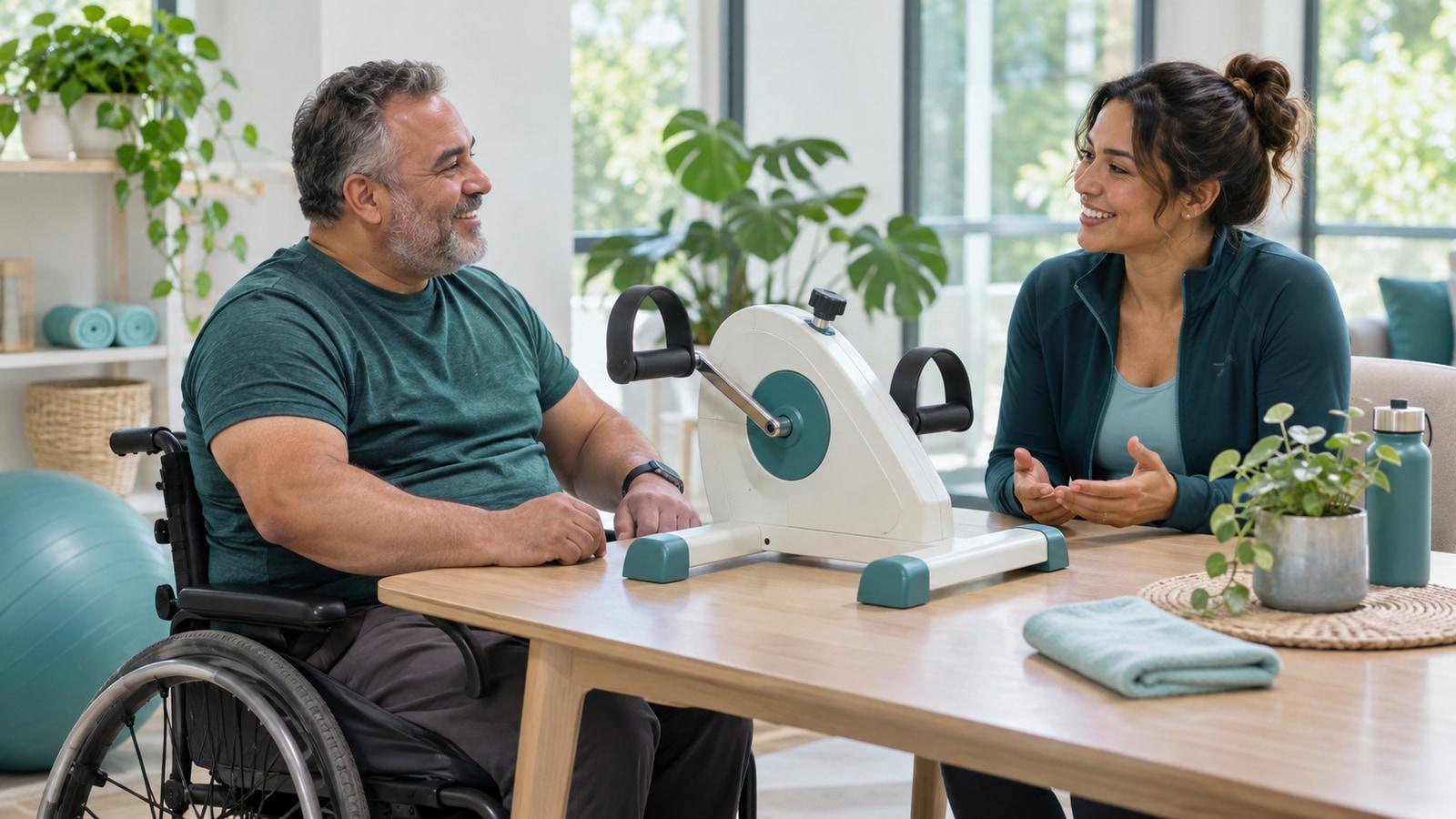
If you’ve seen a machine that looks like bicycle pedals for your hands, you’ve spotted an arm cycle, sometimes called an upper-body ergometer. You turn the handles in a circle while seated or positioned in front of the machine. It can offer a different way to move when a leg-powered bike isn’t appealing or accessible—or when you simply want some variety.
The most important part of a first session isn’t the number on the display. It’s finding a position that feels secure and lets your arms move without straining your shoulders.
Look at the machine before you start
Hand-pedaling equipment comes in different forms. A gym may have a freestanding machine with a built-in seat or space for a wheelchair. A rehabilitation center might use an adjustable arm cycle, and a small pedal unit can sometimes be placed on a stable table. Controls and adjustments aren’t identical, so check the instructions for the model in front of you.
If you use a wheelchair, ask how the machine accommodates it and how to secure your position according to the equipment instructions. You shouldn’t have to transfer to a seat if that doesn’t work for you. A staff member or physical therapist can help with access, handle placement, and an appropriate setup.
Before turning the handles, make sure the machine or tabletop unit is stable. If a small unit shifts or tips as you pedal, stop and fix the setup; don’t try to hold it in place by gripping harder.
Adjust the reach
Sit or position yourself facing the handles. You want to reach through the full circle without having to lunge forward or shrug your shoulders toward your ears. The exact height and distance depend on the machine and your body, so use the available adjustments and ask for help if you need it.
One practical check: when a handle is farthest away, can you still keep a little bend in your elbow without leaning forward? If not, move closer or adjust the machine. As you turn the handles, you should be able to stay supported and move through a range that feels comfortable.
Grip the handles securely without squeezing them as hard as you can. If gripping is difficult or painful, ask a professional about suitable equipment or adaptations rather than fastening your hands to the pedals yourself. Let them know about shoulder pain, recent surgery, or any movement restrictions before trying the exercise.
Try a short, easy first session
Choose the lowest practical resistance and turn the handles at an easy pace for a minute or two. Get used to the motion before worrying about speed. If the display has lots of numbers, you can ignore most of them while you learn.
After the first minute, pause and check in. Is the reach still comfortable? Is your chair or the machine staying in place? Are you breathing comfortably? Adjust the position or resistance if something doesn’t feel right. There’s no need to complete a preset program to have a worthwhile first try.
You might alternate a short period of pedaling with a rest, then repeat if you feel comfortable. When you’re finished, slow down and let the handles stop before moving away. A first session can be brief; next time you’ll have a better idea of how the position and effort felt afterward.
If you notice sharp pain, dizziness, chest discomfort, or unusual shortness of breath, stop. Seek medical help as appropriate, especially for severe or persistent symptoms. If shoulder discomfort keeps returning, a clinician or physical therapist can help you assess the setup and other options.
How hard should it feel?
Start at an effort that lets you speak comfortably. Hand pedaling can feel different from walking or cycling with your legs, and the setting someone else uses doesn’t tell you what’s right for you. A manageable effort today is more useful than a hard session that leaves your shoulders too sore to enjoy the next one.
You can make a note of the machine setting, seat or chair position, and roughly how long you pedaled. Include how it felt later in the day. If you decide to do more over time, change one thing at a time—such as a little more time—rather than increasing speed, resistance, and duration together.
Some people use their arms for many daily tasks or for wheelchair propulsion. If that’s you, consider the whole day’s demands when planning a session. A physical therapist familiar with your needs can help you balance activity and recovery without assuming one routine fits everyone.
Make the workout fit your life
A hand cycle can be one option alongside other movements you like, including seated strength exercises, accessible sports, or time outdoors. You don’t need to use it every day. Look for an opportunity that is convenient, welcoming, and accessible enough that you’d actually want to return.
If a reduced appetite makes it difficult to eat enough around a session, bring that up with your prescriber or dietitian. On a day when nausea or fatigue makes exercise unappealing, rest or choose a shorter session.
Most of all, give yourself time to find a comfortable setup. Once the machine fits you, you can focus less on the equipment and more on whether you enjoy the activity.