










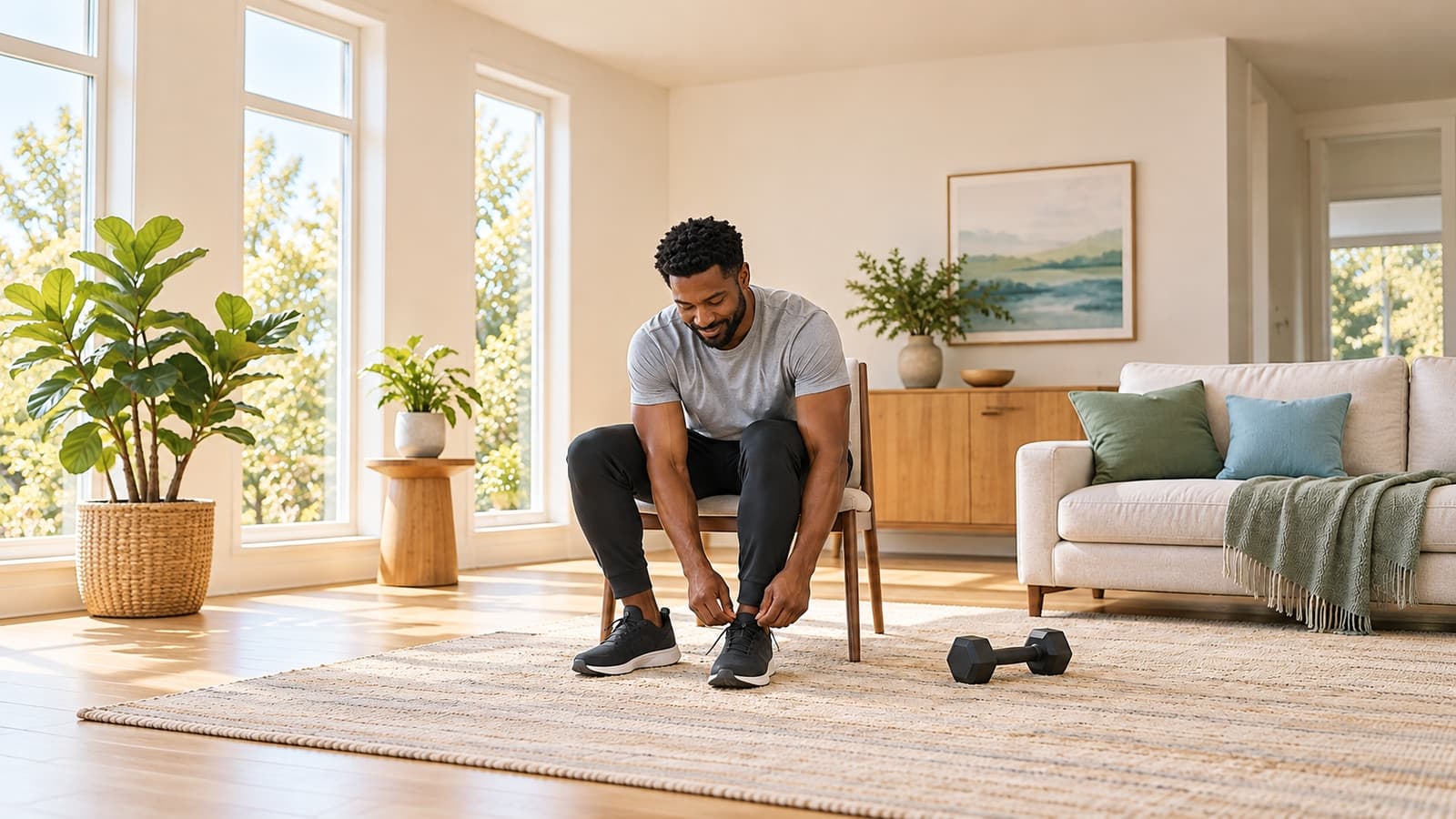
Your calendar has a fifteen-minute gap. It might not be enough for the workout you had imagined, but it can be enough to practice a couple of strength movements.
The trick is to make the plan smaller instead of speeding through it. A short session deserves room to breathe. Choose movements you already understand, keep the setup simple and leave time to rest.
Before the clock starts
Decide what you’ll need: perhaps a stable chair and a clear patch of floor, or a familiar machine at the gym. Move anything that could trip you and check that your equipment is secure. If you need instruction on a new movement, use the time to learn it rather than trying to squeeze a full session around it.
Choose one lower-body movement and one upper-body movement that suit your abilities. A chair sit-to-stand and a wall push-up are examples some people can adapt. You may use different exercises if a trainer or physical therapist has helped you find better options. Pain, balance concerns and medical restrictions can change the choice.
One way to divide fifteen minutes
This is a planning example, not a workout prescription. Adjust it to your pace and the guidance you’ve been given.
Minutes 0–3: Ease in. Walk comfortably around the room or use another gentle movement that suits you. Check your chair or equipment and rehearse each planned exercise without challenging resistance. Some people need a longer warm-up; if you do, extend it and shorten the exercise portion or finish later.
Minutes 3–7: First movement. Practice a small set of your lower-body exercise. Pause, breathe and decide whether another set feels appropriate. There’s no need to work continuously for the whole four minutes.
Minutes 7–11: Second movement. Move to your upper-body choice. Use the same approach: controlled repetitions, a comfortable pause and a second set only if you’re ready. If setting up takes longer, one thoughtful set is fine.
Minutes 11–14: Check in. If you feel well and have time, repeat a familiar set or spend the time resting. You can also use these minutes to put equipment away slowly and note how the session felt.
Minute 14–15: Finish. Put everything back safely and make a brief note for next time. The numbers are a loose map, not a timer you have to beat.
What makes the short plan useful?
You’ve chosen movements you can return to and given yourself a chance to practice them. Some research on short strength sessions has found improvements in trained adults, though that doesn’t guarantee a particular result for a different person or a fifteen-minute routine.
Over a week, you can include other movements and muscle groups when time allows. A short session doesn’t have to contain every possible exercise, and it doesn’t replace an individualized plan if you need one. If you enjoy it, note where it fits on your calendar and what you’d like to change next time.
On a different day, you might select another pair of familiar movements rather than adding more to this session. If you’re unsure how to balance the choices across a week, ask a qualified exercise professional for help.
When to leave the gap empty
If GLP-1 symptoms leave you dizzy, vomiting or struggling to drink, take care of that first and contact your care team. Stop exercising for pain, feeling faint or unusual breathlessness. New or unexplained chest pain and other possible heart attack symptoms call for 911.
Food and recovery matter alongside movement, including on busy days. Our guide to building an exercise routine looks at the bigger week. The fifteen-minute version is simply one option you can use when it fits.