










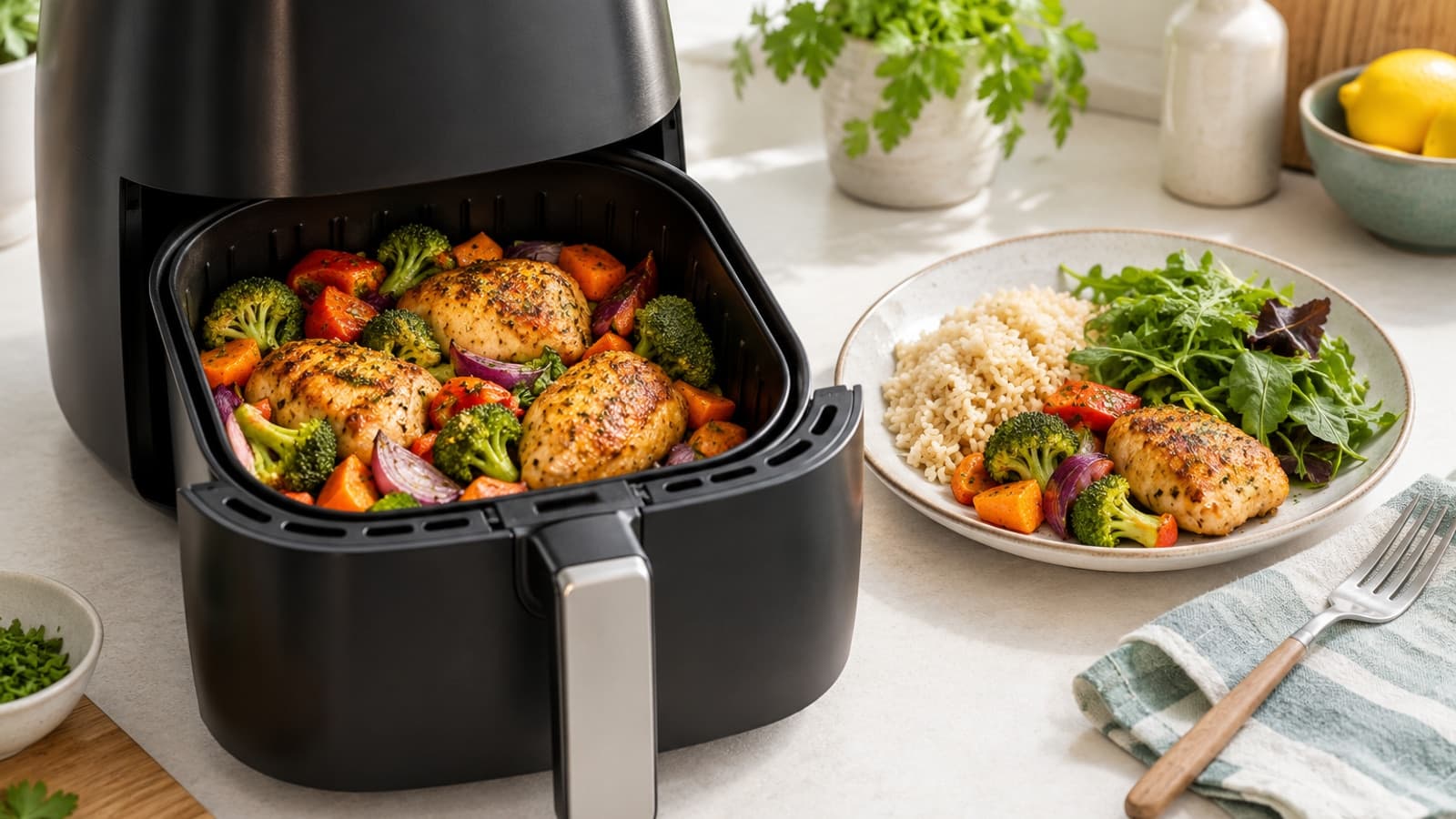
The little air fryer on the counter can do more than produce a bowl of crispy snacks. It can cook one part of dinner while you warm rice, open a can of beans or put together a side.
A small basket can be useful when you cook in batches. It also means you need to pay attention to space, timing and the safe temperature of whatever goes in it.
Think in meal components
You might air-fry a portion of vegetables and serve them with cooked rice and tofu. Another evening, cook chicken according to a reliable recipe and pair it with a vegetable and bread or a grain. Prepared frozen foods can be convenient too; follow the package directions for your appliance.
If you take a GLP-1 and want a smaller first serving, make a plate that feels manageable and keep more available if you're hungry. Cooking a small batch is a convenience, not a rule about how much you should eat.
An air fryer doesn't automatically make a meal nutritionally complete. Consider what else you'd like alongside the basket contents and choose foods that fit your needs, preferences and budget.
For a work lunch, cook the components ahead and pack them separately if you prefer their textures that way. Keep perishable food cold during the trip. A small container of sauce or a piece of fruit can make the meal easier to customize when you're ready to eat.
Leave room for the food
Read your appliance's instructions for the maximum fill and recommended cookware. Crowding the basket can make it harder for food to cook evenly. If you're making more than fits comfortably, divide it into batches.
Cut pieces to a reasonably similar size within the same ingredient. Check and turn or shake them as your recipe and appliance directions recommend. Pieces of different thickness may finish at different times, so keep an eye on them.
Use oven mitts and a heat-safe surface for the hot basket. Don't cover vents or put a liner where the manufacturer says it doesn't belong. Equipment varies, and a cooking time from someone else's larger machine may need adjustment.
Check the food, not just the timer
Browned edges can look appealing, but color alone doesn't establish that meat or poultry is safely cooked. Use a food thermometer in the thickest part. Raw chicken and other poultry need to reach 165°F throughout; other foods have their own safe temperatures.
Check the thickest pieces, especially when the basket contains portions of different sizes. Wash the thermometer after it touches raw or undercooked food, following its cleaning instructions, before checking another piece or using it with ready-to-eat food.
Keep raw poultry and its juices away from ready-to-eat ingredients. Use separate utensils and clean surfaces and the basket as needed. If you're unsure how to cook different ingredients together safely, prepare them separately.
For a frozen product, check whether the label says it is fully cooked or needs cooking. Follow its instructions instead of assuming that a browned coating means the center is ready.
Finish the plate without extra fuss
While vegetables cook, you could warm a cooked grain and prepare a sauce you like. If chicken is in the basket, add a separate cooked vegetable or cool side after it's safely done. A piece of fruit or yogurt can be part of another eating occasion later.
These combinations can be simple. Use a protein food, a starch or grain and produce in amounts that suit you; they don't all have to be cooked in the same appliance.
Refrigerate perishable leftovers promptly, within two hours or one hour above 90°F. Reheat leftovers to 165°F and check with a thermometer. Clean the basket according to the maker's directions once it is safe to handle.
For more low-effort meals, see our guide for busy days. One useful basketful and a couple of simple sides can be enough to get dinner on the table.