










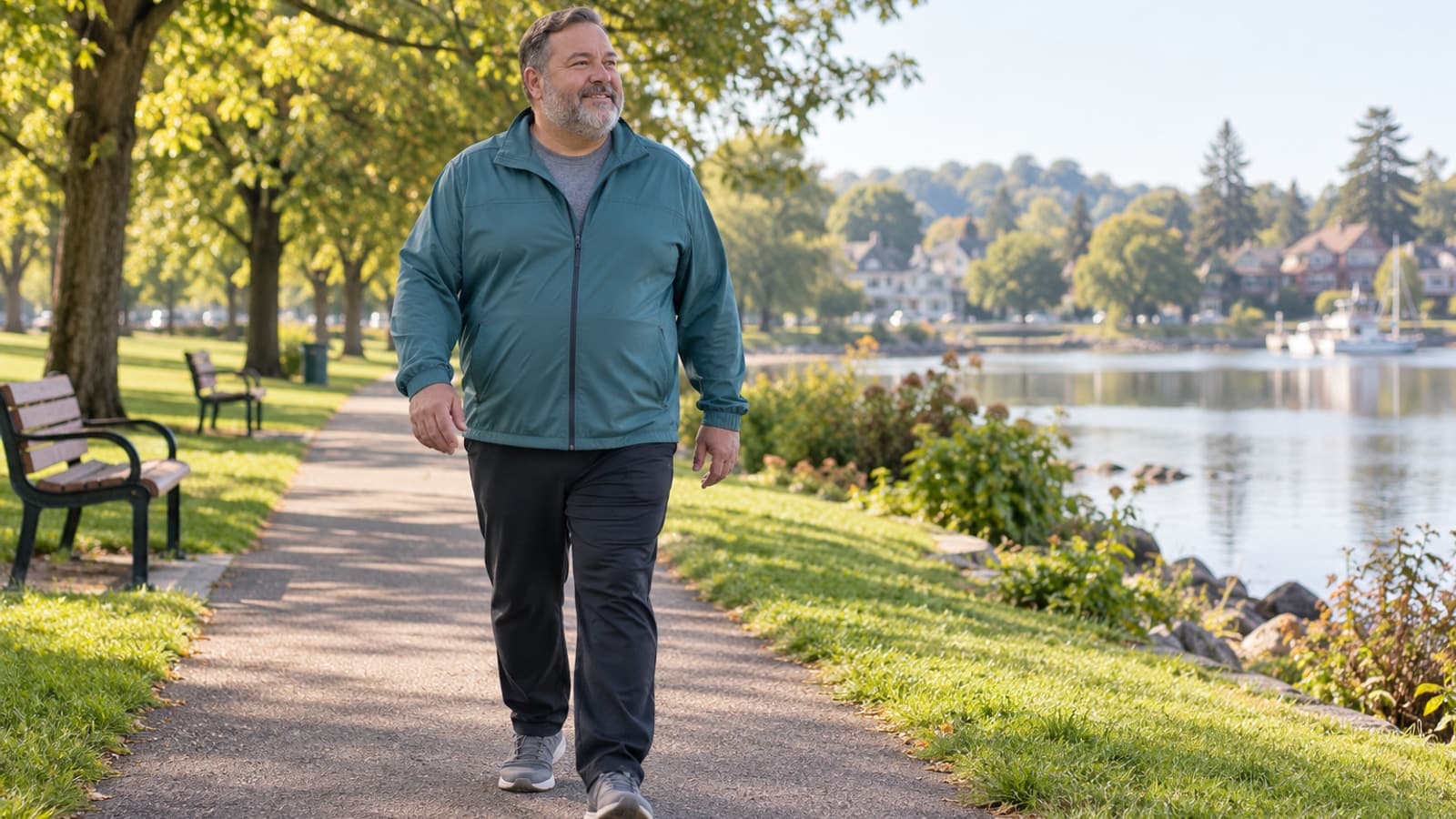
Step counts can make walking feel more complicated than it needs to be. If your starting point is a few minutes, a distant daily target may do little except make those minutes feel inadequate.
A better first question is: what walk could you comfortably repeat this week? From there, you can decide whether a little more time, a slightly longer route, or another day makes sense.
Find your repeatable starting walk
Choose a level route with a convenient place to turn around. That could be near home, inside a building, or at an indoor walking space. Think about lighting, weather, seating, and how you’ll get back if you need to stop early.
Start with a duration that feels manageable for you. For someone new to regular walking, a short outing may be enough. If pain, balance problems, or a health condition affect walking, ask your clinician or physical therapist about a suitable starting point.
Repeat before you add
Use the same comfortable route a few times and notice how you feel during the walk and afterward. There’s no need to increase something every day. A repeatable routine is useful progress on its own.
When the current walk feels comfortable and recovery is going well, change one thing. You might add a few minutes to one outing or include another short walk on a different day. Don’t increase distance, pace, hills, and frequency all at once.
Let your effort be practical
For a moderate walk, being able to talk but not sing is a common way to describe the effort. You can also choose an easier pace, especially while getting started. Short bouts of movement count; the walk doesn’t have to be long to be worthwhile.
Wear shoes that feel secure, dress for the conditions, and slow down at the beginning and end. On days when you’re feeling unwell or struggling to eat and drink, adjusting or pausing the plan is reasonable.
Keep a two-line record
Write down the route or minutes, then one note about comfort. “Ten minutes, comfortable afterward” tells you more than a step number by itself. Pain, dizziness, or unusual exhaustion is also useful information to share.
Stop for chest pain, faintness, or unusual shortness of breath, and seek medical attention as appropriate. A walking habit should make everyday movement more accessible. It doesn’t need to become a test you force yourself through.