










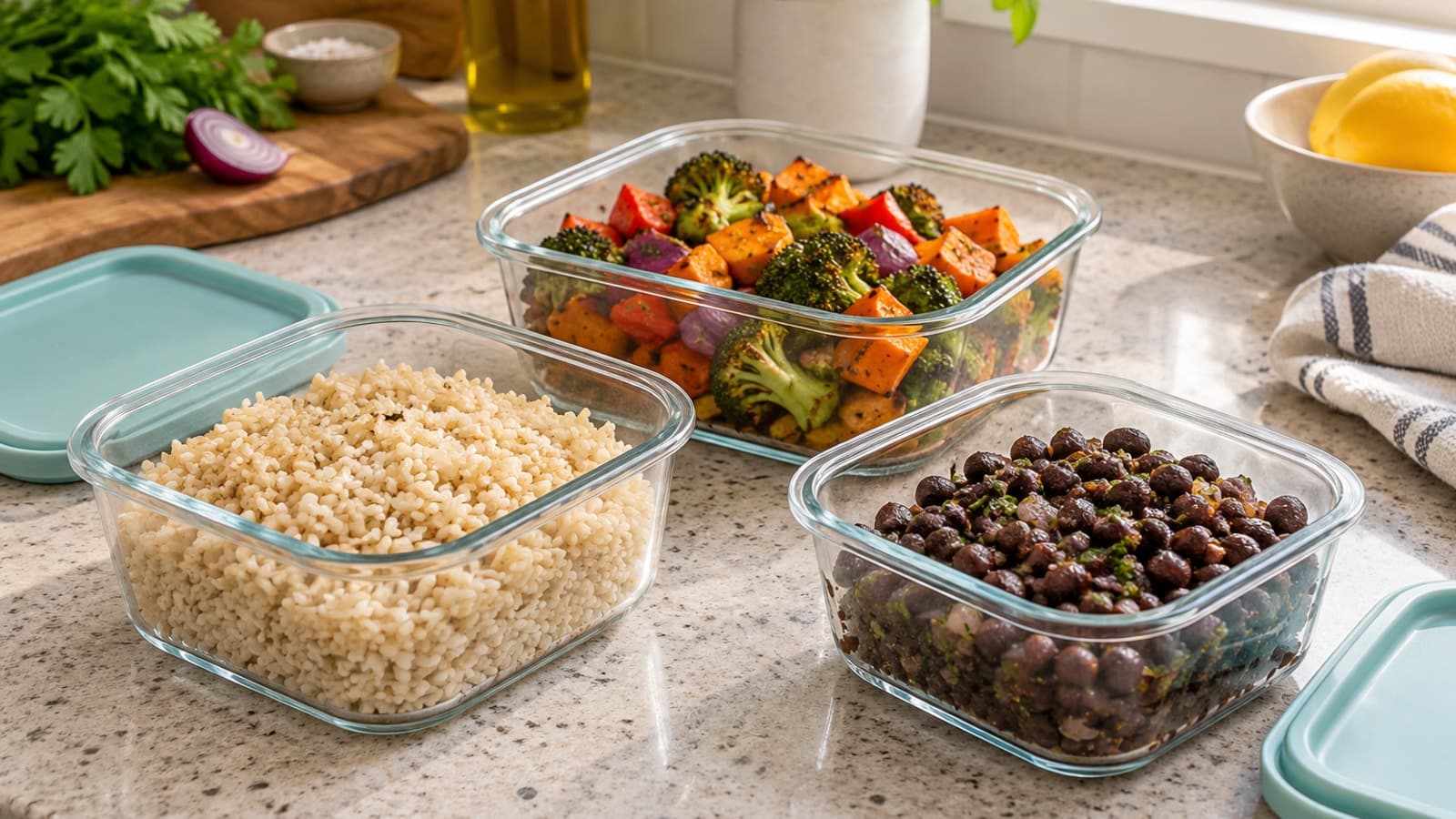
The most useful meal prep may be the kind you’ll still do on a busy weekend. You don’t need to cook every meal in advance. A few ready components can reduce the work on days when your appetite or schedule is unpredictable.
Choose the busiest meals first
Look at the coming week and pick the meals most likely to become difficult. Is it lunch between appointments? Dinner after a long shift? Breakfast before the school run? Prepare for one of those situations first.
Choose foods you already like and tolerate. GLP-1 treatment doesn’t require a special meal-prep menu, and a new recipe for every day can add unnecessary work.
Make a small set of components
You might cook rice or another grain, prepare beans, chicken, or tofu, and make some vegetables easy to use. Keep sauces or toppings separate so the same ingredients can become a bowl, wrap, soup addition, or simple plate.
For example, rice and beans could become lunch with vegetables, while the remaining beans join a soup later. The idea is to create options without committing yourself to the same exact meal repeatedly.
Store for the days ahead
Use shallow containers and refrigerate perishable foods promptly. Don’t leave cooked food on the counter while waiting for the whole kitchen session to finish. Keep the refrigerator at a safe cold temperature and freeze portions you won’t use within a few days.
Label containers with the food and preparation date. When packing lunch, use appropriate cold storage and follow safe reheating guidance. Smell alone can’t tell you whether a leftover is safe.
Leave portions flexible
Smaller containers can be useful when a large meal feels unappealing, but don’t make them a rule about how little you should eat. Keep additional food available if you want more. A separate snack or side may help on a longer day.
If a prepared food no longer sounds good, use another reasonable option. The time you spent cooking doesn’t obligate you to force a meal that makes you uncomfortable.
At the end of the week, notice what actually helped. Repeat that part next time. If persistent symptoms are making most foods difficult, ask your care team for support rather than making the meal-prep plan increasingly restrictive.