










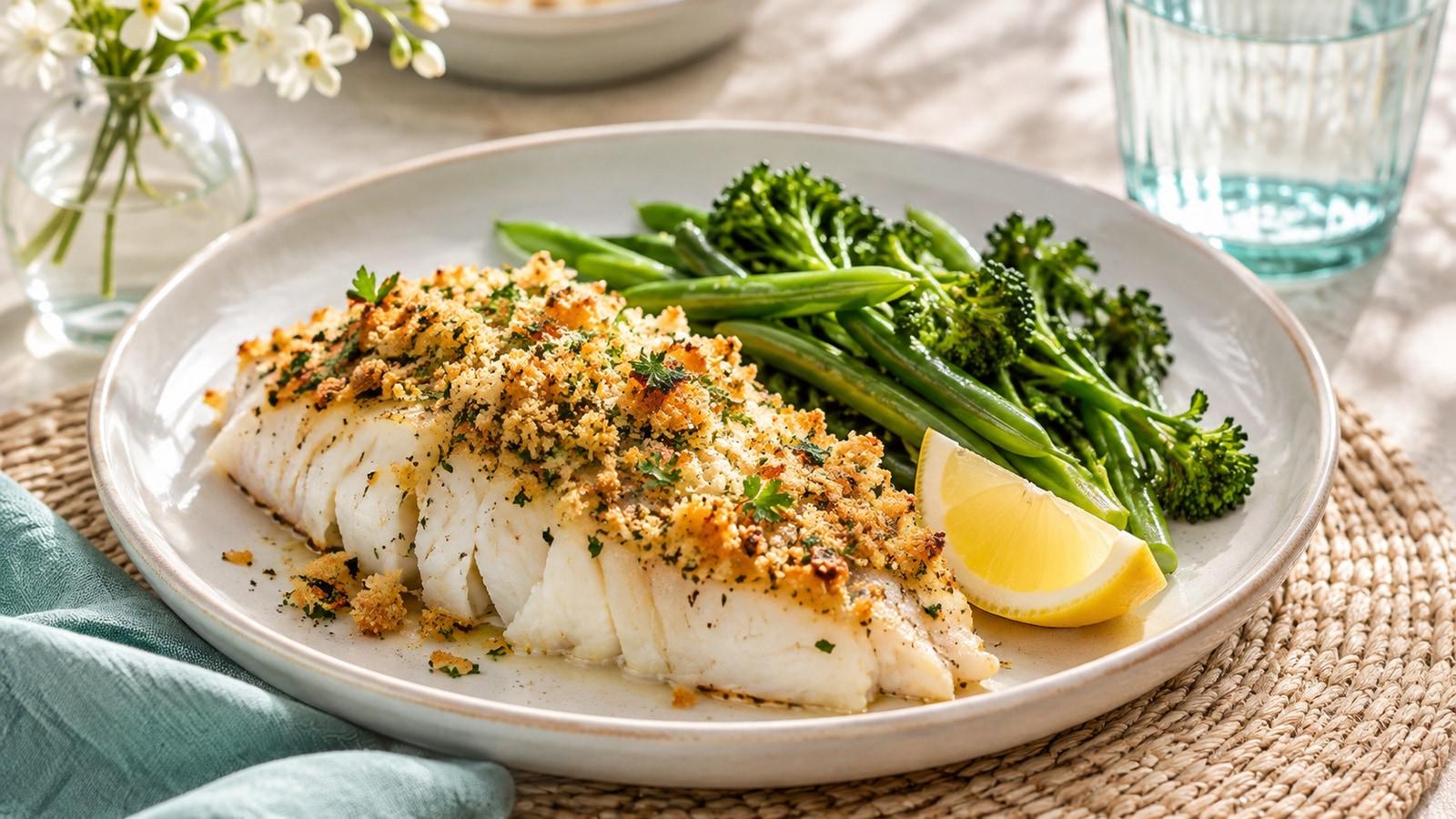
Haddock has a mild flavor that pairs well with a crisp, herby topping. A small amount of breadcrumbs gives the fish texture without needing a separate sauce. Add lemon at the table and serve it with potatoes, rice, or a vegetable you enjoy.
Fish fillets vary in thickness, so use the oven time as a guide and check the thickest part with a food thermometer. The topping can look golden before the center is cooked.
Ingredients
Makes: about 4 servings
Prep: about 10–15 minutes
Cook: about 12–20 minutes
- 4 haddock portions, about 4–6 ounces each
- ½ cup plain breadcrumbs
- 1 tablespoon olive oil
- 2 tablespoons chopped parsley
- 1 teaspoon lemon zest, optional
- Black pepper to taste
- Lemon wedges for serving
- Cooked potatoes, rice, or vegetables, optional
Choose fillets of similar thickness if possible. If the haddock is frozen, thaw it safely in the refrigerator and follow any package instructions. Keep the fish chilled until you’re ready to assemble the dish.
Prepare the topping
- Heat the oven to 400°F. Wash your hands and rinse the parsley and lemon under running water. Chop the parsley and zest the lemon if using.
- In a small bowl, mix breadcrumbs, oil, parsley, lemon zest, and pepper. The crumbs should be lightly coated, not soaked in oil.
- Prepare any salad or ready-to-eat side now, before handling the raw fish. Set out a clean serving plate and utensils.
Bake the fish
Place the haddock in a lightly oiled baking dish or on a lined rimmed sheet. Spoon the crumb mixture over the portions and press gently so it stays in place. Wash your hands and any surfaces or utensils that touched raw fish.
Bake for about 12–20 minutes, depending on thickness, until the thickest part reaches 145°F. If the crumbs brown before the fish is done, cover the dish loosely with foil and continue cooking. Use a clean utensil to transfer the finished fish to plates.
Serve with lemon wedges. A squeeze of lemon adds brightness; pass the wedges separately if people prefer different amounts.
A topping that stays crisp
Dry breadcrumbs brown more easily than a wet mixture. Use just enough oil to coat them, and add lemon juice after baking rather than pouring it over the crumbs before they go into the oven.
If your breadcrumbs are already seasoned, taste a small amount before adding herbs or salt. Some contain cheese, wheat, or other ingredients, so check the label. For a gluten-free meal, choose suitable labeled crumbs and check all packaged ingredients.
Coarser crumbs make a more noticeable crust, while fine crumbs create a thinner coating. Either can work. If using larger flakes, press them lightly onto the fish and keep an eye on the topping as it bakes.
The topping doesn’t have to cover every edge. A thin layer gives each bite some crunch and leaves the fish visible. If crumbs spill onto the pan, don’t return them to a bowl of unused topping after they have touched raw fish.
Check the fish, not just the clock
A thin fillet can finish sooner than a thick one. Begin checking early and remove portions once their centers reach 145°F. Insert the thermometer into the thickest part, avoiding the baking dish.
If you use another mild fish, the cooking time may change. Fish is a common allergen; a different fish isn’t automatically suitable for someone with a fish allergy. Choose an appropriate alternative protein if needed.
Keep raw seafood separate from ready-to-eat vegetables and bread. Wash hands, boards, and counters with soap and water after contact, and use clean equipment for serving.
What goes with it?
Haddock provides protein. Potatoes or rice make a mild base, while green beans, broccoli, or a salad adds color and texture. If roasting potatoes, start them earlier on a separate tray because they generally take longer than the fish.
For a softer meal, serve the fish with mashed potatoes and tender cooked vegetables. For more crunch, add a crisp salad. A spoonful of plain yogurt mixed with herbs can be served on the side, though yogurt contains milk, a common allergen.
If you like stronger flavors, add a pinch of garlic powder to the crumbs or use dill instead of parsley. Keep the changes modest the first time so the mild fish still comes through.
Leftovers
Refrigerate cooked fish in shallow containers within two hours, or within one hour above 90°F. Keep it at 40°F or below and use within three to four days. If serving rice, cool and refrigerate it within one hour, use it within 24 hours, and reheat it only once. Reheat it to 165°F, checking the center. The crumb topping may soften; an oven can help restore some texture, but the safe temperature matters more than making it crisp again.
Leftover haddock can be flaked into a warm grain bowl or served with vegetables. Keep it refrigerated until needed, and add fresh lemon after reheating. Store any unused, uncontaminated breadcrumb mixture separately according to its ingredients.
When the fish is ready, a squeeze of lemon and a side you like are enough to finish the plate. Pass the lemon separately if everyone wants a different amount.