










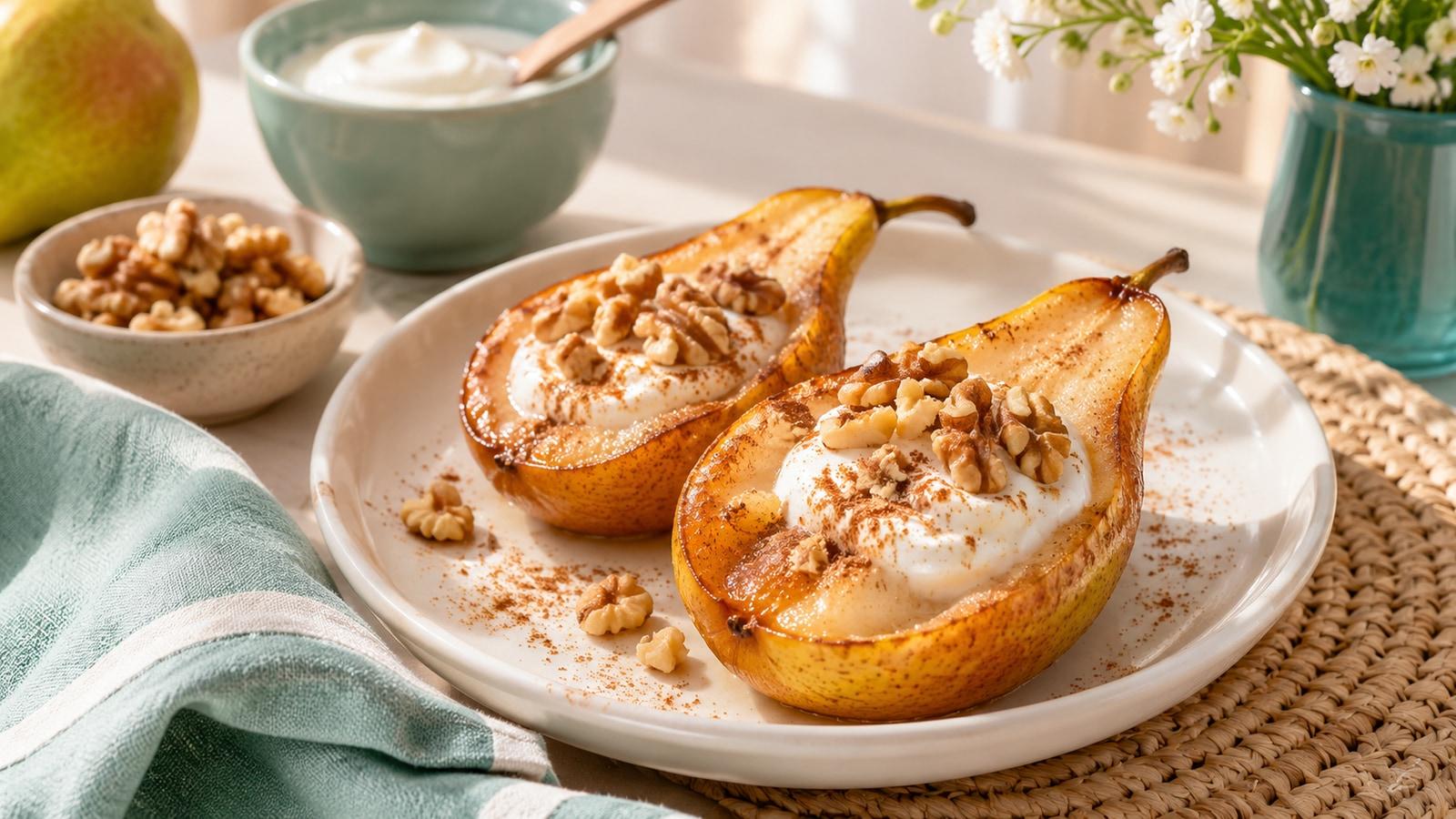
Pears become soft and fragrant in the oven, making them a pleasant breakfast or snack when you want something warm. A spoonful of vanilla yogurt and a few walnuts add a cool, creamy topping and a little crunch.
This is less of a precise baking project than a way to put a few ingredients together. Pear size and ripeness affect how quickly they soften, so check them with a fork and give them the time they need.
Ingredients
This starting recipe is intended for two portions.
- 2 ripe but firm pears
- ½ cup plain or vanilla yogurt
- 2 tablespoons chopped walnuts
- ¼ teaspoon vanilla extract, if using plain yogurt
- A pinch of cinnamon, optional
- 1 to 2 teaspoons honey or maple syrup, optional
- A few tablespoons water for the baking dish
Choose pears that yield slightly to gentle pressure near the stem but aren't so soft that they're difficult to handle. Plain yogurt lets you choose the level of sweetness; vanilla yogurt offers a shortcut. Either can work.
If you have a walnut or other tree-nut allergy, leave the nuts out and choose a topping that is safe for you. Check packaged ingredients for cross-contact information relevant to your needs.
Prepare the pears
Heat the oven to 375°F. Rinse the pears under running water and dry them. Cut each in half lengthwise and remove the core with a small spoon or melon baller. Trim the stem if needed.
Arrange the halves cut-side up in a small baking dish. Add a few tablespoons of water to the bottom of the dish and sprinkle the pears with cinnamon if using. If you'd like a sweeter finish, add a small drizzle of honey or maple syrup now, or wait until serving.
Use a dish large enough that the halves sit in a single layer. The water can help prevent the dish from drying out, but it shouldn't cover the pears. Handle the knife carefully, especially if the fruit is firm.
Bake until tender
Bake until a fork slides into the pear easily and the edges have softened. Start checking after about 20 minutes; larger or firmer pears may take longer. Let them cool briefly before adding the yogurt so the topping doesn't immediately run off the fruit.
While the pears bake, stir the vanilla into plain yogurt if you're using it. Keep the yogurt refrigerated until serving. Chop the walnuts to a size that feels comfortable to eat, or leave them out.
Place two pear halves on each plate and add yogurt and walnuts. Spoon a little of the warm fruit juice from the dish over the top if you like. Add extra sweetener at the table only if the pears need it for your taste.
If you're sharing the dish, serve the toppings in small bowls so each person can choose. Keep the yogurt chilled until the pears have cooled enough to eat, then return any unused yogurt to the refrigerator promptly.
Make the bowl your own
The pears can be served as a light snack or paired with toast, oatmeal or another food for a larger breakfast. Yogurt contributes protein, but different products vary; choose the type and portion you enjoy.
If you prefer a softer texture, bake the pears a little longer and chop them before serving. If crunch isn't comfortable, omit the walnuts or replace them with a topping that suits you. Anyone following a prescribed swallowing plan should check whether the fruit and yogurt combination fits their individual instructions.
Try a pinch of ginger instead of cinnamon, or use a different fruit that is in season. Apples may need a different baking time, so check for tenderness rather than assuming they cook exactly like pears.
Prepare ahead
Bake the pears when you have the oven on for another meal, then refrigerate them in a shallow covered container. Keep the yogurt separate until serving. You can eat the pears chilled or reheat them and add the cold topping afterward.
For a packed snack, place the chilled pear and yogurt in separate containers inside an insulated bag with cold packs. Add the walnuts just before eating so they stay crisp. Don't leave the dairy topping at room temperature through the morning.
Store and reheat safely
Refrigerate cooked pears and other perishable ingredients within two hours, or within one hour if the surrounding temperature is above 90°F. Keep the refrigerator at 40°F or colder. Use cooked leftovers within three to four days or freeze suitable portions for later; the fruit's texture may soften further after freezing.
If reheating the cooked pears, heat them to 165°F, checking the center. Add the cold yogurt and nuts afterward. Labeling the container with the date makes it easier to use the leftovers within the recommended window.
The finished dish is adaptable: a warm pear, a cool topping and as much or as little crunch as you want. Let the fruit and your appetite set the pace.