










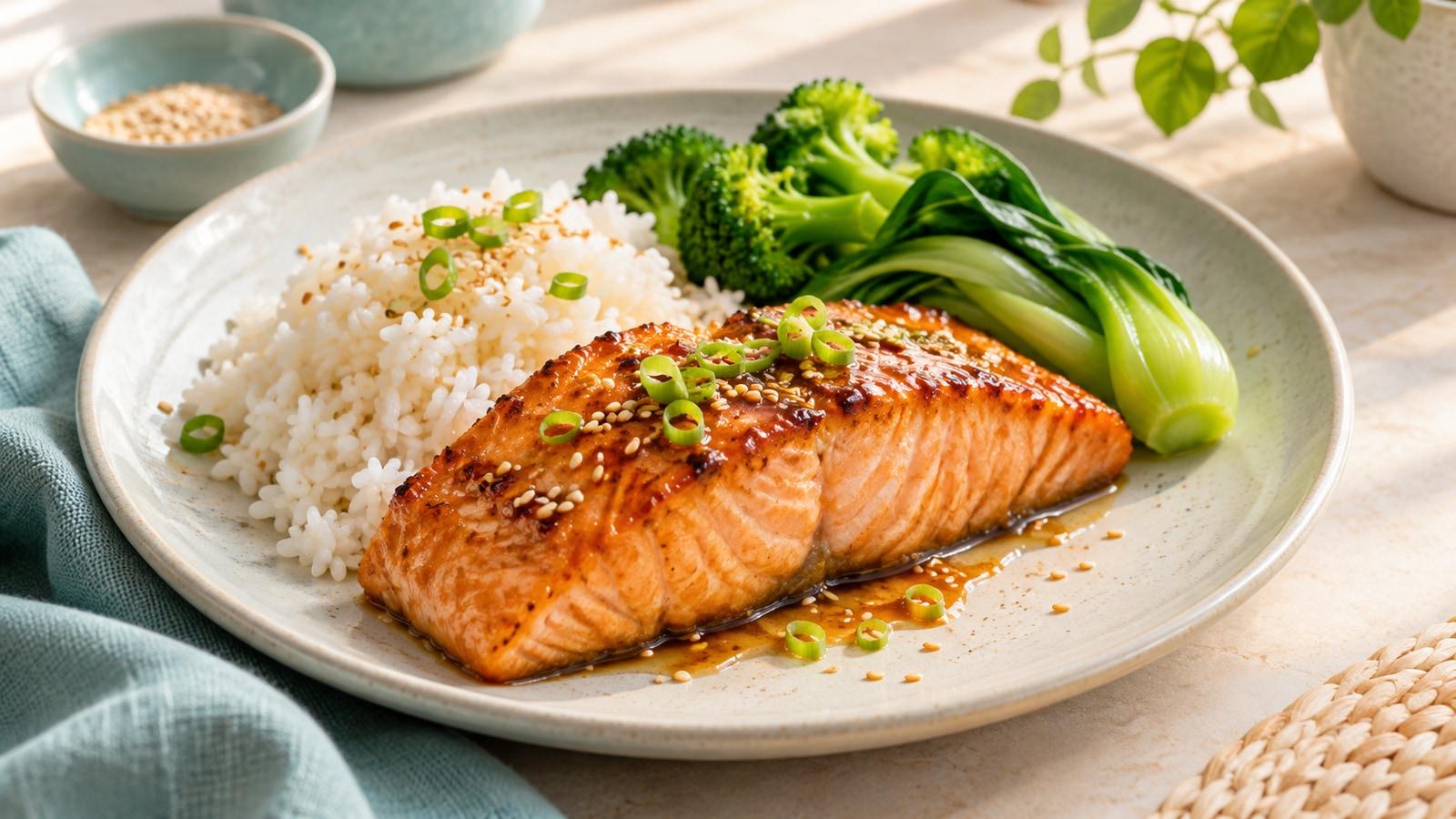
Ginger, soy sauce, and a little sesame make a savory glaze for baked salmon. Serve it with rice and steamed vegetables, keeping extra sauce on the side so everyone can choose how much to add.
The glaze is prepared before handling the fish. Set aside any portion for serving before it touches raw salmon, and use a thermometer to check the thickest part of each fillet.
Ingredients
Makes: about 4 servings
Prep: about 10–15 minutes
Bake: about 12–18 minutes
- 4 salmon portions, about 4–6 ounces each
- 2 tablespoons lower-sodium soy sauce
- 2 teaspoons grated fresh ginger
- 1 teaspoon sesame oil
- 1 teaspoon honey or maple syrup, optional
- 1 tablespoon water
- 1 teaspoon sesame seeds, optional
- Cooked rice and steamed vegetables, for serving
- Sliced scallions or lime, optional
Salmon portions of similar thickness cook more evenly. If using frozen fish, thaw it safely in the refrigerator and follow the package directions. Keep it chilled until you’re ready to bake.
Mix the glaze
- Wash your hands and rinse the ginger, scallions, lime, and any fresh vegetables under running water. Grate the ginger.
- Mix soy sauce, ginger, sesame oil, water, and honey or maple syrup if using. If you want some for serving, pour a portion into a separate clean bowl now.
- Start the rice and vegetables according to their cooking instructions. Follow package directions for frozen vegetables.
Bake the salmon
Heat the oven to 400°F. Place the salmon on a lined rimmed baking sheet and brush with the remaining glaze. Wash your hands and any utensils or surfaces that touched raw fish.
Bake for about 12–18 minutes, depending on thickness, until the thickest part reaches 145°F on a food thermometer. If the glaze darkens before the fish is done, cover loosely with foil and continue cooking. Use a clean utensil to transfer the salmon to plates.
Serve with rice and vegetables. Add sesame seeds, scallions, lime, or the reserved clean glaze if you like. Discard any glaze that touched raw fish.
Keep the glaze balanced
Soy sauce contributes salt, ginger adds warmth, and sesame oil has a strong flavor. Start with the listed amount of sesame oil; a little goes a long way. Water softens the sauce, while honey or maple syrup is optional.
If you want a brighter finish, pass lime wedges at the table. If the sauce is too concentrated, add a little water to the reserved portion. Keep chili separate if only some people want heat.
Honey shouldn’t be given to infants under one year old. If the meal is being shared with a family, leave it out or choose another appropriate sweetener.
Check the fish carefully
The outside can look browned while the thickest part is still cooking. Begin checking thin pieces early and let thicker ones continue until they reach 145°F. Insert the thermometer into the thickest part, avoiding the pan.
Keep raw fish separate from ready-to-eat vegetables and sauce. Wash hands, boards, and counters with soap and water after contact. Don’t return cooked salmon to the plate that held it raw.
Fish, soy, and sesame are common allergens, and ordinary soy sauce may contain wheat. If avoiding gluten, choose a suitable labeled sauce. Choose a different protein and sauce for anyone who must avoid fish or soy.
Build the bowl
Salmon provides protein. Rice gives the glaze a mild base, and steamed broccoli, carrots, or green beans add vegetables. Serve the components separately so each person can choose the proportions that suit their appetite.
For softer vegetables, steam them until tender. For a crisp contrast, add cucumber or a salad after the fish has cooked. Keep cool toppings separate from the raw seafood and its utensils.
Carrots generally need more time to soften than delicate greens. Cut them into thin slices and start them first, then add quick-cooking vegetables later. If you’re preparing several sides, a pot with a steamer basket can keep them together while still allowing you to remove each one when it reaches the texture you prefer.
Sesame seeds add crunch but are optional. If serving someone with chewing difficulties, consider the texture and use an appropriate alternative. Scallions or herbs can add freshness without the seeds.
Leftovers
Refrigerate cooked salmon and vegetables promptly in shallow containers. Cool and refrigerate cooked rice within one hour, use it within 24 hours and reheat it only once. Reheat leftovers to 165°F, checking the center of the fish. Covering the dish and adding a little water can help prevent drying; add fresh scallions or lime afterward.
If you have reserved glaze that never touched raw fish, store it covered in the refrigerator and follow safe storage guidance. Don’t use leftover raw-fish marinade as a cold sauce.
The meal is easiest when the sauce and vegetables are prepared first, the salmon is checked with a thermometer, and the final glaze is added to taste.