










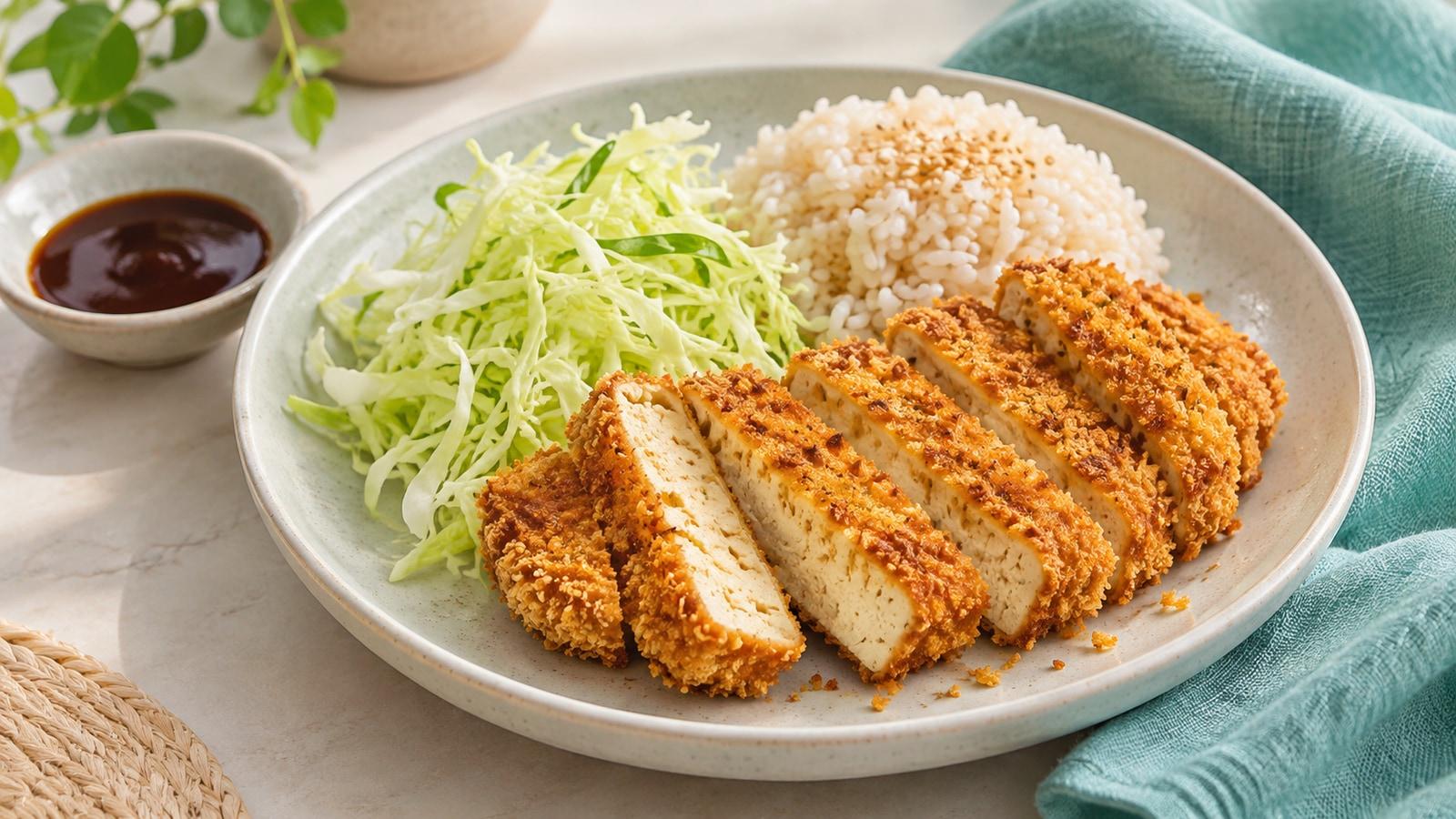
This home adaptation gives tofu a breadcrumb coating and bakes it until lightly crisp. Serve the slices with shredded cabbage, rice, and a little sauce on the side. It takes inspiration from Japanese katsu-style cutlets while using tofu and an oven rather than the usual meat and frying method.
The coating is easiest to handle when the tofu is blotted dry and the slices are thick enough to lift without breaking. Set up the breading bowls before you start.
Ingredients
Makes: about 4 servings
Prep: about 20 minutes
Bake: about 20–25 minutes
- 1 package (14–16 ounces) firm or extra-firm tofu
- ¼ cup all-purpose flour
- 1 large egg, beaten
- ¾ cup panko breadcrumbs
- 1 tablespoon neutral oil
- 3 cups finely shredded cabbage
- Cooked rice, for serving
- Katsu-style sauce or another sauce, optional
Check the tofu and sauce packages for preparation instructions and allergens. Panko and flour usually contain wheat, and the egg is raw until the coating is fully cooked. Keep the sauce separate from the breading bowls.
Prepare the components
- Heat the oven to 425°F. Wash your hands and rinse the cabbage under running water. Shred it finely and refrigerate it in a covered container.
- Drain the tofu and blot it with a clean towel. Cut it into four thick slabs or another size that will be easy to turn.
- Put flour, beaten egg, and panko in three separate shallow bowls. Line a baking sheet and brush it lightly with some of the oil.
Coat and bake
Dip each tofu slab lightly in flour, then egg, then panko. Place on the prepared sheet and brush or drizzle with the remaining oil. Keep the coating thin and even.
Bake for about 20–25 minutes, turning carefully once, until the coating is golden and the egg-containing coating reaches at least 160°F. Follow any additional tofu package cooking directions. Use a clean spatula and plate for the finished tofu.
Serve with rice, cabbage, and a little sauce on the side. Wash your hands, bowls, and work surface after handling raw flour and egg. Don’t taste the uncooked coating.
Help the coating stay on
Blotting the tofu removes surface moisture that can make the coating slide. Handle the slabs gently and press the breadcrumbs on lightly rather than squeezing hard. If a piece breaks, coat the smaller pieces and bake them together.
Keep one hand for the dry bowls and one for the egg if that makes the process less messy. Discard leftover flour, egg, and breadcrumbs that have touched the raw coating mixture. Don’t put them back into their original packages.
Leave room between the slabs on the tray. Crowding traps moisture and can soften the coating. Turn them carefully after the first side has had time to set. If the crumbs darken before the center is ready, lower the heat or cover loosely and continue cooking.
Panko flakes are usually larger than fine breadcrumbs, giving the outside a more pronounced crunch. If you substitute finer crumbs, check them earlier because they may brown at a different rate.
Cabbage, rice, and sauce
Thinly shredded cabbage gives the plate a cool crunch. If you prefer it softer, cook it briefly and serve it warm. Rice provides a simple base; start it first and follow the package directions.
Sauces vary in sweetness, salt, and ingredients. Put a small amount on the side so each person can decide how much to use. Check the label if avoiding soy, wheat, fish, or other ingredients, since prepared sauces can differ.
Tofu provides plant protein. A slab with rice and cabbage can be a meal; adjust the portions to suit your appetite. Add cucumber or another vegetable if you want more color.
Allergies and alternatives
Tofu contains soy, while the coating contains wheat and egg. These are common allergens, and wheat contains gluten. Choose a different protein or suitable labeled coating if needed. Egg-free binders and gluten-free crumbs can behave differently, so test a small batch.
If using cooked rice made ahead, it should have been cooled and refrigerated within one hour and kept cold for no more than 24 hours. Reheat it only once, to 165°F, and warm only what you plan to eat now. Reheat safely refrigerated leftover tofu to 165°F. Keep raw breading ingredients separate from ready-to-eat foods.
Save a portion
Refrigerate cooked tofu and cabbage promptly in separate shallow containers. Cool and refrigerate freshly cooked rice within one hour, use it within 24 hours and reheat it only once. Reheat the tofu and rice to 165°F, checking the center. An oven may help the coating regain some texture, though it may not be as crisp as when first baked.
Keep the sauce and cabbage separate until serving. For travel, use an insulated bag with a cold pack; don’t leave perishable foods at room temperature for more than two hours, or one hour when it’s above 90°F.
This is a flexible adaptation: a carefully coated tofu slab, a pile of cabbage, and rice with sauce added to taste.