










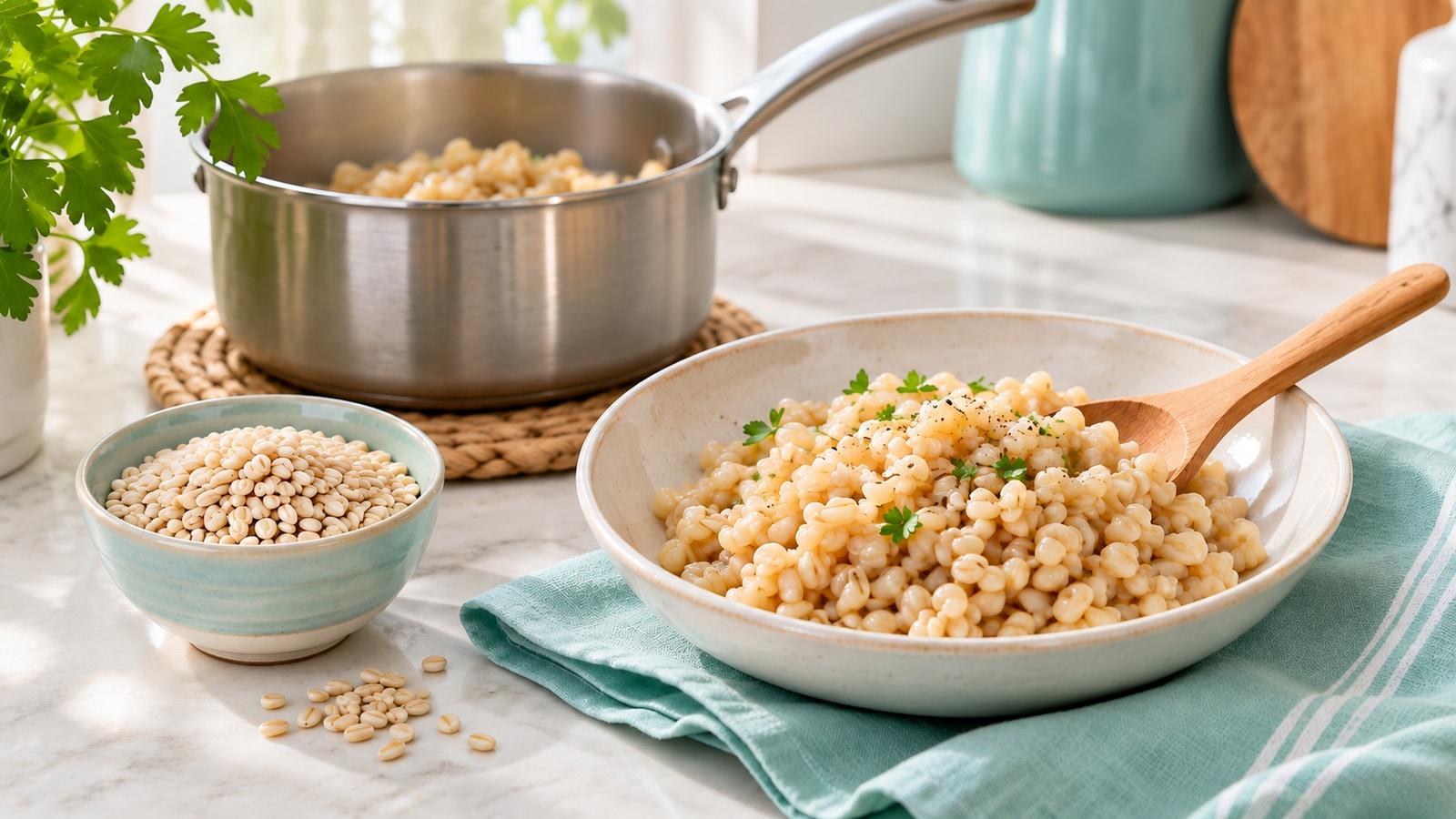
A bag of barley can be easy to overlook. It doesn’t cook as quickly as pasta, and the labels may say “hulled,” “pearled,” or “quick” without explaining what that means for dinner.
The useful question is: how much time do you have, and what texture do you want? Once you know which kind is in the bag, barley can become a warm side, a spoonful in soup, or the base of a meal you assemble from things already in the refrigerator.
First, check the label
Hulled barley has had its tough outer hull removed while retaining the grain’s bran. It’s a whole grain and usually takes longer to soften. Expect a chewy texture, and give it the time indicated on the package.
Pearled barley has been polished to remove some or all of the bran. It isn’t a whole grain, but it still contains fiber. It generally cooks faster than hulled barley and is a common choice in grocery stores.
Quick barley has been processed to shorten the cooking time. The directions and texture depend on the product, so read that package rather than applying the timing for another type.
There’s no need to turn the choice into a contest. If you want a whole grain and have time to cook it, hulled barley may fit. If you’re looking for a shorter cooking time or a texture your family enjoys, pearled or quick barley might get used more often.
Barley contains gluten. If you have celiac disease or another reason to avoid gluten, choose a suitable alternative and check labels for the ingredients and cross-contact concerns that apply to you. Don’t treat hulled barley as gluten-free simply because it is a whole grain.
Give the pot enough room
Barley expands as it cooks, so a little dry grain makes more than it first appears. One cup of dry pearled barley can yield roughly three and a half to four cups cooked. If you’re trying it for the first time, you might make less and keep the rest of the dry grain for another meal.
Check the package for the amount of water and its specific directions. As one starting method for pearled barley, rinse one cup, place it in a saucepan with three cups of water, and bring it to a boil. Reduce the heat, cover, and simmer until tender; this may take about 45 to 60 minutes. Drain any extra liquid. Hulled barley can take longer, while a quick product can be much faster.
Use a pot large enough for the liquid to simmer without boiling over. Check it near the end and add a little water if the pot becomes dry before the grain is tender. The exact time can vary by product and by the texture you prefer.
Water keeps the flavor neutral. Broth can add flavor if you plan to serve the barley with savory food; compare sodium on the package if that matters to you. You can also add herbs at the table, which lets different people season their own portions.
Decide what “done” means for your meal
Barley is generally pleasantly chewy, but it shouldn’t feel hard in the center. Taste a cooled spoonful near the end of cooking. If you want it softer, give it more time and check the liquid.
For soup, a firmer cooked grain may hold its shape better when added to hot broth. For a warm breakfast bowl, you might prefer it softer with a splash of milk or another liquid. Different packages will behave differently, so the first batch is a chance to learn what you like.
If chewing is difficult or you have been given instructions about food texture, follow those instructions. Barley’s chewiness isn’t right for everyone, and another food may be a better fit.
Make one batch useful in more than one way
Try a scoop alongside chicken or tofu and vegetables, or stir cooked barley into a vegetable soup. A spoonful can make a salad more substantial; add greens and dressing when you’re ready to eat so the leaves stay fresh.
It also works at breakfast. Warm a portion with a little water, then add cooked apple and yogurt or another topping you enjoy. Keep perishable toppings cold until serving. You don’t need a different grain for each meal of the day.
If you’re taking a GLP-1 medicine and your appetite is smaller, start with an amount that feels manageable and keep more available if you want it. Barley can contribute fiber, while foods such as eggs, fish, beans, or yogurt can add protein. If increasing fiber leaves you uncomfortable, discuss a suitable pace with your care team or dietitian.
Cool and store the extra
Divide cooked barley into shallow containers so it cools quickly, and refrigerate it within one hour of cooking. Keep the refrigerator at 40°F or below. Use refrigerated leftovers within three to four days or freeze portions sooner.
When you want a warm serving, reheat it to 165°F. A splash of water can loosen grains that have clumped; stir and check that the portion is heated throughout. Keep a cold barley salad refrigerated until serving, and use an insulated bag with cold packs when you need to carry it.
Labeling the container with the cooking date makes the next decision easier. If you don’t know how long it sat out, appearance alone can’t confirm that it’s safe.
A useful batch doesn’t have to fill the freezer. Start with the kind you can find, follow its directions, and save only as much as you expect to use.