










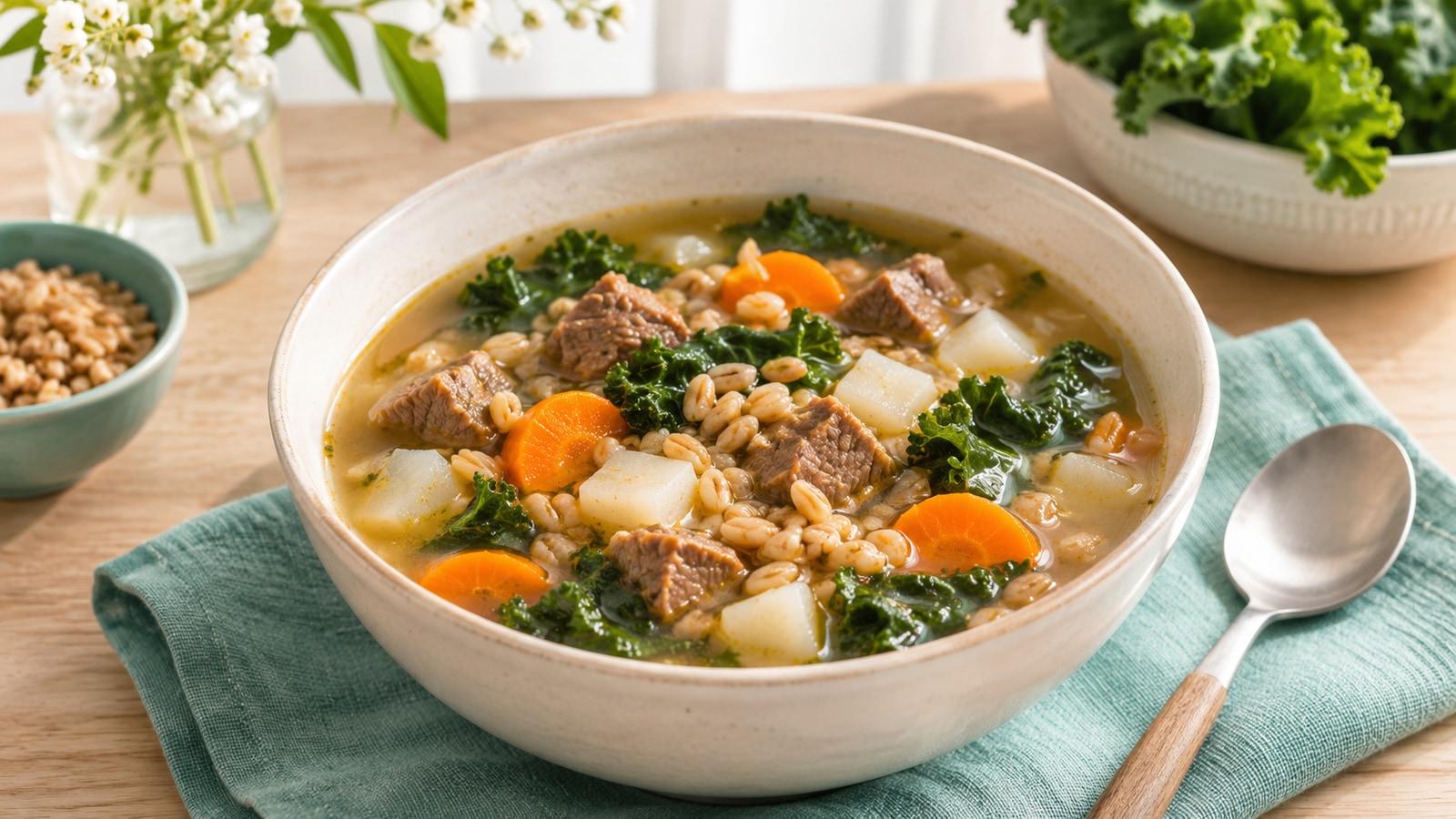
Farro gives this broth-based beef soup a pleasant chew. Turnip and kale add a little bitterness that softens in the pot, while a splash of cider vinegar at the end makes the broth taste brighter. It’s a practical way to use a safely stored portion of roast or steak.
Cook the farro separately if you want to control how much goes into each bowl. It can also be stirred into the pot, but it will absorb some of the broth as the soup sits.
Ingredients
Makes: about 4 servings
Prep: about 15 minutes
Cook: about 25 minutes, using cooked farro and beef
- 1 tablespoon olive oil
- 1 small onion, diced
- 2 carrots, diced
- 1 small turnip, peeled and diced
- 2 cups chopped kale, tough stems removed
- 4 cups lower-sodium beef or vegetable broth
- 1½ cups cooked farro
- 1½ cups safely cooked beef, cut into small pieces
- ½ teaspoon dried thyme or oregano
- Black pepper to taste
- 1–2 teaspoons apple cider vinegar, optional
- Optional: chopped parsley or a little grated cheese
Farro is a type of wheat and contains gluten. It isn’t suitable for someone with celiac disease. A gluten-free grain can be used instead if it fits your needs, but check the package for cross-contact and cook it according to its own directions.
Put the soup together
- Wash your hands. Rinse the carrots, turnip, and kale under running water. Dice the roots and chop the leaves.
- Heat the oil in a soup pot. Cook the onion for a few minutes, then add the carrots and turnip. Stir until the onion begins to turn golden.
- Add the broth and dried herb. Bring to a boil, then simmer until the roots are tender. Add the kale and cook until it softens.
- Add the cooked farro and beef. Bring the soup back to a rolling boil and stir so the ingredients heat evenly. Check that the reheated beef reaches 165°F.
- Taste before adding salt. Stir in a little cider vinegar if you like, then add pepper, parsley or cheese at the table.
If using leftover roast or steak, keep it refrigerated until it goes into the pot. Cut it into pieces small enough to warm through and eat comfortably. If it was cooked several days ago, consider its original storage time; turning it into soup doesn’t reset the clock.
Cooking the beef from the start
If you don’t have cooked beef, prepare a steak or roast separately. Use a food thermometer to check a minimum internal temperature of 145°F, then allow it to rest for at least three minutes before cutting. Keep raw meat and its juices away from produce and cooked foods, and wash the board, utensils, and hands after handling it.
For a tender bowl, choose a cut you enjoy and cook it using a method appropriate for that cut. Some cuts need longer cooking for texture even after they’ve reached a safe temperature. The thermometer tells you about the minimum temperature; tenderness is a separate question.
You can also use a safely prepared leftover rather than cooking meat specifically for the soup. Keep the amount modest if that suits your appetite and let the vegetables and farro fill out the bowl.
Farro: chewy, separate, or soft
Farro comes in forms with different cooking times. Follow the package directions and cook it until it reaches the texture you like. Some people enjoy a distinct chew; others prefer a softer grain. If your package calls for rinsing or soaking, include that in your plan.
Cooking the farro separately makes it easy to vary portions. One person can add a few spoonfuls, another can make a thicker bowl, and any extra grain can be cooled and refrigerated within one hour for another meal. If you add it all to the soup, expect to add more broth when reheating.
For a gluten-free variation, cooked rice or another suitable grain changes the character of the dish but can serve the same practical role. Check the grain and broth labels if cross-contact matters to you. If you choose rice, cool and refrigerate it within one hour, use it within 24 hours, and reheat it only once. Add previously chilled rice only to the portion you plan to eat now.
A flexible serving
The beef contributes protein, while the vegetables and grain provide different textures. Start with a bowl that feels comfortable and add toast or fruit if you want more. A smaller bowl can be useful on a day when your appetite is lower; you can save another portion instead of treating the pot as a single meal.
Turnips vary in sharpness. Dice them small and let them soften in the broth; if you prefer a sweeter root, try parsnip instead and check it for tenderness. Add kale near the end so the leaves keep some texture, or simmer them longer if you like them soft. A little cider vinegar is optional and can be left at the table for each person to add.
Store it safely
Transfer extra soup to shallow containers, then cool and refrigerate it within one hour. Keep the refrigerator at 40°F or below. Use refrigerated leftovers within three to four days, taking the age of the original beef and farro into account, or freeze them sooner.
Bring leftover soup to a rolling boil and check that the beef reaches 165°F. Add broth if the grain has absorbed liquid. For a packed lunch, keep it cold with ice packs until it can be refrigerated or reheated.
If a GLP-1 medication is making it difficult to eat or drink, contact your care team rather than relying on one recipe to address the symptom. Otherwise, adjust the grain, vegetables, and portion to make a bowl you’ll look forward to eating.