










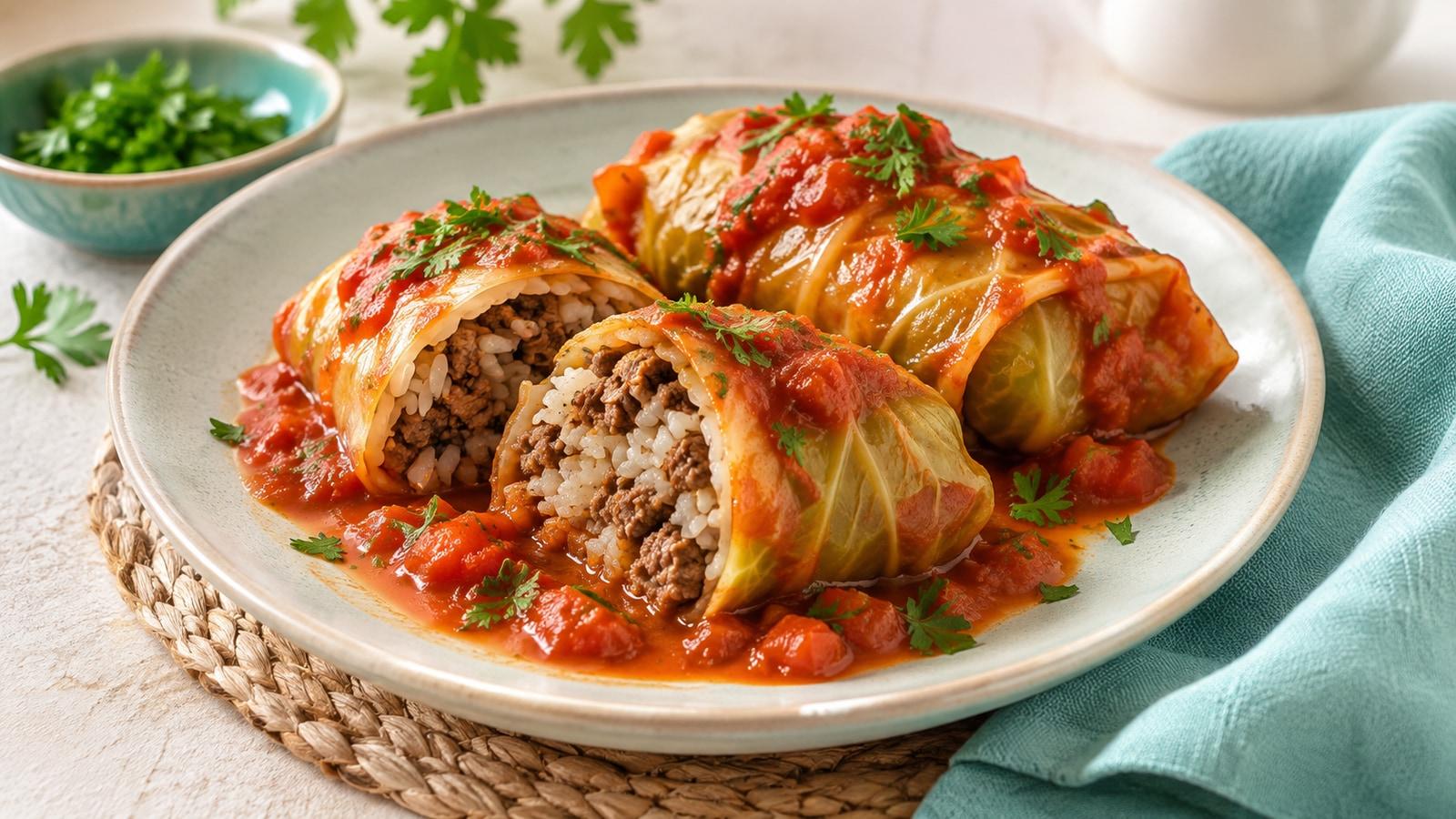
Stuffed cabbage rolls bring a savory beef-and-rice filling together with tender cabbage and tomato sauce. They take a little more assembly than a skillet meal, but the rolling can be done at a relaxed pace, and the finished dish is easy to portion.
This home version uses cooked rice and a simple tomato sauce. The filling contains raw ground beef, so keep it chilled while you work and check the center of the rolls with a food thermometer.
Ingredients
Makes: about 4 servings, depending on leaf size
Prep: about 25 minutes
Cook: about 40–50 minutes
- 8 large cabbage leaves, plus extras if needed
- 1 pound lean ground beef
- 1 cup cooked rice
- ½ small onion, finely diced
- 1 small carrot, finely grated
- 1 teaspoon dried oregano
- 2 cups tomato sauce
- ¼–½ cup water, as needed
- Black pepper and chopped parsley, optional
Cook the rice ahead, cool and refrigerate it within one hour, and use it within 24 hours. Keep the rice chilled until mixing. Baking reheats the rice, so make only the rolls you plan to eat immediately and do not save them for another reheat. Cabbage leaves vary in size; torn leaves can line the dish or patch a roll.
Soften the cabbage
- Wash your hands and rinse the cabbage and carrot under running water. Carefully separate the leaves, keeping them as whole as possible.
- Bring a large pot of water to a boil. Add the leaves in batches and cook briefly until flexible enough to fold. Lift them out with clean tongs and let them cool enough to handle.
- Trim the thickest part of each central rib if needed, taking care not to cut through the leaf. Set the leaves on a clean surface.
Mix, roll, and bake
Heat the oven to 375°F. In a bowl, gently mix ground beef, cooked rice, onion, carrot, oregano, and pepper. Don’t taste the raw mixture. Spread a thin layer of tomato sauce in a baking dish.
Place a modest spoonful of filling near the base of a cabbage leaf. Fold the lower edge over it, tuck in the sides, and roll toward the tip. Place seam-side down in the dish. Repeat, arranging the rolls close together.
Cover with the remaining tomato sauce and enough water to keep the dish moist. Cover the dish with foil and bake for about 40–50 minutes, checking the center of the thickest rolls. Because the filling includes previously cooked rice, heat the rolls to 165°F. Let them rest briefly before serving.
Wash your hands, bowl, board, and utensils after handling raw beef. Use a clean plate and serving spoon for the cooked rolls.
Keep the rolls together
Cabbage leaves need to be flexible but not falling apart. If one cracks when folded, return it to the hot water briefly. A thick rib can be shaved down carefully with a knife, leaving the rest of the leaf intact.
Use less filling than the leaf appears to hold. It’s easier to tuck in the sides when there’s a clear border. If a leaf tears, overlap another piece over the opening or place the damaged roll seam-side down under the sauce.
The rolls can be different sizes. Keep similar-sized ones together if possible and check the largest with a thermometer. A small piece may heat through before a thick one.
A sauce that stays moist
Tomato sauces vary in thickness. Add a little water if the sauce is too thick to spread around the rolls. Covering the dish helps retain moisture; uncover it for the final few minutes if you want a thicker top.
Onion and carrot add flavor to the filling. Dice or grate them finely so they soften during baking. Oregano is a simple choice, but parsley or a pinch of thyme can be used instead. Keep hot sauce at the table for anyone who wants it.
Beef provides protein. Rice adds a grain, and cabbage and carrot add vegetables. Serve a roll with additional vegetables, potatoes, or bread if you want a larger plate.
Food-safety details
Ground beef on its own should reach 160°F. These rolls use cooked rice that may have been chilled, so the recipe calls for a 165°F center as the filling is reheated. Insert the thermometer into the middle of the thickest roll, avoiding the baking dish.
Keep raw meat separate from ready-to-eat salad and bread. Wash hands and equipment with soap and water after contact. Assemble the rolls just before baking and cook them thoroughly; keep the rice and beef refrigerated until you are ready to mix them.
Leftovers
Because the rice has already been chilled and reheated in the oven, make only what you plan to eat at this meal. Do not save the baked rolls for another reheat. If cooking for fewer people, reduce the recipe and keep uncooked beef separate and refrigerated according to its label.
Extra filling can be cooked separately to the appropriate temperature and served over rice or a baked potato. Don’t use a spoon that touched raw beef to serve the cooked dish unless it has been washed.
The most useful steps are softening the leaves, using a modest amount of filling, and checking the thickest roll. The shapes don’t need to match for the dish to taste good.