










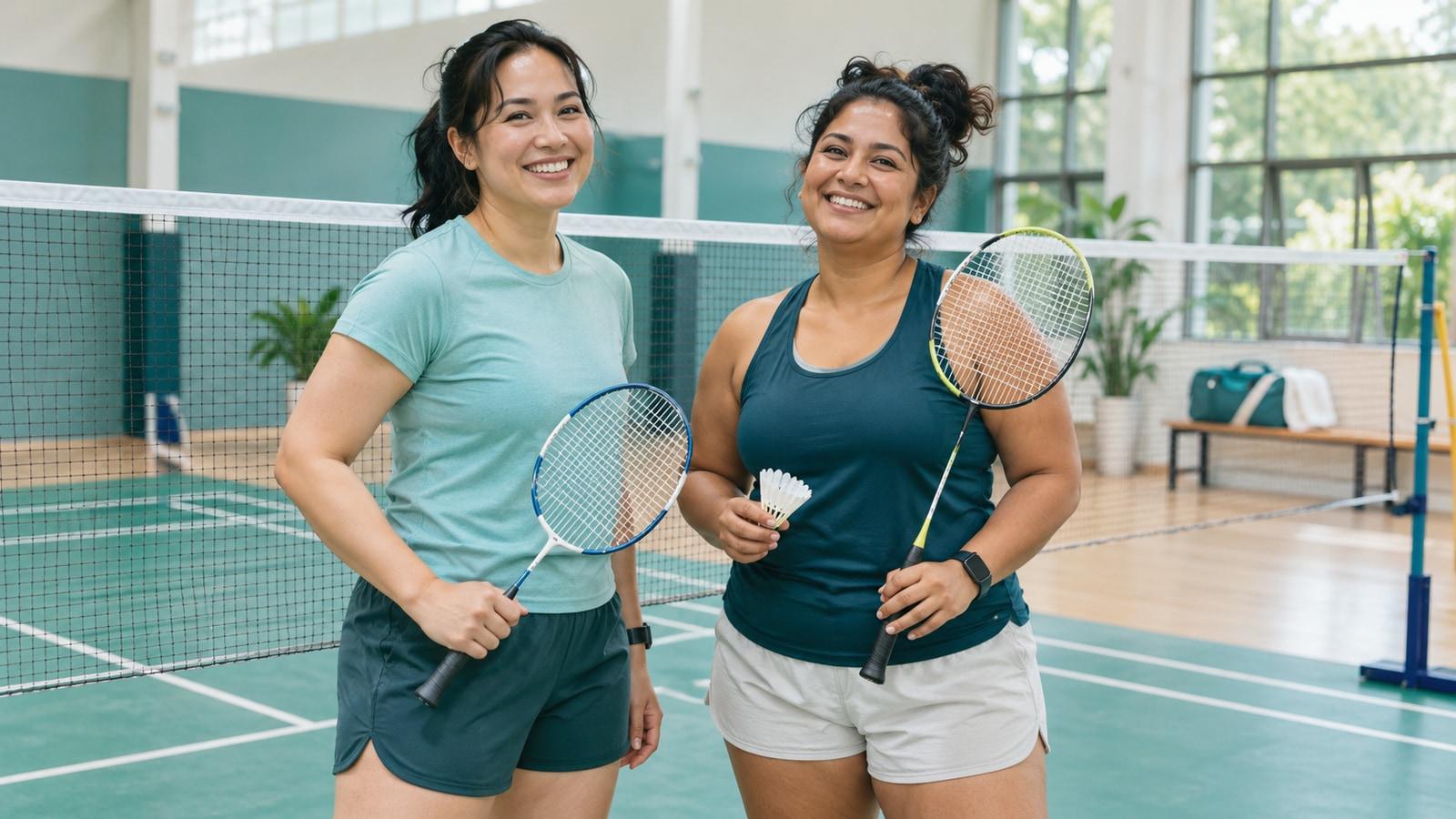
Badminton can begin with a very modest goal: keep the shuttle moving back and forth a few times. You don’t need a powerful smash, a perfect serve, or a detailed knowledge of the score to enjoy your first session.
The game can be quick, though, especially when a shuttle heads in a direction you didn’t expect. Starting with a relaxed rally and a little space to move is a good way to learn without turning the first outing into a sprint.
Find a welcoming place to play
Community centers, recreation programs, and local clubs may offer casual play or beginner instruction. Ask whether equipment is available to borrow and whether the session is designed for people who are new to the game. If you need an accessible entrance, court surface, seating, or an adaptation to participate, ask the organizer about those details before you go.
Badminton can also be played casually outdoors with a friend and enough clear space. Wind changes how the shuttle travels, so an indoor court may make learning the first few shots easier. Either way, check the area for bags, loose objects, wet patches, or people crossing behind you before play begins.
Wear comfortable clothing and shoes that feel secure for the surface. If you’re using a gym court, check whether it has footwear requirements. Bring water and plan for breaks; there’s no need to play continuously to make the session worthwhile.
Get to know the racket and shuttle
A badminton racket is light and has a long handle. The shuttle—the small feathered or plastic object—is struck over a net. For a first rally, ask someone to show you a comfortable grip and how to hold the racket without squeezing it constantly. A coach can help you adjust the grip for different shots as you learn.
Stand far enough from your partner that each of you has room to swing. Start by gently tapping the shuttle back and forth, even if it doesn’t cross the net every time. You can practice with a shorter distance or without keeping score. Try to send the shuttle somewhere your partner can reach rather than aiming for a winner.
If coordinating the racket and shuttle feels tricky, slow things down. Let the shuttle fall, pick it up, and try again. A few comfortable exchanges are a better introduction than rushing to hit every shot at full speed.
Move at a pace you can control
Before playing, ease into movement with a few minutes of comfortable walking or gentle movement that suits you. Once you start, use a smaller playing area if you and your partner agree. You can let a difficult shot go rather than lunging for it, especially while you’re learning the surface and your own range of movement.
When playing doubles, communicate with your partner about who will take a shuttle headed between you. Calling for the shot can help avoid both people moving into the same space. Leave room between courts, and wait for another group to finish a rally before retrieving a stray shuttle from their area.
If you use a wheelchair or another mobility aid, ask the organizer about court access and ways to adapt the session. You can discuss the space, rules, and equipment that will make play workable for you; don’t assume you have to move in the same way as another player.
Keep the first game simple
You can take turns starting a rally and agree on a small score, or skip scoring altogether. The formal game has specific court lines and serving rules, but those can come later. A beginner class can explain them when you’re ready.
One approachable practice is to count consecutive exchanges together. If you manage three, try for four; if the shuttle lands, start again. The shared goal encourages both players to make a return possible. Change partners or take a break whenever you need one.
You might notice that short rallies still get your breathing going. Pause, have a drink, and resume when comfortable. Stop if you experience pain, dizziness, chest discomfort, or unusual shortness of breath, and seek appropriate medical help for severe or persistent symptoms. If you have an injury or have been given movement restrictions, ask your care team how the activity fits your situation.
Make it something you want to repeat
Afterward, ask yourself what made the session enjoyable. Was the court easy to reach? Did your partner give you time to learn? Would a shorter game or an introductory lesson help next time? Those details matter more than the score of your first match.
Badminton can be a social way to add movement to a weight-management routine, but you don’t have to chase a calorie target or play at someone else’s speed. If you take a GLP-1 medication and feel unwell on the day, rest or reschedule; speak with your care team about symptoms that persist or make eating and drinking difficult.
Start with a racket that feels comfortable, a partner who is happy to practice, and a few easy rallies. The rest of the game can arrive a little at a time.