










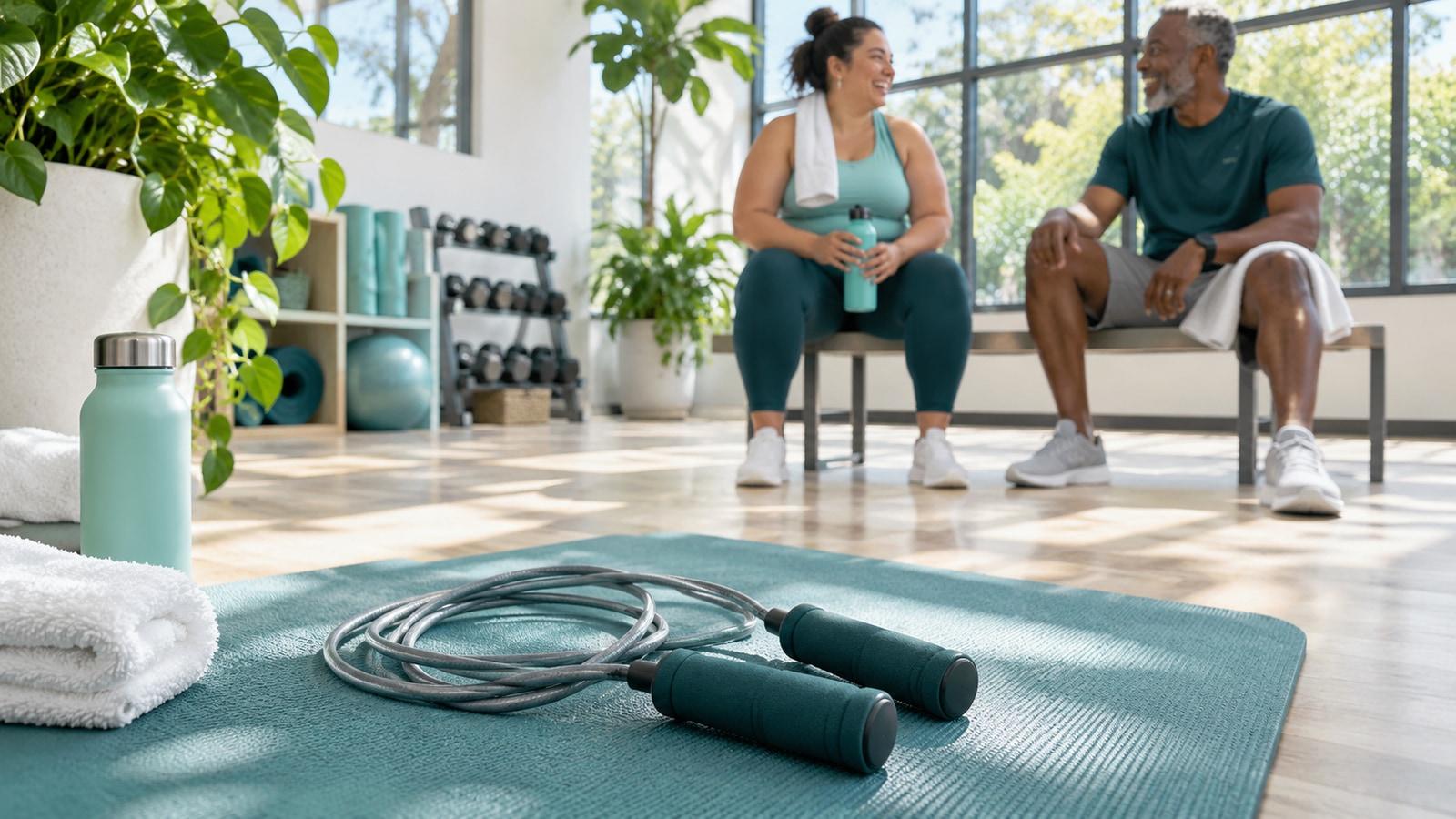
The first time you pick up a jump rope as an adult, you might clear it twice and then spend a minute untangling it from your shoes. That’s a normal beginning. You’re learning a rhythm, not taking an exam, and there’s no minimum streak that makes a session count.
Jumping is a higher-impact activity, so it won’t be the right choice for everyone. If it suits you, start with a few easy attempts and plenty of rest. If it doesn’t, you can use a lower-impact activity and still build an enjoyable movement routine.
Make space before you swing
Choose a flat, dry surface with room around and above you. Check for furniture, ceiling lights, cords, and people or pets who might wander into the rope’s path. A gym floor or another suitable exercise surface may feel more forgiving than hard concrete. Avoid slippery floors and uneven ground.
Wear shoes that fit securely and feel comfortable for jumping. You don’t need to buy the most expensive pair, but loose footwear or a sole that catches can make the first few tries harder. If you’re in a shared space, make sure the rope won’t reach anyone nearby.
Look at the rope as well. Handles should feel easy to hold, and the rope should turn without tangling around them. Many ropes can be adjusted. Ask an instructor or follow the maker’s directions if it feels so long that it keeps slapping the floor far ahead of you or so short that you have to hunch to clear it.
Learn the turn without jumping first
Hold a handle in each hand and practice turning the rope to one side of your body. Listen to its rhythm as it touches the floor. Then try a few gentle turns while stepping over it rather than jumping. This gives your hands and feet a chance to coordinate without asking you to clear the rope repeatedly.
When you’re ready, try one small jump as the rope approaches your feet. Land softly with your knees relaxed, then stop and reset. If you clear it once, you’ve practiced the timing. If you catch the rope, step out of it and try again; there’s no reason to rush.
Keep the movement small. You don’t need to pull your knees high or jump as high as possible. A coach can help you find a comfortable hand position and rhythm. If your shoulders are doing huge circles or your wrists feel strained, slow down and ask for a demonstration.
Use short attempts instead of a streak
Try a few turns, put the rope down, and take a break. You might repeat that several times if you feel comfortable. Counting attempts rather than consecutive jumps can keep the session from becoming an exercise in frustration.
For example, a first practice could include a minute of comfortable walking, several attempts at a single jump, and a rest. Repeat only if you feel good. That’s an example of a gentle introduction, not a target you must meet. Some people will prefer even less, and others may already be familiar with the movement.
Pay attention to how your feet, ankles, knees, and hips feel during and after practice. If you develop pain, stop. A clinician or physical therapist can help if discomfort persists or if you have an injury, joint concern, balance issue, pelvic-floor symptom, or another condition that makes jumping uncertain.
You can practice the rhythm without impact
If jumping isn’t comfortable, put the rope aside and turn your wrists while marching or stepping in place. You can also practice moving the rope beside your body without trying to jump over it. These options won’t be identical to jumping rope, but they let you explore the timing without the same landing.
Walking, cycling, seated activity, or another form of movement may suit you better. You don’t need to earn a lower-impact option by first trying jumps that hurt. Choose an activity you can do safely and want to repeat.
If balance is a concern, ask a professional about a suitable setup. Turning a rope around your feet while holding a support may not be practical or safe; an alternative without a rope may be a better choice.
Know when to stop
Pause for sharp pain, dizziness, chest discomfort, or unusual shortness of breath. Seek appropriate medical help for severe or persistent symptoms. If a clinician has given you exercise restrictions, follow those rather than a generic beginner routine.
If you take a GLP-1 medication and feel unwell, rest or choose a gentler day. Contact your care team about symptoms that persist or make it difficult to eat and drink. Jump-rope practice isn’t a way to compensate for a meal, and it doesn’t need to be tied to a calorie target.
Keep the next session easy to start
Store the rope where it won’t become a tripping hazard, and make a note of the space and rope length that worked. Next time you can repeat the same short practice before deciding whether to add a few more turns.
Some days the rope will clear your feet more often than others. That’s part of learning. A relaxed five-minute practice with pauses can be more inviting than chasing a number that makes you dread picking the rope up again.