










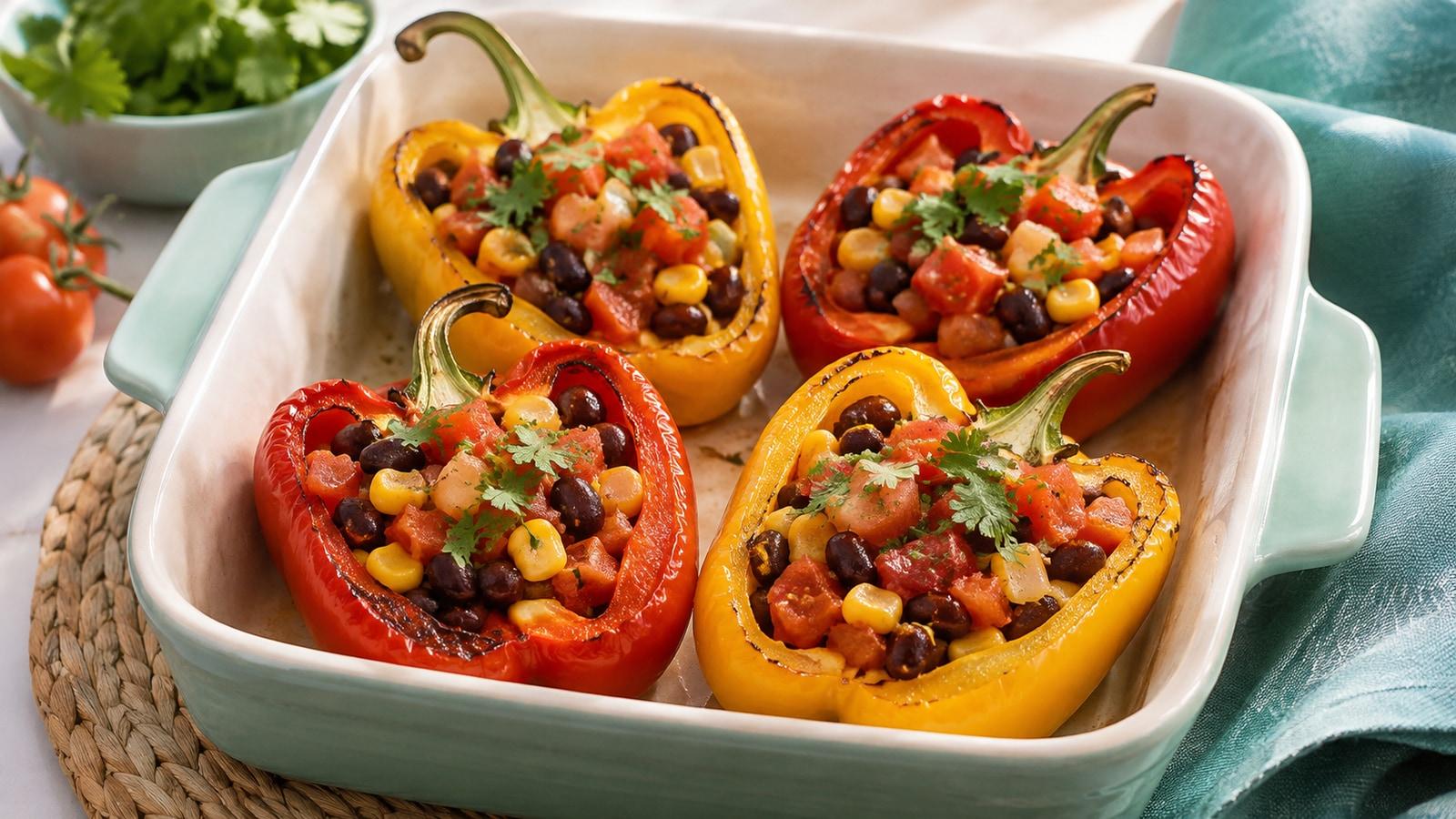
Stuffed peppers make a convenient individual serving: each half holds a warm mixture of black beans, corn, and tomato. You can add rice or cheese if you like, but the basic filling is simple enough to assemble from pantry and freezer ingredients.
The peppers take longer to soften than the filling takes to mix, so give them a head start in the oven. Then fill them, bake until heated through, and add any cool toppings at the table.
Ingredients
Makes: 4 pepper halves
Prep: about 15 minutes
Bake: about 30–40 minutes
- 2 large bell peppers
- 1 can (15 ounces) black beans, drained and rinsed
- 1 cup corn, prepared according to its package if frozen
- ½ cup diced tomatoes or tomato sauce
- ½ teaspoon ground cumin
- ¼ teaspoon garlic powder, optional
- ½ cup cooked rice, optional
- ¼ cup shredded cheddar, optional
- Optional: plain yogurt, cilantro, or lime for serving
Choose peppers that can sit reasonably flat when cut in half. If adding rice and saving portions, use freshly cooked rice and assemble and bake immediately. Previously chilled rice should have been cooled within one hour and kept cold for no more than 24 hours; bake only what you plan to eat now, because rice should be reheated only once. Keep cheese chilled until needed.
Bake the peppers
- Heat the oven to 400°F. Wash your hands and rinse the peppers under running water. Cut each pepper in half from stem to base and remove the seeds and pale inner ribs.
- Place the halves cut-side up in a baking dish. Bake for about 10–15 minutes to begin softening them.
- Meanwhile, mix the drained beans, prepared corn, tomatoes, cumin, and garlic powder. Stir in the optional cooked rice.
- Remove the dish carefully and spoon the filling into the pepper halves. Add the optional cheese on top.
- Return the dish to the oven and bake until the peppers are tender and the filling reaches 165°F throughout, checking with a food thermometer. Begin checking after about 20 minutes, but allow more time if needed.
- Let the peppers cool briefly before serving. Add yogurt, cilantro, or lime at the table if you like.
The size of the peppers and the amount of filling affect the baking time. If the top browns before the center is hot, cover the dish loosely with foil and continue baking. A thermometer in the center of the filling is more useful than judging only by the cheese.
Keep the filling flexible
Black beans and corn have different textures, so mix gently if you want the beans to keep their shape. For a softer filling, mash some of the beans with a fork before adding the tomatoes. If the mixture seems dry, add a spoonful of tomato sauce; if it’s very wet, drain some tomato liquid first.
Rice is optional. It can make the filling more substantial, but it also absorbs liquid and takes up space in the pepper. Start with a small amount. Extra filling can be baked in a separate small dish rather than piled so high that it falls out.
Frozen corn often comes with cooking instructions. Follow the package before mixing it into the filling rather than assuming it can be eaten straight from the freezer. Canned corn can be drained; choose the form that is convenient and suits your preferences.
Choose toppings for each person
Cheddar melts over the filling and adds a savory finish. A spoonful of plain yogurt gives a cool contrast after baking. Both contain milk, so use suitable alternatives or leave them off if you avoid dairy. Lime and cilantro can be added separately for anyone who enjoys them.
Black beans contribute plant protein and fiber. If you don’t eat beans often, begin with a smaller pepper half or a few spoonfuls of filling and see how it feels. A side of fruit, salad, or another protein can make the plate larger when you want more.
If your appetite is smaller while taking a GLP-1 medication, choose an amount that feels manageable. Ongoing nausea or difficulty eating and drinking is a reason to contact your care team; this recipe doesn’t treat those symptoms.
Cool and reheat leftovers
For peppers without rice, refrigerate leftovers promptly in shallow covered containers and use within three to four days. For peppers assembled and baked immediately with freshly cooked rice, cool and refrigerate within one hour of cooking the rice, use within 24 hours, and reheat only once. If the rice was refrigerated before baking, eat those peppers promptly rather than saving them for another reheat.
Reheat the filling to 165°F, checking the center. In a microwave, cover and rotate or stir the filling as needed for even heating, then allow the recommended standing time before checking. Add cold yogurt or herbs afterward.
Rice-free peppers can be frozen for later, though they may be softer after thawing. Label the container and thaw safely in the refrigerator or reheat from frozen using an appropriate method.
This is a good recipe for a table where everyone wants something a little different. Keep the filling mild, offer toppings separately, and let each person build a pepper they’ll enjoy.