










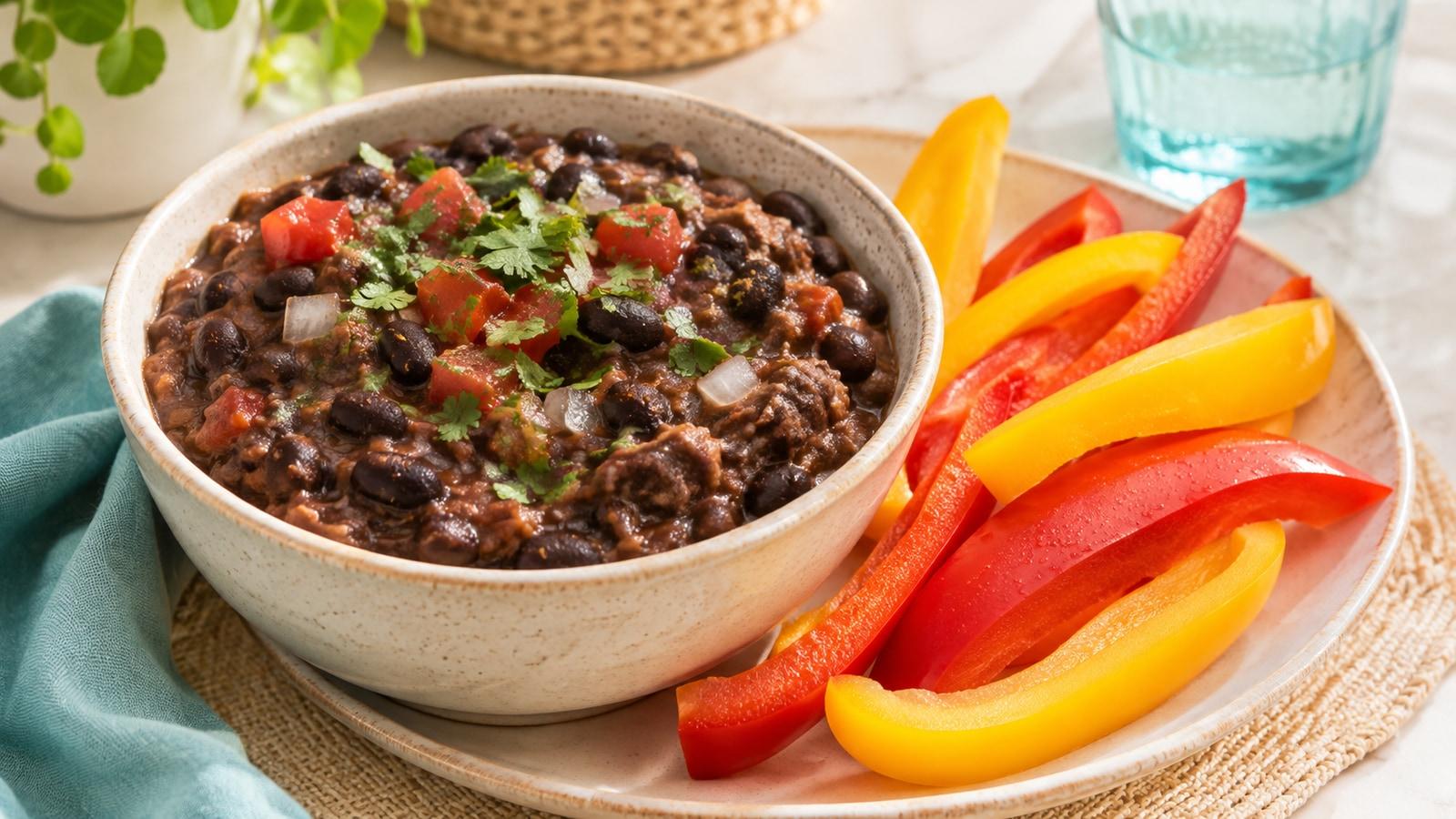
When a cold snack doesn't sound appealing, a warm bowl of black beans can be just as easy. This dip starts with a little onion, cumin, and tomato in a skillet. Mash some of the beans into the sauce, leave the rest whole, and scoop it up with crisp bell pepper strips.
The recipe makes enough for a few snacks or a casual lunch. If you prefer, set out a small bowl with your portion and put the rest away for another day.
What you'll need
Makes: about 3–4 snack portions
Prep: about 10 minutes
Cook: about 10–15 minutes
- 1 teaspoon olive oil
- ¼ small onion, finely diced
- ½ teaspoon ground cumin
- ½ cup canned crushed or diced tomatoes
- 1 can (15 ounces) black beans, drained and rinsed
- 2–4 tablespoons water, as needed
- 2 bell peppers
- Lime wedges or chopped cilantro, optional
- Toasted corn tortillas or crackers, optional
Lower-sodium beans and tomatoes let you decide how much seasoning to add. Bell peppers of any color work; choose whichever ones you like eating raw.
Warm and mash the beans
- Wash your hands. Rinse the bell peppers, lime, and cilantro under running water. Cut the peppers into wide strips and arrange them on a clean plate.
- Warm the oil in a small skillet over medium heat. Add the diced onion and cook until softened, stirring so it doesn't burn.
- Stir in the cumin briefly, then add the tomatoes and drained beans. Add a couple of tablespoons of water and bring the mixture to a gentle simmer.
- Simmer for 5–8 minutes, stirring occasionally, until the beans are hot and the tomato sauce has thickened a little. Mash roughly half the beans with the back of a spoon. Add a little water if the mixture sticks or becomes too thick.
- Spoon the warm dip into a serving bowl. Add a squeeze of lime or chopped cilantro if you like, and serve with the pepper strips.
For a smoother dip, mash more of the beans. For a chunkier one, press only a few against the side of the pan. Let the mixture cool enough to eat comfortably before dipping.
Get the texture right
The tomatoes provide moisture as well as flavor. If you use diced tomatoes and want a smoother dip, break up the pieces with the spoon as they simmer. Crushed tomatoes make a more even sauce. Start with the listed amount and add water gradually; too much liquid makes the dip harder to scoop.
Wide pepper strips are easier to hold than thin ones. Cut away the stem, seeds, and pale ribs, then use a spoon to load each strip if it bends. A sturdy cracker or a piece of toasted tortilla works too.
For a softer snack, roast the pepper pieces until tender and serve them alongside the warm beans. Keep the raw strips on a clean plate until you're ready to eat, and use separate utensils for any food that needs further cooking.
Change the flavor at the table
Cumin gives the dip a warm, earthy flavor without necessarily making it spicy. Smoked paprika adds a different kind of warmth; begin with a pinch. If you like heat, offer hot sauce separately so everyone can decide how much to use.
Lime tastes brightest when added after cooking. A little cilantro or chopped scallion can also go on top. If acidic foods aren't appealing to you, skip the lime and use a little extra water to loosen the dip instead.
A spoonful of plain yogurt or a little grated cheese can make a creamy topping if dairy works for you. Both contain milk, a common allergen. Check crackers and other packaged foods for wheat or any ingredients that matter to the person eating.
Make it a snack or a meal
Black beans provide plant protein and fiber. The peppers add a fresh crunch, while toast or tortillas can make the plate more substantial. You don't have to settle on a perfect serving size before you start: put some in a bowl and add more if you're still hungry.
If you're getting used to eating beans, try a smaller portion and see what feels comfortable. Rinsing canned beans removes some of their packing liquid. Products differ in sodium, so their labels are useful when you're choosing between cans.
A warm dip can also become a quick lunch. Spoon it over rice, tuck it into a tortilla, or add it to a baked potato. Refrigerated rice should have been cooled within one hour, kept cold for no more than 24 hours, and reheated only once, to 165°F.
Save some for later
Transfer extra dip to a shallow covered container and refrigerate promptly, within two hours of cooking or one hour if the room or outdoor temperature is above 90°F. Store cut peppers separately in the refrigerator. Use clean utensils when taking out a portion.
Reheat the dip to 165°F, stirring so it warms evenly. A splash of water can loosen it after refrigeration. For lunch away from home, pack the cold dip and peppers in an insulated bag with a cold pack, then heat the dip when you're ready to eat.
This is a handy one-pan use for a can of beans. Keep the seasonings mild for the first batch, then adjust your own bowl with lime, herbs, or heat.