










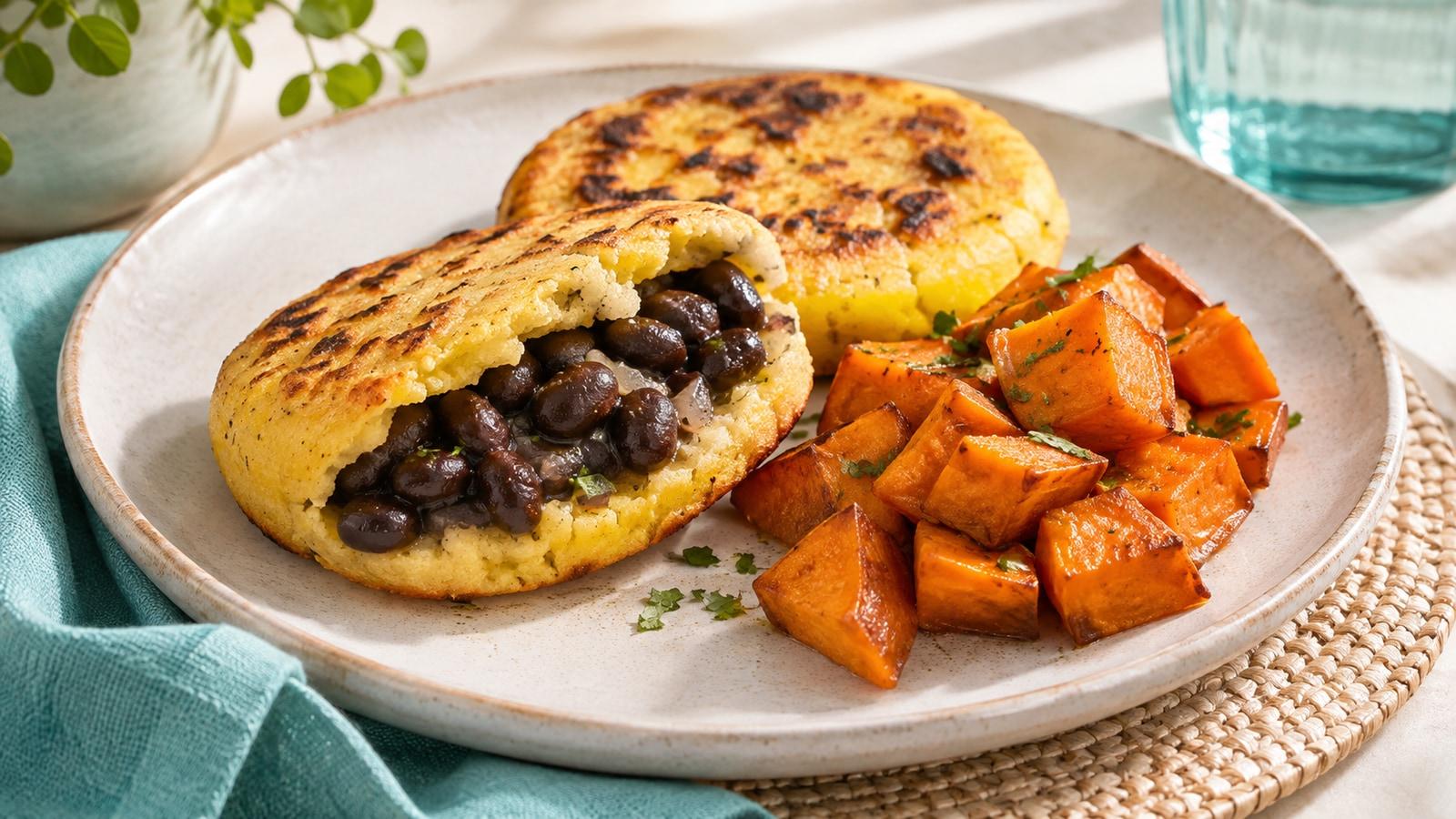
Pupusas are thick, filled corn cakes associated with El Salvador, and there are many ways to make and serve them. This home version uses a black bean filling with cooked sweet potato served alongside. It’s a starting point for practicing the shape, not a substitute for the family recipes and techniques that make the dish special to many people.
The first one might leak a little filling. That’s normal when you’re learning. Keep the filling modest, work with damp hands, and let the corn dough cook through on both sides.
Ingredients
Makes: about 8 small pupusas
Prep: about 25 minutes
Cook: about 25 minutes, plus sweet potato cooking time
- 2 cups masa harina for tortillas or pupusas
- Warm water, according to the masa package, starting with about 1½ cups
- 1 can (15 ounces) black beans, drained and rinsed
- ½ teaspoon ground cumin, optional
- 1 medium sweet potato, peeled and diced
- 1–2 teaspoons neutral oil for the pan
- Shredded cabbage and lime, optional for serving
Masa harina is a specially treated corn flour. It isn’t the same as ordinary cornmeal, so use a product intended for corn tortillas or pupusas and follow its hydration instructions. Different brands absorb water differently.
Prepare the sides and filling
- Wash your hands and rinse the sweet potato and any cabbage or lime under running water. Peel and dice the sweet potato.
- Put the sweet potato in a pot of water and simmer until tender. Drain and keep warm. Alternatively, cook it ahead and refrigerate it promptly; reheat it to 165°F before serving.
- Mash the drained beans with cumin. They should be thick enough to hold a small mound. If they are dry, add water a teaspoon at a time; if very wet, warm them briefly in a skillet to reduce excess liquid.
Mix and shape
Put the masa harina in a bowl and add warm water gradually, following the package. Mix until the dough feels soft and pliable, then cover and rest it as directed. If the edges crack badly when flattened, work in a little more water. If it sticks heavily to your hands, let it rest or add a small amount of masa.
Divide the dough into eight portions. With damp hands, flatten one portion into a thick round and make a shallow cup in the center. Add about a tablespoon of beans. Bring the edges up around the filling, pinch closed, and gently flatten into a thick cake. Repeat with the rest.
Warm a lightly oiled skillet or griddle over medium heat. Cook the cakes in batches, turning once or twice, until both sides have browned spots and the masa is cooked through, about 4–6 minutes per side depending on thickness. Check the center of one before serving. Use the masa package instructions as your guide, and don’t taste raw dough.
Serve with the cooked sweet potato and, if you like, cabbage and lime. Any extra beans can go on the side.
The feel of the dough
Soft dough is easier to seal than dry dough. Add water gradually and give the masa time to absorb it before deciding whether it needs more. Damp hands help prevent sticking, but dripping-wet hands can make the surface slippery and difficult to close.
If filling breaks through, press a small piece of dough over the opening and smooth it gently. A little bean showing at the edge won’t ruin dinner. Smaller cakes are easier to manage while you learn; once you know the dough, you can adjust their size.
Keep uncooked dough covered while shaping the rest so it doesn’t dry out. Use a clean surface and don’t sample the raw mixture. Corn flour, like other flour, should be cooked before eating.
A note about the filling
Black beans provide plant protein and fiber. Mash them enough to keep the filling together, but leave a little texture if you prefer. Rinsing canned beans removes some packing liquid, giving you more control over the thickness and seasoning.
This version serves sweet potato on the side rather than packing it inside. That keeps the filling simple and lets each person decide how much to add. If you want to experiment later, try a small amount of mashed cooked sweet potato with the beans, but keep the mixture thick enough to seal.
Some pupusas include cheese. If you add it, remember that milk is a common allergen and check the ingredients for the person eating. Masa is made from corn, but packaged products can vary; if avoiding gluten, select a suitable labeled product and check for cross-contact.
Serve and store
Freshly cooked pupusas are easiest to enjoy while warm. Cabbage adds crunch and lime adds brightness. A simple cabbage salad can be served alongside; use clean utensils and refrigerate cut vegetables promptly.
Refrigerate leftover pupusas, beans, and sweet potato in shallow containers within two hours, or within one hour above 90°F. Keep them at 40°F or below and use within three to four days. If serving rice, cool and refrigerate it within one hour, use it within 24 hours, and reheat it only once. Reheat them to 165°F, checking the center of the filled cake. A skillet can warm the outside, but use a thermometer to make sure the filling is hot too.
If you make the dough ahead, follow the masa package’s storage guidance and keep perishable fillings chilled. The next day, extra beans and sweet potato can become a bowl with greens or rice.
Take your time with the first few cakes. The technique becomes more comfortable once you’ve felt how much water the masa needs and how little filling is enough.