










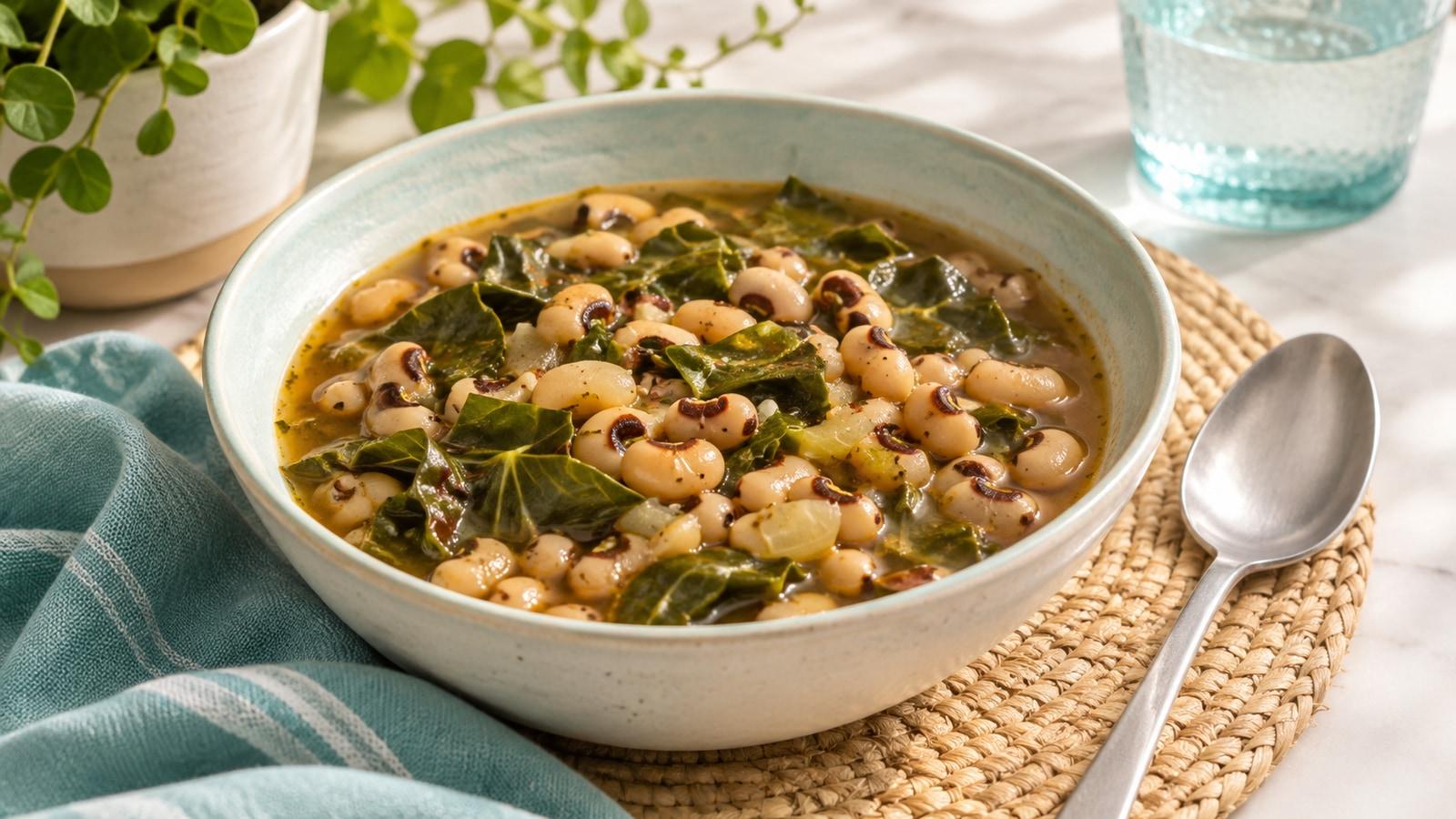
A pot of black-eyed peas and collard greens is a comforting way to turn a few everyday ingredients into dinner. This version uses canned peas for convenience and simmers the greens until tender in a lightly seasoned broth. A little vinegar at the table adds brightness, but the bowl is good without it.
Black-eyed peas are enjoyed in many dishes and traditions. There are countless ways to season a pot; this is one simple meatless version, with room to use the flavors your household likes.
Ingredients
Makes: about 4 servings
Prep: about 15 minutes
Cook: about 30–40 minutes
- 1 tablespoon olive oil
- 1 small onion, diced
- 1 celery stalk, diced
- 2 garlic cloves, minced
- 1 teaspoon smoked paprika
- 1 bunch collard greens, about 6 cups chopped
- 2 cans (15 ounces each) black-eyed peas, drained and rinsed
- 3 cups lower-sodium vegetable broth, plus more as needed
- 1 can (14–15 ounces) diced tomatoes, optional
- 1–2 teaspoons cider vinegar or lemon juice, optional
- Black pepper to taste
If you use dried black-eyed peas, cook them separately according to the package directions before making this stew. The short simmer here assumes the peas are already cooked. Canned peas vary in softness, so stir gently if yours are especially tender.
Make the pot
- Wash your hands and rinse the collards and celery under running water. Remove the thickest collard stems. Stack the leaves, slice them into strips, and cut long strips into manageable pieces.
- Warm the oil in a large pot over medium heat. Add onion and celery and cook until softened, about 5 minutes. Add garlic and paprika and stir briefly.
- Add the collards and broth. Bring to a boil, then lower the heat, cover, and simmer for about 15–20 minutes. Stir occasionally and add a little broth or water if the pot looks dry.
- Add the cooked black-eyed peas and tomatoes, if using. Simmer for another 10 minutes or until the greens are as tender as you like and the peas are hot.
- Taste and finish with a small splash of vinegar or lemon, if desired. Serve in bowls with pepper at the table.
Getting collards tender
Collard greens have sturdy leaves. Thin strips cook more evenly and are easier to eat with a spoon. Mature leaves can take longer than young ones, so taste a piece rather than relying only on the clock. If they’re still too firm, cover the pot and give them a little more time.
The stems are edible, but they take longer to soften. You can discard the thickest parts or chop them finely and add them with the onion and celery. The leaves will reduce as they cook, leaving more room in the pot for the peas.
For a brothier stew, add another cup of broth or water. For a thicker one, mash a small scoop of peas against the side of the pot and stir them back in. If you add tomatoes, the finished pot will be brighter and more acidic; leave them out for a gentler broth.
Season it your way
Smoked paprika adds a smoky flavor without requiring meat. A pinch of thyme or a bay leaf can add another savory note; remove the bay leaf before serving. If you like heat, pass hot sauce separately so everyone can choose.
Add vinegar gradually. A teaspoon may be enough for the whole pot, or you may prefer a few drops in your own bowl. Too much acid can overpower the greens and peas, while a little can lift a rich-tasting broth.
Lower-sodium broth and canned peas give you more control over salt. Rinsing the peas removes some of their packing liquid. Taste at the end, especially if you’ve added a salty broth or seasoning blend.
Make a meal of it
Black-eyed peas provide plant protein and fiber, while collards add greens to the bowl. Slice thicker stems finely and give them a head start if you want them as tender as the leaves. Serve extra broth separately for anyone who prefers a looser stew.
Serve the stew with rice or cornbread, or add a side of roasted sweet potato. You can also spoon it over a baked potato. The broth is worth keeping: use a spoon, add a piece of bread, or serve it as a soupier bowl.
For a larger appetite, add a side you enjoy or serve a larger portion. For a softer texture, cook the collards longer and mash some of the peas. The idea is to make the bowl fit the person eating it, not to force everyone into an identical portion.
Save a serving
Divide leftovers into shallow containers and refrigerate within two hours, or within one hour above 90°F. Keep the fridge at 40°F or below and use the stew within three to four days. Cool and refrigerate any cooked rice within one hour, use it within 24 hours, and reheat it only once. The greens and peas may absorb broth as they sit, so add a splash of water when reheating if needed. Bring the stew back to a rolling boil, stirring so it heats evenly, and add fresh vinegar or lemon afterward.
If you freeze portions, leave room for expansion and label the container. Thaw in the refrigerator before reheating. Keep any bread or other crisp side separate until serving.
This is a flexible pot: change the greens, adjust the seasoning, or add a side. Just give the collards enough time to become tender and keep the black-eyed peas gentle enough to retain their shape.