










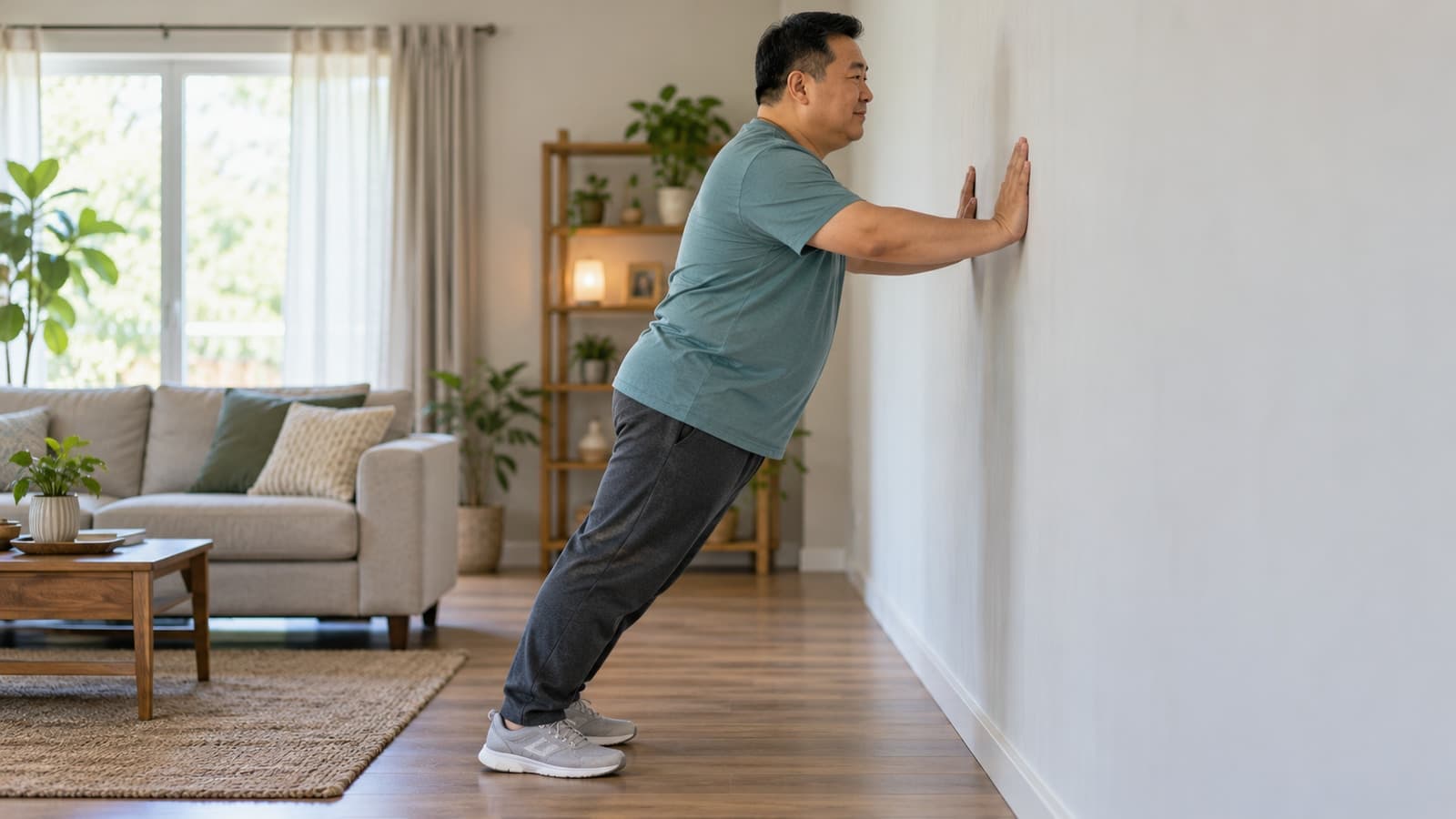
Strength work can begin with your own bodyweight and a small amount of space. You don’t have to buy a set of equipment before finding out which movements feel comfortable. During GLP-1 treatment, this can be one way to support everyday function alongside food, recovery, and your care plan.
Make the room work for you
Clear a level area, wear secure footwear if that helps you, and use stable furniture. A chair should stay put rather than roll or slide. Keep pets, loose rugs, and other trip hazards out of the movement area.
If getting to the floor is difficult, choose standing or seated options. There’s no prize for making the setup harder than it needs to be.
Choose a few adaptable movements
Depending on your ability, a wall push-up, a supported sit-to-stand from a chair, or a comfortable heel raise might be options. These are examples to adapt, not a routine that suits everyone. A physical therapist or qualified trainer can help if you have pain, balance concerns, or limited mobility.
Practice slowly enough to notice what you’re doing. Breathe normally and use a range of motion you can control. Stop if a movement produces sharp pain, dizziness, or an unusual symptom.
Start below your maximum
A first session can be brief. Choose a small amount that leaves room to recover, rather than seeing how many repetitions you can force out. Notice how you feel later that day and the next day.
Once a movement feels familiar and comfortable, you can gradually change one part: a little more time, a few more repetitions, or a modestly harder version. You don’t need to increase all three together. Leave recovery time between demanding sessions for the same muscles.
Include the rest of the day
Strength work isn’t a substitute for eating enough or addressing medication symptoms. If you’re vomiting, lightheaded, or struggling to drink, deal with that before exercising. Ask for a personal plan if your health conditions or other medicines affect activity.
Keep one useful note after each session: what you did and how it felt. Over time, easier chair rises or more comfortable everyday lifting may tell you something a scale can’t.