










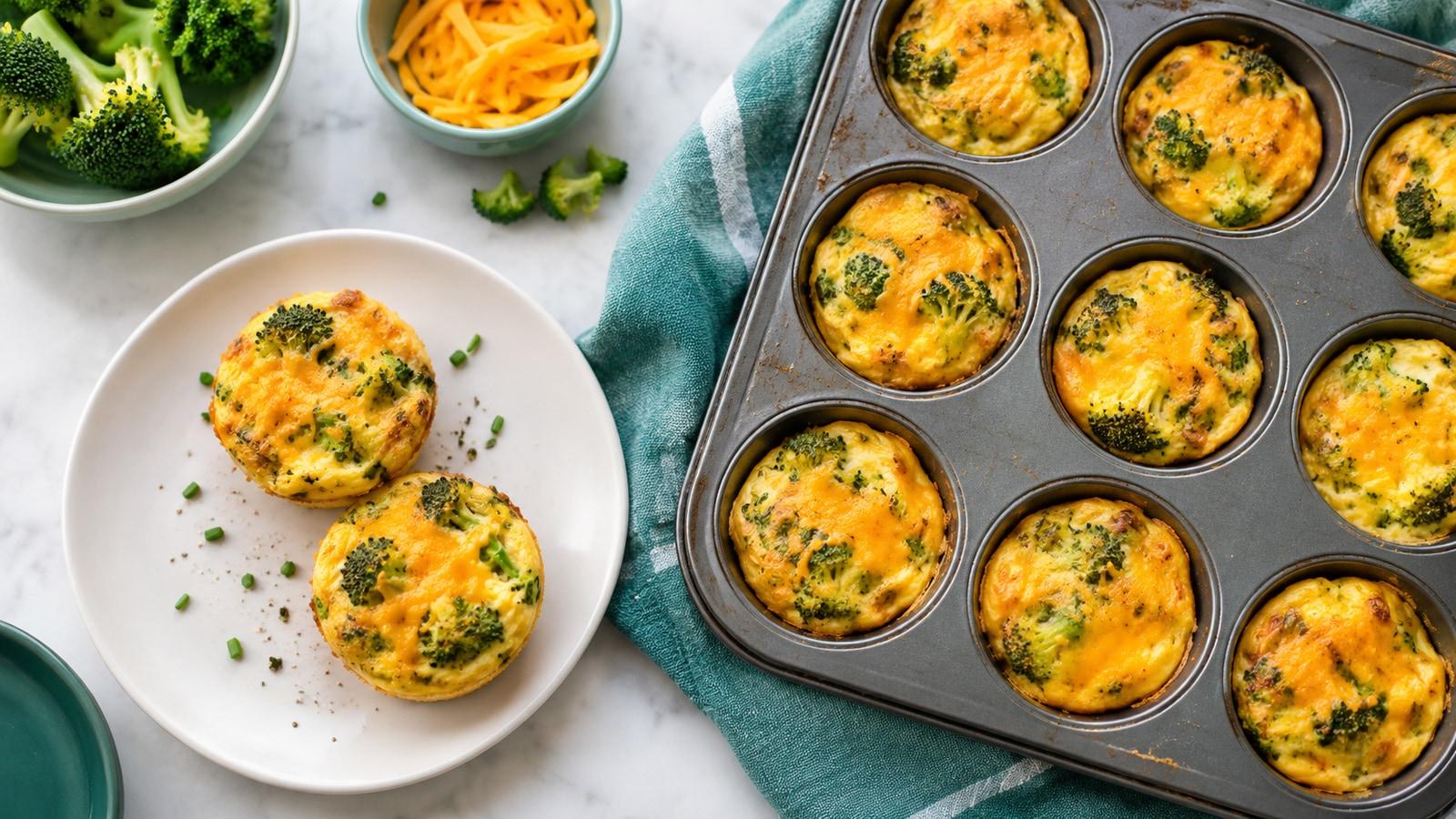
Mini frittatas are a handy way to turn eggs, broccoli, and a little cheddar into breakfast portions you can refrigerate or freeze. They also leave room for different mornings: have one with toast, add fruit on the side, or warm a couple when you need a more substantial meal.
This version uses a muffin pan and finely chopped cooked broccoli. A food thermometer is useful for checking that the centers are safely cooked, especially because ovens and muffin pans vary.
Ingredients
For about 10 to 12 mini frittatas:
- 6 large eggs
- 1 cup cooked broccoli, finely chopped and drained
- ½ cup shredded cheddar
- ¼ cup milk or a suitable unsweetened alternative
- 1 teaspoon olive oil, for the pan
- Black pepper and a pinch of garlic powder, optional
You'll need a muffin pan, a mixing bowl, a whisk or fork, and a food thermometer. The number of pieces depends on the size of your muffin cups and how full you make them. Use a standard muffin pan rather than tiny candy-size molds for this version.
If you use frozen broccoli, cook it according to the package and drain off excess water before chopping. You can cook fresh broccoli until tender, then let it cool enough to handle. Check the cheese and milk labels if you need to avoid an ingredient.
Make the frittatas
- Heat the oven to 350°F. Wash your hands and clean your work surface. Lightly oil the muffin cups.
- Rinse fresh broccoli under running water before cutting, or prepare frozen broccoli as directed. Cook until tender, drain, and chop into small pieces. Let it cool slightly before adding it to the eggs.
- Crack the eggs into a bowl, add the milk, and whisk until combined. Stir in the broccoli, cheddar, and any seasoning. Wash hands and surfaces that touched raw egg.
- Divide the mixture among the muffin cups, leaving a little space at the top. Place the pan in the oven.
- Bake until the centers are set and a food thermometer inserted into the center of the frittatas reads at least 160°F. Begin checking around 18 minutes; the exact time will vary with the pan and oven.
- Remove the pan carefully and let the frittatas cool briefly before loosening them with a clean utensil. Serve warm, or transfer the portions you are saving to shallow containers for prompt refrigeration.
If you add meat or poultry, the safe temperature and handling requirements change. This vegetable version is simpler to prepare as written; ask your care team or consult a reliable food-safety chart before adapting it.
Why the broccoli should be drained
Broccoli can hold a surprising amount of water, especially after steaming or thawing. Draining it before it goes into the eggs helps avoid excess liquid in the muffin cups. Chop it finely enough that it distributes through the mixture rather than forming one large piece in each cup.
You don't need to make every piece identical. If you prefer a smoother texture, chop the cooked broccoli more finely. If you like a little more bite, leave it slightly larger while keeping the pieces manageable for whoever will eat them.
Refrigerate or freeze the extras
Refrigerate cooked frittatas in shallow covered containers within two hours, or within one hour when the surrounding temperature is above 90°F. Keep the refrigerator at 40°F or below and use refrigerated leftovers within three to four days.
For longer storage, freeze portions in a freezer-safe container or bag and label the date. Separating the pieces first can make it easier to take out only what you need. For best quality, use them within the timeframe recommended for cooked egg dishes in your food-storage guide.
Reheat leftovers to 165°F throughout, checking with a food thermometer. If using a microwave, arrange the pieces so they heat evenly, follow the microwave's instructions, and allow any recommended standing time before checking. Discard food that has been left out too long or whose storage history is uncertain.
Serving ideas
A mini frittata can be part of breakfast with toast, a piece of fruit, or another food you enjoy. You can pack a portion for later in an insulated bag with a cold source, then reheat it safely when you're ready to eat.
If nausea or a reduced appetite regularly makes it hard to eat enough, tell your prescriber or dietitian. A convenient breakfast can help on a busy morning, but persistent symptoms deserve their own discussion.
Change the vegetables or cheese
Cooked spinach or finely chopped peppers could be used in place of some broccoli. Drain watery vegetables before mixing them with the eggs. A different cheese will change the flavor and salt content; check labels if sodium or an allergen matters to you.
These frittatas contain egg and dairy as written. Choose substitutions that are safe for the person eating them and be aware that an egg-free mixture may need a different recipe and cooking method. If you have a prescribed texture plan, ask your care team whether the frittatas fit it.
If you make these ahead, keep a couple of portions chilled for a morning when you don't feel like cooking. Add the toast, fruit or other sides when you're ready to eat.