










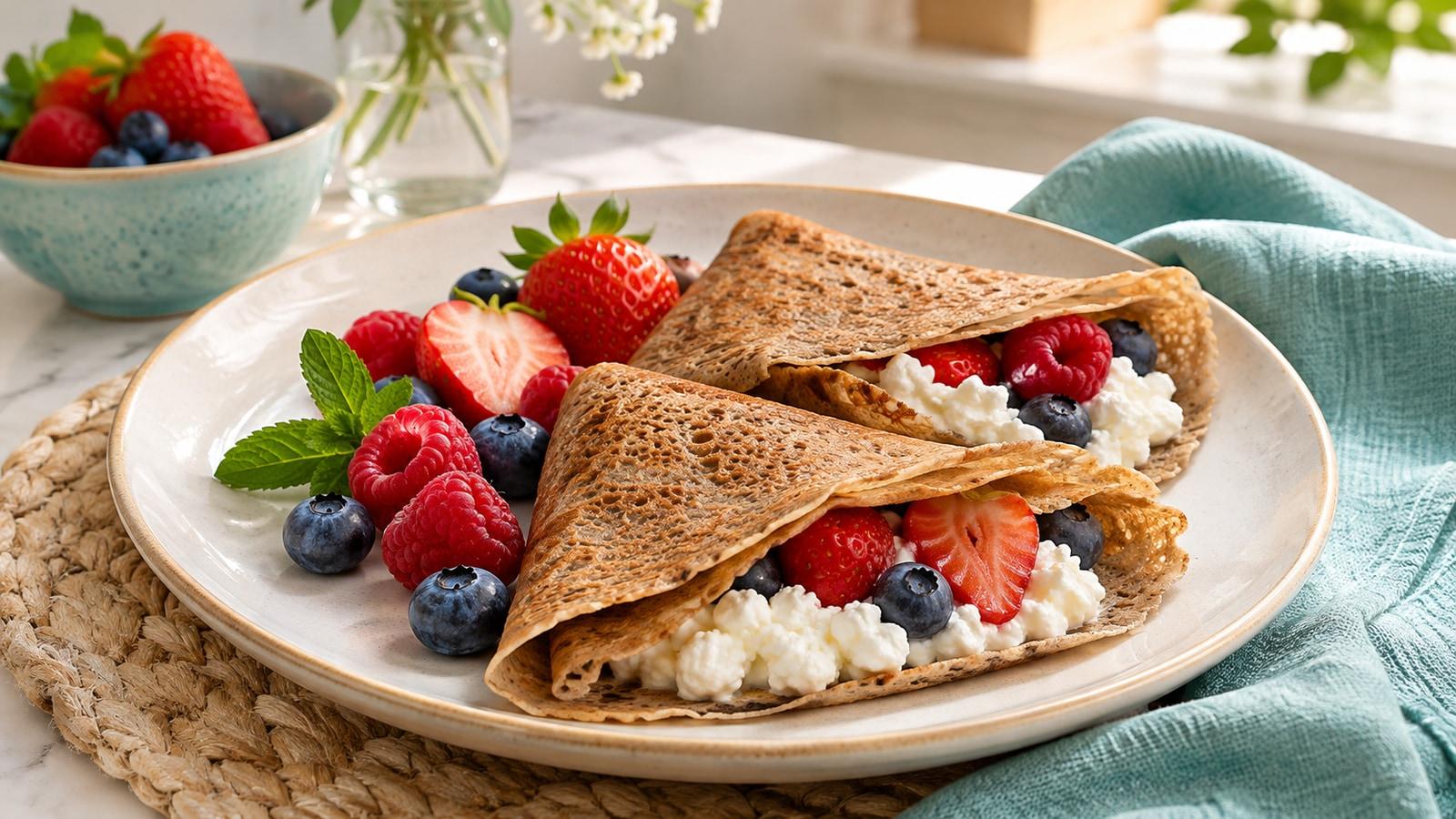
Thin buckwheat crepes can make breakfast feel special without needing an elaborate filling. This version pairs them with cottage cheese and berries, so the crepes can be cooked first and filled just before serving.
The first one may tear or come out uneven while you learn the pan. That's normal for a thin batter. Keep the heat moderate, use a spatula that fits underneath and cook the batter fully before adding the cold filling.
Ingredients
This starting recipe is intended to make about four small crepes, depending on the pan.
For the crepes:
- ½ cup buckwheat flour
- 1 egg
- ½ cup milk or an unsweetened alternative
- ¼ cup water, plus a little more if needed
- 1 teaspoon neutral oil, plus a little for the pan
- A small pinch of salt
For serving:
- ½ cup cottage cheese
- ½ cup berries
- A little honey, optional
Buckwheat isn't wheat, but flour products may be processed alongside gluten-containing grains. If you need a gluten-free product, check the package for a suitable option. Check the milk, filling and any alternatives for ingredients relevant to allergies or other dietary needs.
Rinse fresh berries under running water and drain them. Keep the cottage cheese, milk and egg refrigerated until you're ready to prepare the meal.
Mix the batter
Whisk the buckwheat flour and salt in a bowl. Add the egg, milk, water and oil, then whisk until the mixture is smooth. The batter should be thin enough to spread across the skillet; add a small splash of water if needed.
Let the batter rest briefly while you prepare the filling and heat the pan. If it thickens, stir it and add a little water. Don't taste it raw: both uncooked flour and raw egg can carry germs.
Wash your hands, whisk, bowl and any surfaces that touched raw batter before handling the berries or cooked crepes. Keep the ready-to-eat filling away from the raw mixture.
Cook the crepes
Lightly oil a nonstick skillet and warm it over medium heat. Pour in a small amount of batter and tilt the pan so it spreads into a thin layer. Cook until the underside is lightly browned and the top is set, then turn carefully and cook the other side.
Cook each crepe until no wet batter remains and the egg-containing batter is fully cooked; an adequately thick folded portion should reach 160°F when checked with a food thermometer. Adjust the heat if the outside browns before the center cooks. Repeat with the remaining batter, adding a little oil to the pan as needed.
Transfer cooked crepes to a clean plate. If one breaks, use it as a folded wrap or tear it into pieces for the bowl. Shape doesn't affect whether it makes a pleasant breakfast, but complete cooking does matter.
Fill and serve
Spread a spoonful of cottage cheese over each warm crepe, add berries and fold or roll. A small drizzle of honey is optional. Serve immediately, or keep the filling separate if you're saving crepes for later.
If the berries are large, cut them into manageable pieces. For a smoother filling, stir the cottage cheese before spreading it. Someone who prefers a less sweet breakfast can skip the honey and use a small amount of fruit.
Add a side you enjoy if you want a larger meal. If one crepe is enough for now, refrigerate the rest promptly and return to it later. The recipe is a starting point, not a required portion.
Change the filling
Plain yogurt and fruit are one alternative if you prefer them to cottage cheese. A dairy-free filling can work too; choose a product that meets your needs. If you have a prescribed texture-modified diet, ask the care team whether the crepe and its mixed filling are suitable.
For a savory version, leave out the honey and fill a fully cooked crepe with cooked vegetables and a topping you like. Keep the batter recipe the same while changing the filling, and use clean utensils for cooked and raw foods.
Prepare and store
You can cook the crepes ahead and refrigerate them in a shallow covered container. Keep the cottage cheese and berries separate. Refrigerate perishable foods within two hours, or within one hour if the temperature is above 90°F, and keep the refrigerator at 40°F or colder.
Use cooked leftovers within three to four days or freeze suitable portions. Reheat the crepes to 165°F before filling them, then add the cold cottage cheese and fruit. If you're packing them for later, keep the components cold in an insulated bag with cold packs.
Once you've found the amount of batter that suits your pan, the process gets simpler. Cook the crepes through, add a filling you enjoy and let an imperfect fold be part of breakfast.