










When your usual lunch suddenly feels too big, it’s tempting to think a few bites of anything will do. But a smaller appetite doesn’t make your body’s need for nourishment disappear. It just changes how you might put meals together.
There isn’t one perfect “GLP-1 plate.” The useful question is whether your meals give you a reasonable mix of foods across the day, in amounts you can comfortably eat.
Start with a meal you already like
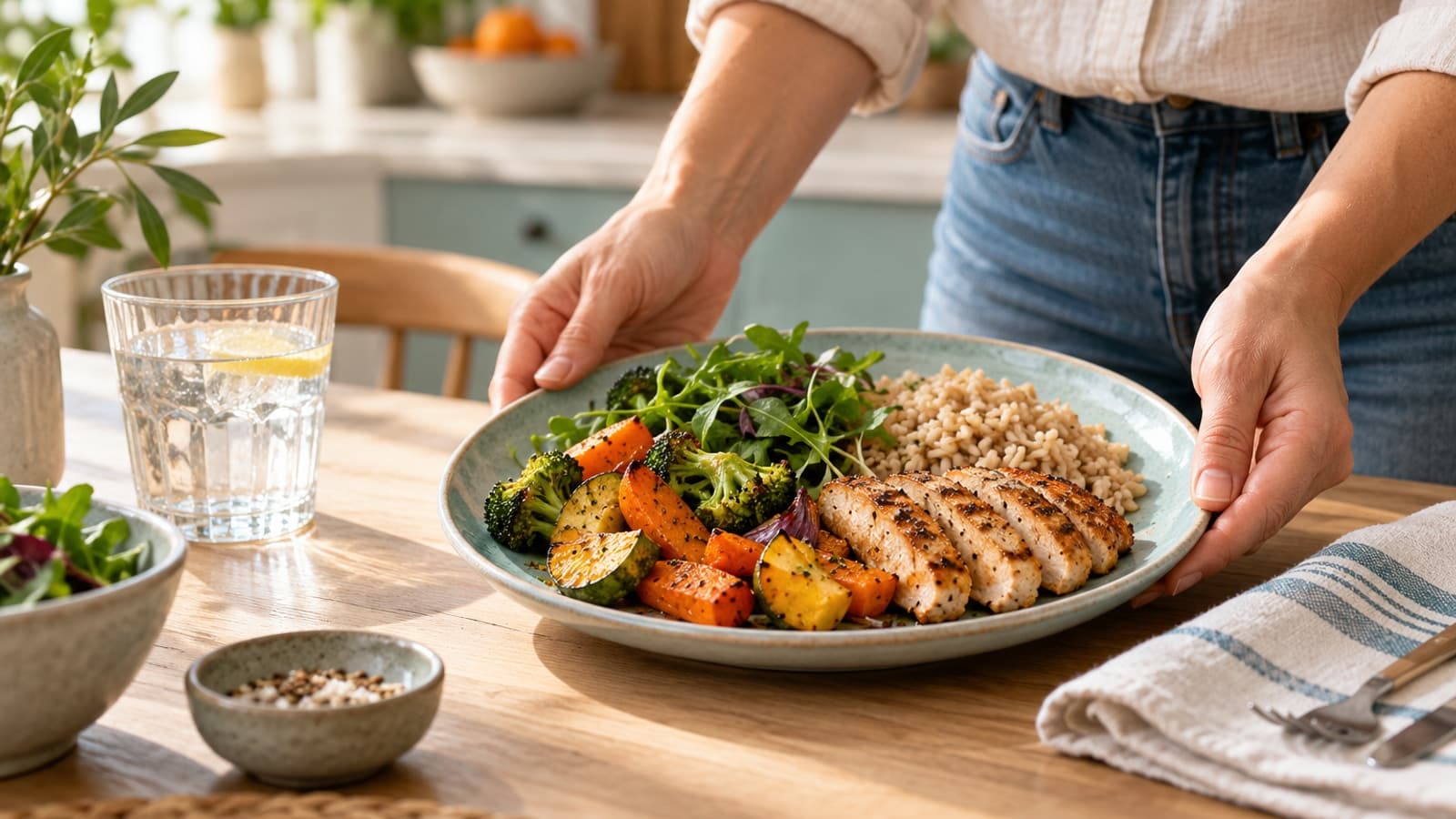
Keep the familiar parts, then look for what’s missing. A rice bowl could include chicken or tofu, a vegetable you enjoy, and a little sauce. A sandwich might have egg, tuna, turkey, or hummus, with fruit or vegetables alongside it. A baked potato can become dinner with beans and a topping you like.
You don’t have to make every plate look the same. These combinations are starting points, not a prescription or a rule about the exact amount you should eat.
Think in a few building blocks
- Something with protein: fish, chicken, eggs, yogurt, tofu, lentils, or beans.
- Produce: a vegetable or fruit you’ll actually eat. Cooked, frozen, and canned choices can all be useful.
- An energy source: rice, oats, bread, potatoes, or another grain or starchy food.
- Flavor and satisfaction: a little oil, avocado, nuts, cheese, or dressing, depending on what you tolerate.
Some foods cover more than one category. Beans bring protein and carbohydrates. Yogurt can contribute protein and calcium. You’re assembling a meal, not trying to win a sorting exercise.
Let the starting portion be flexible
Try serving a comfortable amount and leaving the rest available. Eat slowly enough to notice how you feel. If you’re satisfied sooner, you can refrigerate the remainder for another meal rather than forcing yourself to finish it.
When a large meal feels difficult, a smaller meal followed by another eating opportunity later may be easier. For example, have part of a sandwich at lunch and yogurt with fruit later. The aim is to keep nourishment in your day, not stretch a tiny lunch into an all-day fast.
Notice patterns, not perfect plates
Look back over a few days. Are you repeatedly missing meals? Has most of your food come from one or two items? Is eating becoming uncomfortable? Those patterns are useful to share with your care team or a dietitian. They can help you adjust around your health conditions and nutritional needs.
For tonight, pick one familiar meal and add the building block it usually lacks. That’s a manageable place to begin. You can also read our explanation of how GLP-1 medicines work if you’re wondering why appetite feels different.