










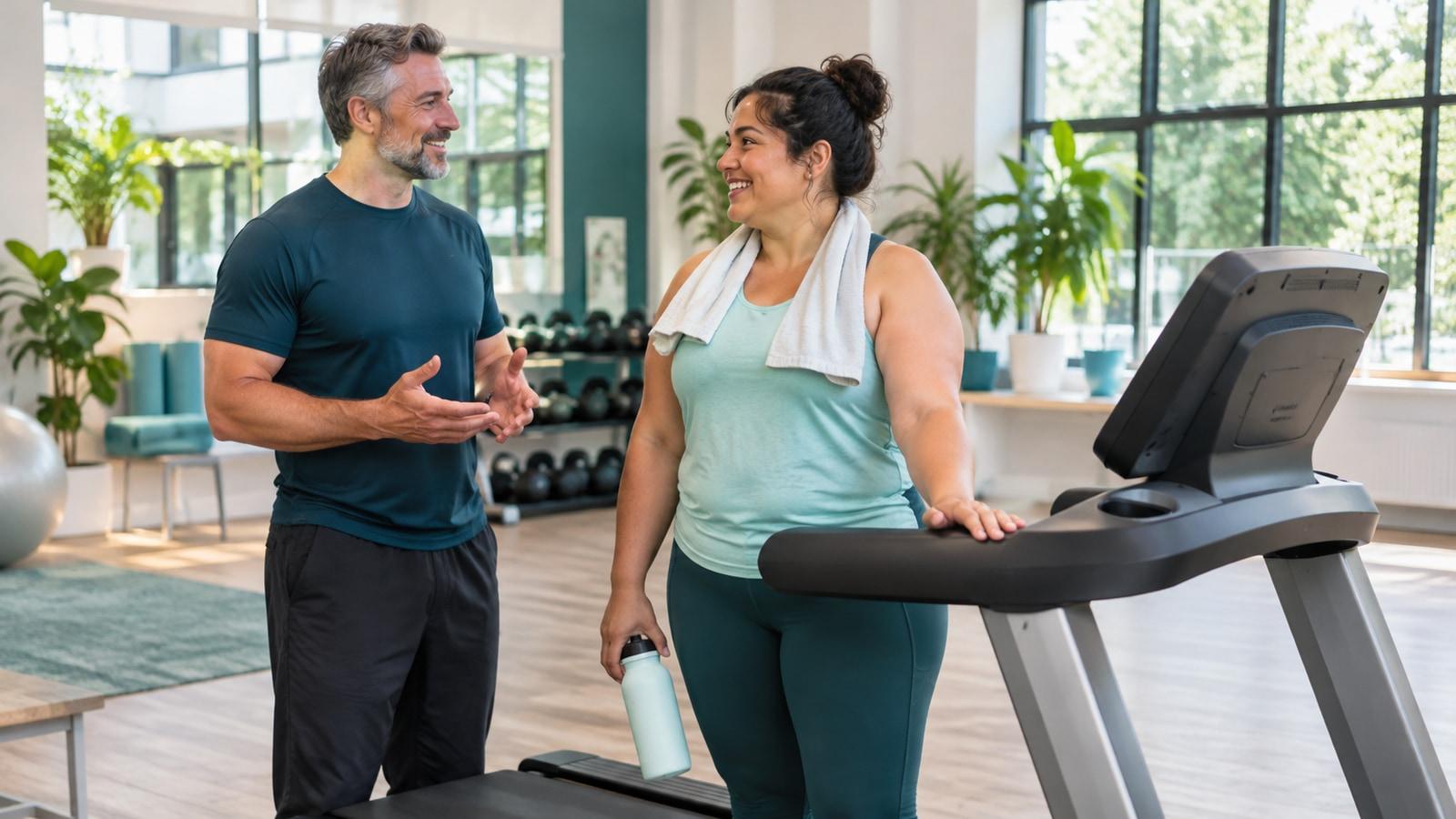
A treadmill can feel unfamiliar at first: the belt moves beneath you, the display offers several buttons and the rails are right there to hold. It's reasonable to use the rails for support while you learn or whenever you need them. The goal is a safe, comfortable walk—not proving that you can let go.
If you find yourself hanging on because the belt is too fast or the incline is too steep, slowing the machine may help. If you need the rails for balance or have been advised to use them, keep using them and ask a professional about the best setup for you.
Learn the controls before the belt moves
Ask a gym staff member or qualified instructor to show you how to start, adjust and stop the exact model. Locate the emergency stop and safety clip if the treadmill has one. Attach the clip as instructed, and check that you understand what will happen if it is pulled.
Make sure the area behind the treadmill is clear and that your shoes and laces are secure. Keep children and pets away from a moving belt. If the display is difficult to read or reach, ask for help before starting.
If you have balance concerns, a heart or lung condition, recent injury or another reason you're unsure about treadmill walking, talk with your clinician or physical therapist. They can help you decide whether the treadmill is appropriate and what support you need.
Begin slowly and hold on as needed
Follow the manufacturer's instructions for getting onto the machine. Start at a slow speed and a level incline, using the rails while you find the belt's rhythm. Keep your gaze comfortably forward when possible rather than continually looking at your feet.
Choose a speed that lets you place your feet without rushing. If you feel pulled backward or have to grip the rails tightly to keep up, slow down. A faster number isn't useful if the movement feels uncontrolled.
Some people may gradually feel comfortable relaxing their grip or briefly using less hand support. Others need the rails throughout. A physical therapist can help you decide what is safe for you; don't let go simply because a fitness rule says you should.
Use effort cues, not just the display
Pay attention to breathing, comfort and how steady you feel. The talk test may help you describe effort to your care team: walking at a pace where you can speak comfortably feels different from a pace that leaves you struggling for words. Follow any individualized exercise limits you've been given.
If you take medicine that affects heart rate, ask your clinician how to interpret the treadmill's target zone. The machine's calorie and heart-rate estimates are not a complete measure of your session.
Start with a short, manageable period. You can stop and rest before deciding whether to continue. As you become comfortable, a professional can help you adjust time or speed gradually rather than changing everything at once.
Practice stopping and stepping off
Before you're tired, practice using the normal stop control at a slow speed. Hold the rails as needed, follow the machine instructions and wait for the belt to stop completely before stepping off. If you feel unsteady, ask staff for assistance.
Don't jump from a moving belt. If the treadmill stops unexpectedly or you feel dizzy, stay supported and ask for help. Severe chest pain, significant trouble breathing or fainting can require emergency care; follow your personal action plan and call 911 when appropriate.
For new or recurring discomfort, contact your clinician before returning to the same activity. A lower speed may help with control, but it isn't a substitute for evaluating concerning symptoms.
Build confidence one change at a time
Once you know the controls, you might repeat the same easy session a few times. If it feels appropriate, change one variable—such as adding a little time—while keeping speed and incline familiar. Rest between sessions as needed.
If you want to try an incline, ask how to adjust it and whether it suits your condition. A steep incline may make it harder to maintain a comfortable posture or keep pace. Return to a level setting if you find yourself hanging from the rails.
You can also choose an indoor track, outdoor route, seated exercise or another activity. A treadmill is an option, not a requirement for movement or weight care.
Make the machine fit you
Tell the instructor what feels uncertain: the moving belt, balance, the display or stepping off. Ask for a demonstration and an opportunity to practice at a slow speed. If a rail is part of how you stay safe, using it is a sensible choice.
Confidence grows from a setup you can control. Slow the belt, use the support you need and let the next session be guided by how you feel—not by someone else's pace.