










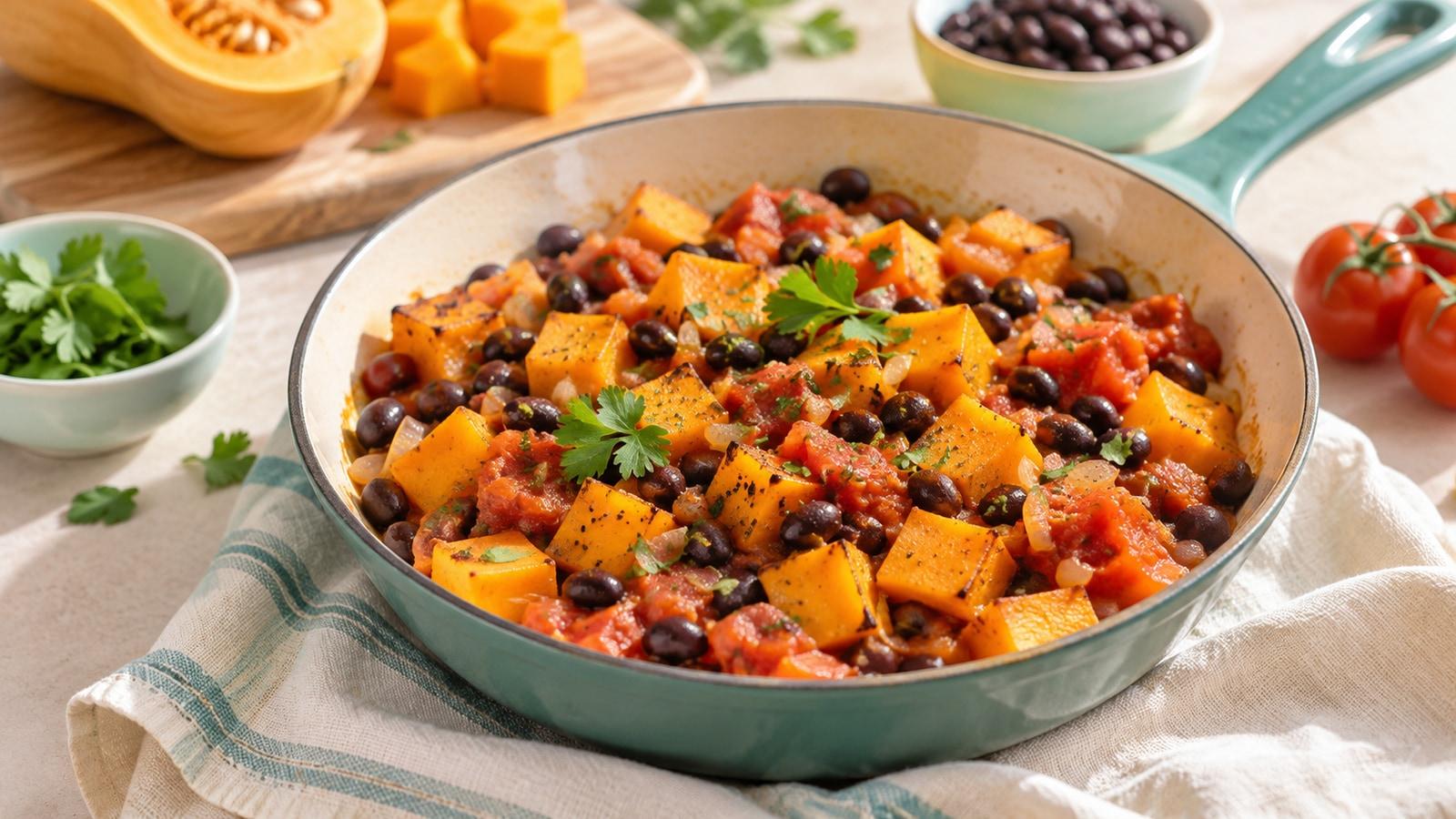
Butternut squash and black beans make a colorful skillet dinner with very little fuss. The squash becomes soft and sweet, the beans give the pan more substance, and tomatoes bring everything together. You can eat it from a bowl, spoon it over rice, or tuck it into a warm tortilla.
The main thing is to give the squash enough time. Cut it small, use a lid, and check a piece before adding the final toppings. Once it’s tender, the rest comes together quickly.
Ingredients
Makes: about 4 servings
Prep: about 15–20 minutes
Cook: about 25–30 minutes
- 1 tablespoon olive oil
- 1 small onion, diced
- 3 cups peeled butternut squash, cut into ½-inch cubes
- 1 bell pepper, diced
- 1 garlic clove, minced
- 1 teaspoon ground cumin
- ½ teaspoon smoked paprika
- 1 can (14–15 ounces) diced tomatoes
- 1 can (15 ounces) black beans, drained and rinsed
- ¼ cup water, plus more as needed
- Lime, cilantro, plain yogurt, or avocado, optional
Precut squash is convenient if you don’t want to peel and chop a whole one. Check the pieces and cut any very large chunks smaller so they cook at a similar pace. Frozen squash may be another option; follow its package cooking directions and adjust the timing as needed.
Cook the skillet
- Wash your hands. Rinse the pepper, squash before cutting, and any fresh toppings under running water. Peel the squash and remove the seeds if using a whole one.
- Warm the oil in a large skillet over medium heat. Add onion and cook for about 3 minutes. Add squash and pepper; stir to coat.
- Add garlic, cumin, and paprika, followed by tomatoes and water. Bring to a simmer, cover, and cook for about 15–20 minutes, stirring occasionally. If the pan dries out before the squash is tender, add water a little at a time.
- Test a squash cube with a fork. When it is nearly tender, stir in the beans and cook until heated through. If you want a thicker mixture, uncover for the final few minutes.
- Serve in bowls with the toppings you like. Rice, tortillas, or a spoonful of yogurt can go alongside.
A safer way to cut squash
Whole squash can be awkward to handle. Use a stable cutting board and a sharp knife, and make a flat surface before attempting to peel or cube it. If the squash feels too difficult to cut safely, choose precut squash instead; it’s a practical shortcut, not a compromise.
The size of the cubes matters more than making them look perfect. Small pieces cook faster, while a few large chunks can remain firm after the rest are done. Test one of the larger pieces near the end. It should be easy to pierce with a fork but not so soft that every cube falls apart when stirred.
If the sauce looks watery, simmer uncovered for a few minutes. If it looks dry, add a splash of water and replace the lid. Tomatoes vary, and the shape of your skillet changes how quickly liquid evaporates.
Build your bowl
Black beans provide plant protein and fiber. Rinsing them removes some of the packing liquid and helps you control the texture of the pan. If you’re getting used to beans, start with a smaller portion and serve the rest on the side for anyone who wants more.
Lime wakes up the sweet squash and smoky spices. Avocado or yogurt adds a creamy contrast, and cilantro gives the bowl a fresh finish. You don’t need all three. Put small dishes of toppings on the table and let everyone pick.
For a softer meal, serve the skillet over rice and cook the squash until very tender. For more crunch, add finely shredded cabbage just before eating. The filling also works in a tortilla, though you may want to simmer off extra liquid first so it doesn’t run out.
Adjust the flavor without starting over
Smoked paprika adds a smoky note but isn’t necessarily hot. If you like spice, add a pinch of chili flakes to your portion. If you want a milder pan, use regular paprika or leave it out and rely on cumin and lime instead.
Pinto beans can replace black beans, and sweet potato can replace the squash, though cooking times may change. Cut sweet potato into similarly small pieces and check it for tenderness before serving. Corn can be stirred in for another color and texture; follow the package directions if using frozen corn.
Make tomorrow easier
Put the leftovers in shallow containers and refrigerate within two hours, or within one hour above 90°F. Keep the fridge at 40°F or below and use the filling within three to four days. Reheat to 165°F, stirring so the center warms evenly. A splash of water can loosen the tomatoes if the mixture thickens in the fridge. Add avocado and other fresh toppings after reheating rather than storing them on top.
The skillet can fill a tortilla with a little yogurt and cabbage, or be served over rice. If saving cooked rice, cool and refrigerate it within one hour, use it within 24 hours, and reheat it only once. Reheat leftovers to 165°F.