










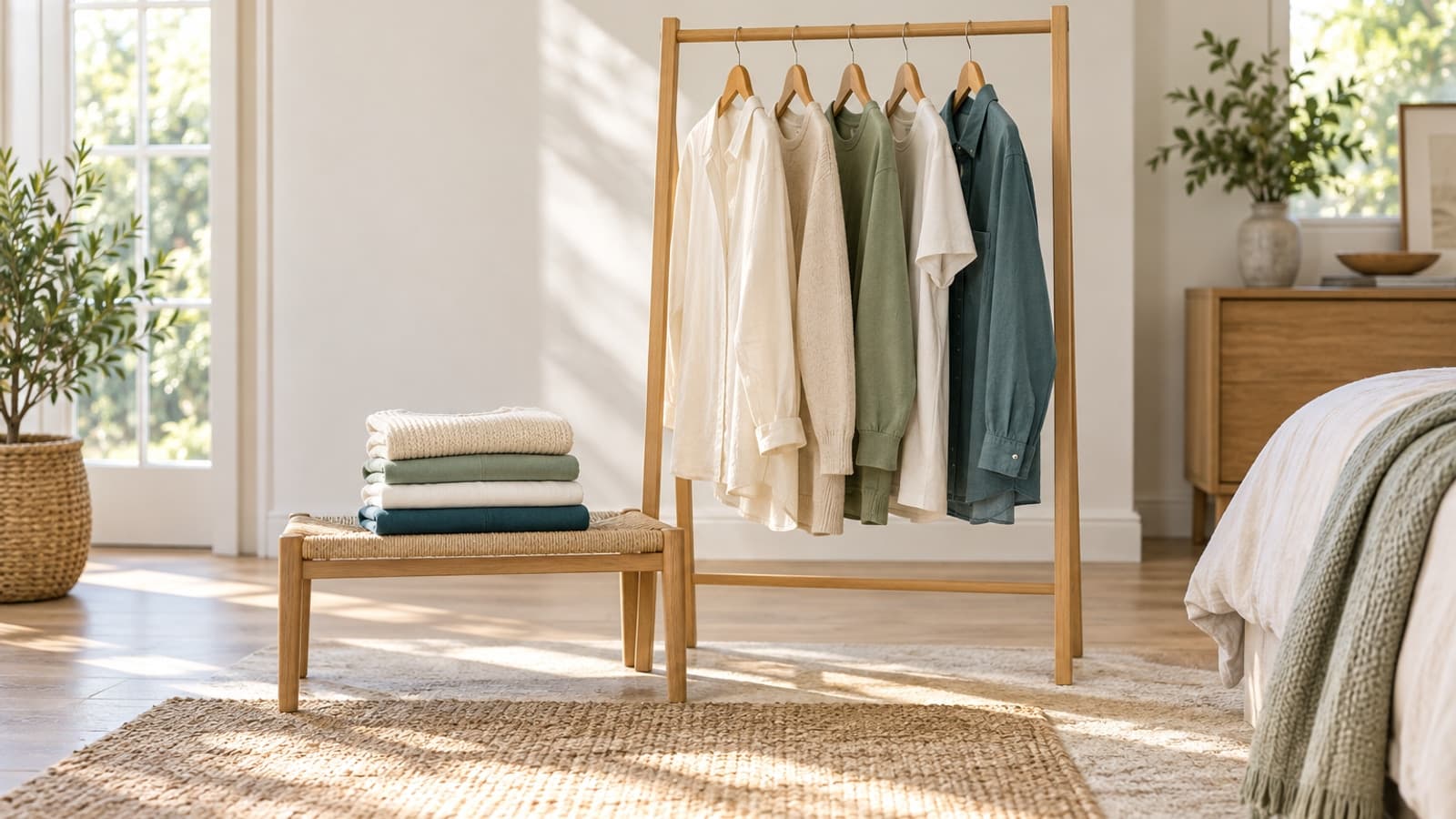
You pull on the pants you wore all last season and spend the morning tugging at the waistband. Maybe they’re loose now; maybe a favorite shirt sits differently. Either way, getting dressed has suddenly become a chore.
Clothes should fit the body you have today. You don’t need to wait for a particular number or buy an entirely new wardrobe to make mornings more comfortable.
Start with the pieces you actually use
For a week, notice which items you reach for and which ones stay on the hanger. Is the problem a sliding waistband, a shirt that bunches under a jacket or a pair of shoes that rubs? Write down the specific gap before you shop. “Comfortable work trousers” is more useful than “new clothes.”
Try each item while sitting, reaching and walking, not just standing in front of a mirror. A piece that looks fine in the fitting room may feel different during a commute or a long shift. If it digs in or needs constant adjusting, you can set it aside without treating the label as a report card.
You might find that two reliable outfits are enough to solve the immediate problem. Laundry, work requirements and your own style will determine what’s practical.
Give useful clothes another chance
A belt, a small alteration or a simple repair may extend the life of something you like. Ask a tailor what can realistically be changed and what it will cost before committing; extensive work can cost more than replacing the item.
Look for adjustable features when they suit you: a drawstring, elastic section, wrap closure or layers you already own. Comfort doesn’t require hiding your shape. Choose colors and cuts you enjoy rather than buying only what someone else says is “flattering.”
If a garment no longer works, decide whether to store, donate, sell or recycle it. There’s no prize for keeping a closet full of things that make you uncomfortable. There’s also no need to clear everything out in one afternoon. A small box for pieces you’re undecided about can keep them out of the way without forcing an immediate decision. Set a date to look again if that helps; it can be next season, not tomorrow.
Shop with a ceiling, not a target size
Choose a budget before you browse. You might buy one pair of pants, try secondhand shops, borrow for an event or wait for a sale. If your size is still changing, a small rotation of versatile pieces may be more useful than a complete seasonal overhaul.
Compare fit rather than relying on a single size across brands. Check the return policy and keep tags on until you’ve tried an item at home, where possible. For online shopping, look at the retailer’s size guide and the fabric description; neither can promise a perfect fit, but they can narrow your options.
Don’t buy an uncomfortable item as a reward for a future body. You deserve clothes that work for your life now, including a wedding, a job interview or a quiet day at home.
Make the fitting room less loaded
Bring several sizes if that’s available, take breaks, and choose whether you want company. A trusted friend can help you find a cut you like; they can also wait outside if comments make shopping harder. You get to say, “I’m looking for comfort today, not feedback on my body.”
Some days it may feel fun to try something new. Other days you may want to order the same shirt in a different fit and be done. Both count as taking care of a practical need. If a store has little in your size, that is a limit of its selection, not a reason to apologize for needing clothes.
If changing clothes brings up a lot of difficult feelings, our body image guide offers a place to start. A size tag describes a garment; it doesn’t describe your worth.