










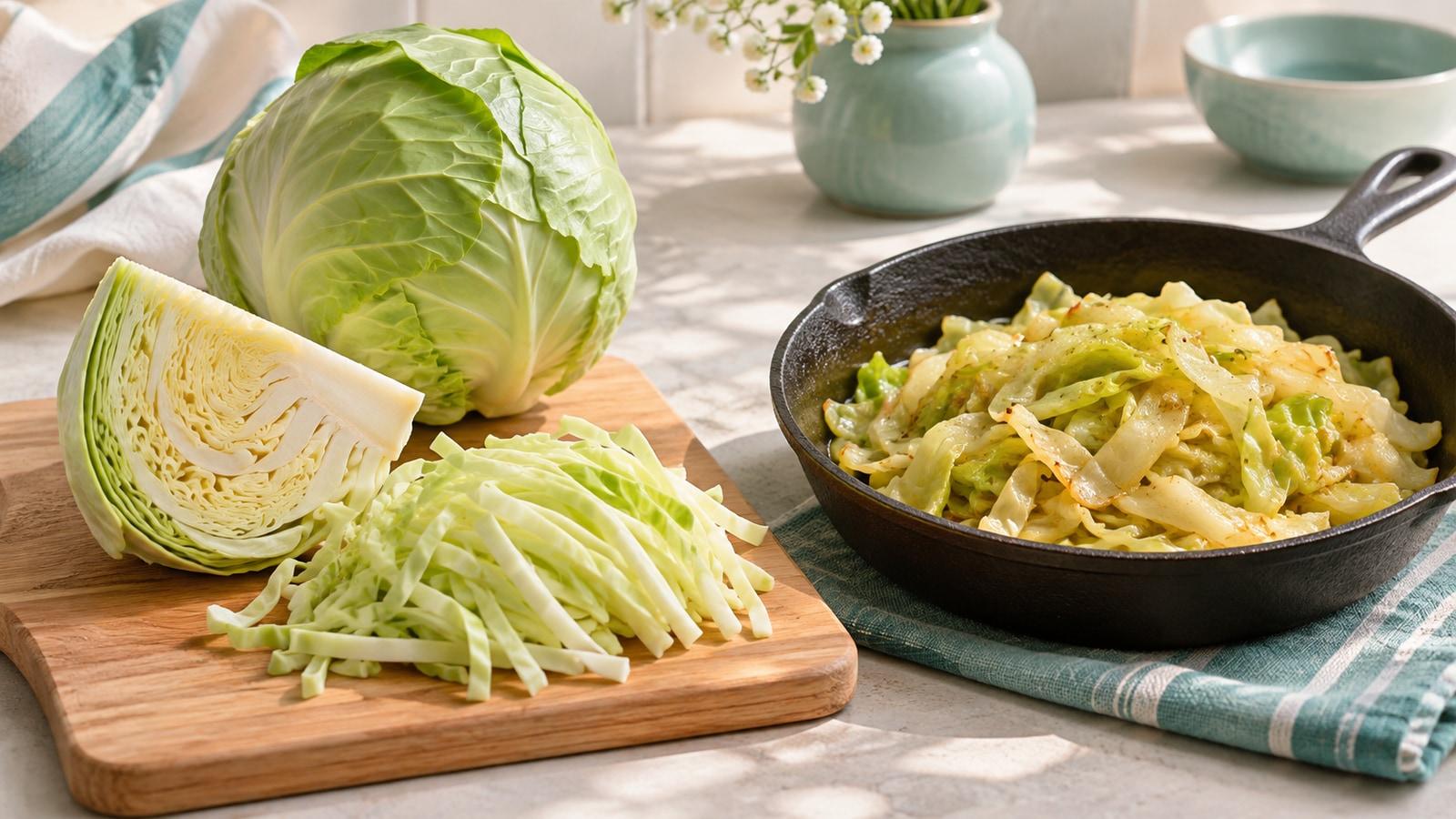
A whole head of cabbage can look like more commitment than dinner requires. You need a few handfuls for a skillet, but the rest takes up a surprising amount of refrigerator space. The good news is that you don't have to cook it all at once—or use it the same way every time.
Start with a manageable piece, cut it to suit the meal and pay attention as it softens. The rest can wait in the refrigerator while you decide what sounds good next.
Pick a head you can use
Green cabbage is a practical starting point for a warm skillet or soup. Red cabbage has a different color and flavor, and softer-leaved varieties can cook at a different pace. Pick the one you enjoy rather than assuming the same instructions will produce identical results with every type.
Look for a head that feels firm and doesn't have obvious damage. If a whole head is more than you want to handle, a smaller piece or a package of prepared cabbage may be a better fit. Check the package's storage and washing instructions and buy an amount you expect to use.
At home, keep the cabbage refrigerated. Put a cut portion in a clean covered container or food-safe wrap. Before preparing it, remove damaged outer leaves and rinse the produce under running water. Use clean hands, a clean knife and a stable cutting board.
Cut only what you need
Set the cabbage on the board with a flat side down. Cut it into quarters so the pieces are easier to manage. Each quarter has a firmer core; you can cut that section away or slice it very thinly if you like it and have time to cook it longer.
For a quick skillet, place a quarter on its cut side and slice across it into strips. Thin strips soften more quickly and mix easily with other ingredients. Wider pieces keep more bite, but may need a few extra minutes. They don't need to be perfectly even; try to avoid a pan full of tiny shreds and a few very thick chunks.
If the cabbage shifts while you're cutting, stop and reposition it rather than trying to steady a rounded piece with your fingertips. A sharp knife you can handle comfortably and a board that doesn't slide make the job less awkward. Prepared shredded cabbage is a useful shortcut when chopping isn't practical.
Cook it to the texture you like
Warm a little oil in a wide skillet and add a few handfuls of sliced cabbage. Toss it over medium heat, then add a splash of water and cover the pan if you want it to soften more gently. Stir occasionally and check a piece as it cooks. Add another spoonful of water if the pan dries out before the cabbage is tender.
The pile will shrink as it cooks. If it doesn't fit comfortably at first, add some, let it soften and make room, then add the rest. A wide pan makes stirring easier; a lid keeps more moisture in when you prefer a softer result.
For more bite, uncover the pan and stop when the strips are just tender. For a softer side, keep cooking with a little moisture until the thicker pieces are comfortable for you. A minute or two can make a noticeable difference when the slices are thin, so taste a cooled piece rather than following a single fixed time.
Salt, pepper, herbs or a small squeeze of lemon can go in near the end. If acidic flavors aren't appealing, leave the lemon out. A splash of broth is another way to add flavor, but check the label if sodium or another ingredient matters to you.
Make a meal around it
Cabbage works beside foods that are already in your routine. Add a portion of chicken, fish, tofu, beans or another protein food you enjoy. Potatoes, bread or a grain can make the plate more substantial. Keep components separate if people at the table want different amounts.
You can also add cabbage to soup, where it softens in the broth. Put thicker pieces in earlier and check them before serving. Or keep some raw and thinly sliced for a cool topping, washing and storing it separately from anything that touched raw meat.
If you're taking a GLP-1 medicine and your appetite is smaller, serve what sounds good now and keep the rest safely chilled for later. If you aren't used to fiber-rich foods, introduce them gradually and see how you feel. Persistent nausea or trouble eating and drinking is a reason to contact your care team; adjusting one vegetable isn't a substitute for that conversation.
Save the rest without guessing
Keep the uncooked portion covered in the refrigerator and use clean equipment when cutting more. If you bought shredded cabbage, follow the package's after-opening instructions. Check it before use and discard it if it has spoiled; don't try to rescue food whose safe history is uncertain.
Refrigerate cooked cabbage promptly in a shallow covered container, within two hours of cooking or within one hour if the surrounding temperature is above 90°F. Keep the refrigerator at 40°F or colder and use cooked leftovers within three to four days. When serving them hot, reheat to 165°F, stirring so they warm evenly.
Tomorrow's cabbage doesn't need to repeat tonight's plate. Stir a safely reheated portion into a soup, add it beside an egg or fold it into a warm tortilla. The useful trick is to prepare only as much as you need, then give the rest a clear place in your next meal.