










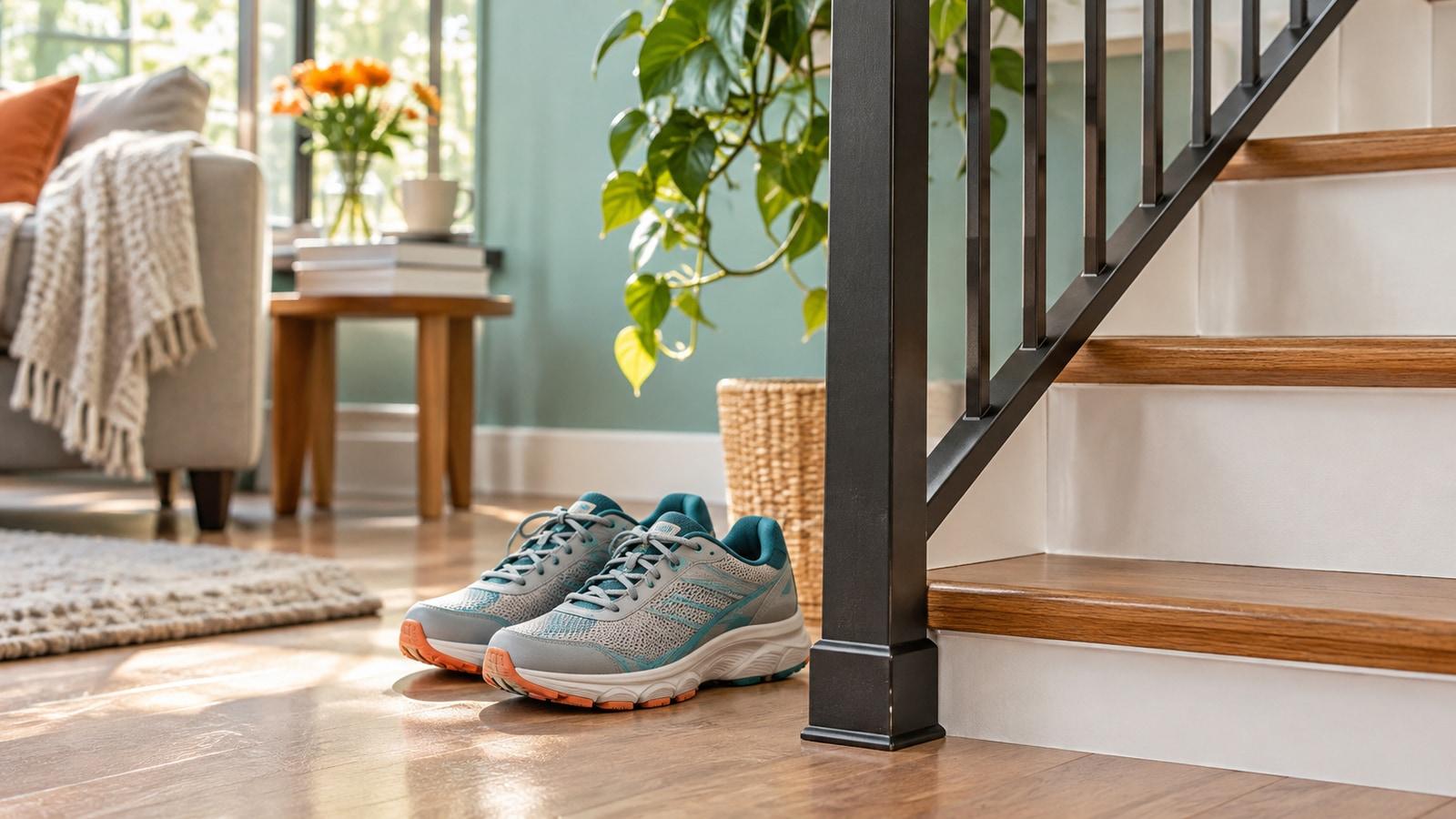
Rising onto the balls of your feet is a small movement that uses the muscles at the back of your lower legs. A supported calf raise lets you practice that movement near a counter or sturdy chair, with no special equipment.
The goal is control, not reaching the highest possible tiptoe position. If you have foot, ankle or balance concerns, ask a clinician or physical therapist whether this movement is right for you and how to adapt it.
Choose a stable place
Stand near a firm counter or a sturdy chair that won't roll or slide. Clear the floor of loose rugs and other obstacles. Wear footwear that gives you a secure grip, or follow the advice of the professional helping with your exercise plan.
Place both hands on the support if that helps you feel steady. Using support isn't a shortcut; it lets you focus on the movement without turning the exercise into an unnecessary balance test.
If standing isn't comfortable or safe, a seated heel raise may be an option. Ask a professional to show you the variation that fits your needs, especially if you have a recent injury or prescribed rehabilitation plan.
Keep the support within easy reach before you begin. If you share the room with children or pets, choose a time when the area can stay clear and you can concentrate on placing both feet securely.
Lift and lower slowly
Stand with your feet comfortably apart and your weight supported through both feet. Holding the counter or chair, slowly lift both heels from the floor as far as feels comfortable. Keep the balls of your feet in contact with the ground.
Pause briefly, then lower your heels slowly back to the floor. Keep breathing normally and avoid bouncing. You should be able to stay in control of the movement in both directions.
Begin with a few repetitions that feel manageable and rest. The number that suits you depends on your current ability and any advice you've been given. A qualified professional can help you build a plan if you're not sure where to start.
Notice the lower-leg effort
You may feel the calf muscles working as your heels rise and lower. That sensation is different from sharp pain. If you feel pain in your ankle, foot or calf, or you become dizzy or unsteady, stop and ask for guidance.
Don't push higher by rolling onto the outer edges of your feet. A smaller lift with your feet placed securely may feel more controlled. If you can't keep the movement steady, hold the support with both hands or ask whether a seated version is more appropriate.
This exercise isn't a substitute for evaluating a new injury or unexplained pain. Follow your own rehabilitation instructions if you've been given them.
Try a seated variation if appropriate
Sit upright on a stable chair with both feet on the floor. Lift your heels while the fronts of your feet remain supported, then lower slowly. The seated movement may feel different from the standing version because your position and load have changed.
Choose a chair that stays put and lets both feet rest on the floor. If your feet don't reach comfortably, try another chair instead of putting a loose object underneath them. A physical therapist can help with the setup if an injury or balance concern makes it difficult.
There is no requirement to stand for an exercise to be worthwhile. Choose the version that lets you move safely and comfortably.
Connect the movement to daily life
Calf muscles help with movements involved in standing and walking. Practicing a controlled heel raise can be one part of a broader strength and balance routine. It doesn't guarantee that stairs will immediately become easy, and it shouldn't replace individualized care for a mobility problem.
If stairs are a goal, talk with a professional about the whole task: handrails, balance, leg strength, breathing and the environment. You may benefit from several different movements or an adapted approach, depending on your situation.
If you use a mobility aid, keep it and your support setup as recommended. Don't remove assistance simply because a video shows someone exercising without it.
Progress without rushing
When the movement feels comfortable over time, you might add a few repetitions while keeping the same steady pace. Change one part of the routine at a time and leave room for rest. There is no need to add a weight or perform the exercise on a step for a first attempt. Follow your own rehabilitation plan if you have one.
Notice how your calves and ankles feel later in the day, not just during the set. If symptoms worsen or interfere with normal activity, pause and ask for advice. If you're returning after illness or injury, follow the plan made for your recovery.
Keep the setup simple
A stable support and a clear floor are enough to practice. Lift only as high as is comfortable, lower with control and breathe throughout. A few well-paced movements can be more useful than a long set that leaves you unsteady.