










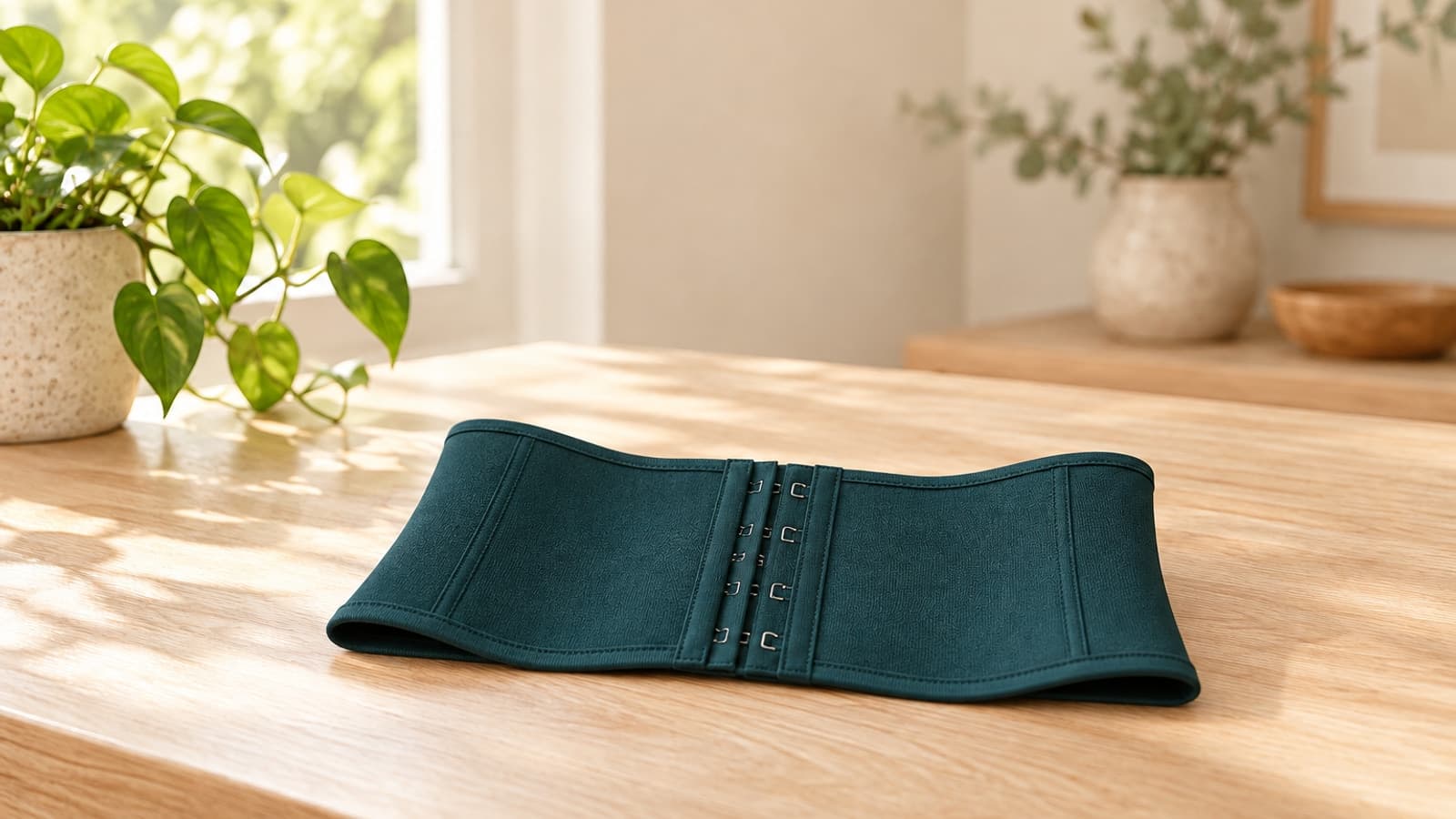
A waist trainer can change your silhouette while you wear it. That’s what compression does: it presses the middle into a different shape under clothing. It isn’t evidence that the garment has removed body fat or produced a lasting change in your waist.
That distinction can get lost in photos that show the garment on and off. If you’re curious about one, it helps to know what you’re buying: a piece of shapewear, not a shortcut around the slower changes involved in weight management.
Why the mirror can look different
Pull on a fitted garment and your clothes may sit differently. A waistband may feel smoother, and your outline may look narrower. Those changes can happen immediately, before there has been any meaningful change in body composition.
After you take the garment off, the pressure is gone. Your body has not been “trained” into a permanent new shape by that short period of squeezing.
The same caution applies to a measuring tape. A measurement taken over a tight garment is not the same as one taken against your body. Even without shapewear, everyday differences in posture, timing and where the tape sits can affect the number.
If measurements are useful to you, our guide to measuring waist changes explains how to make them more consistent. They’re optional, too. You don’t have to measure your waist to be doing something worthwhile for your health.
What about sweating?
Some waist trainers are advertised for workouts, sometimes with the suggestion that sweating under the material means extra fat loss. Sweat is not a direct measure of fat loss. A damp shirt tells you that you’ve been sweating, not where body fat has gone.
You don’t need a tight wrap to make a walk, a swim or a strength session count. Clothes that let you move and breathe comfortably are a good place to start.
If a garment makes exercise uncomfortable, loosening it or taking it off is a reasonable choice. You’re allowed to choose movement for the way it fits your life, without adding an accessory that distracts you from it.
Comfort matters, especially around meals
A garment that feels fine for a few minutes in a fitting room may feel different when you sit down or eat. Notice whether you can take a comfortable breath, bend and move normally. Pain, uncomfortable pressure or a mark that concerns you are reasons to take it off.
There is also a connection worth discussing if you deal with reflux. In one small study, researchers used a tight abdominal belt in people who already had reflux-related conditions and measured more reflux with the belt. That test isn’t the same as trying every style of shapewear, and it can’t predict your response. But if a tight garment seems to worsen heartburn, it’s sensible to stop wearing it and bring persistent symptoms up with your clinician.
People taking a GLP-1 may already be paying attention to nausea, fullness or reflux. You don’t need another source of pressure around your stomach to prove that you’re committed to a plan.
What if you simply like the look?
That’s a different question. Shapewear is a clothing choice. If you enjoy how a comfortable piece sits under an outfit, you can make that choice without treating it as a health intervention.
Be wary of ads that promise a permanent waist change, show dramatic before-and-after photos without context, or suggest a garment will “melt” fat from one area. The photo may show compression, a different pose or lighting. It cannot tell you what happened to someone’s body fat.
Better questions for your goals
Think about what you want from the purchase. If it’s an outfit that feels good for an event, comfort and fit may be enough. If you’re hoping for a change in health or weight, a wrap can’t replace the habits and care you’re already considering.
You might focus on meals you can manage, movement you enjoy, sleep and follow-up with your care team. Progress may also show up in energy, comfort or strength rather than in one measurement.
And if you take a GLP-1, keep treatment decisions between you and your prescriber. A waist trainer is not a reason to change your medicine. It’s a garment; your care plan deserves a bigger conversation.