










A video promises to “burn belly fat” with a few minutes of crunches. Another says a particular leg exercise will make fat disappear from your thighs. It's an appealing idea: choose the body part, choose the move, and get the exact result you want.
Exercise doesn't offer that kind of precise guarantee. A workout can train a muscle without promising where your body will lose fat.
Muscle and fat are different things
When you practice a movement, the muscles involved can become stronger or more capable. A row trains pulling muscles; a squat variation works muscles involved in standing up; a core exercise can improve how those muscles perform.
Fat is stored in different places throughout the body. Changes in those stores don't necessarily happen where the nearest muscle is working. The order and amount of visible change can differ from one person to another.
That doesn't make a core exercise pointless. It means its value isn't limited to the promise printed on a workout thumbnail.
What have studies found?
Researchers have tested whether particular exercise programs change fat in a trained region. The results aren't perfectly uniform.
One small study found that several weeks of abdominal exercises improved muscular endurance without a significant reduction in the abdominal fat measures studied. Another small study using a different, demanding exercise program reported a greater regional change in its abdominal-training group.
Those studies involved different people and routines. Neither can tell you exactly what will happen to your waist or thighs if you follow an online workout. The fair takeaway is that research is still debated and a specific local result can't be promised.
Be especially cautious when an advertisement uses a close-up photograph or a before-and-after image as proof. Lighting, pose, time and many other factors can change how a picture looks.
Choose exercises for things you want to do
Think about a goal that matters outside the mirror. Perhaps you want to carry groceries more comfortably, climb stairs, feel steadier getting out of a chair or enjoy a sport with friends.
A routine can include strength work for different parts of the body along with movement you enjoy. If you're new to exercise, start at a level you can manage and build gradually. A qualified trainer or physical therapist can help adapt movements when you have pain, balance concerns or another health condition.
You can still do the exercise you saw online if you enjoy it and it suits you. Just judge it by how it feels and what it helps you do, not by a guarantee that one area will shrink first.
During GLP-1 treatment
Changes in appetite, energy and body weight may affect how a workout feels. Keep food and fluids in the plan, and adjust the session if you're feeling unwell or haven't been able to eat enough.
Tell your care team about persistent weakness, dizziness or symptoms that interfere with activity. If you have diabetes or use medicines that can lower blood sugar, ask how exercise fits into your existing monitoring plan.
There is no need to keep repeating one uncomfortable movement in the hope of forcing a local change. Try a variation, take a break or get advice on a better fit.
Let progress be broader than a spot
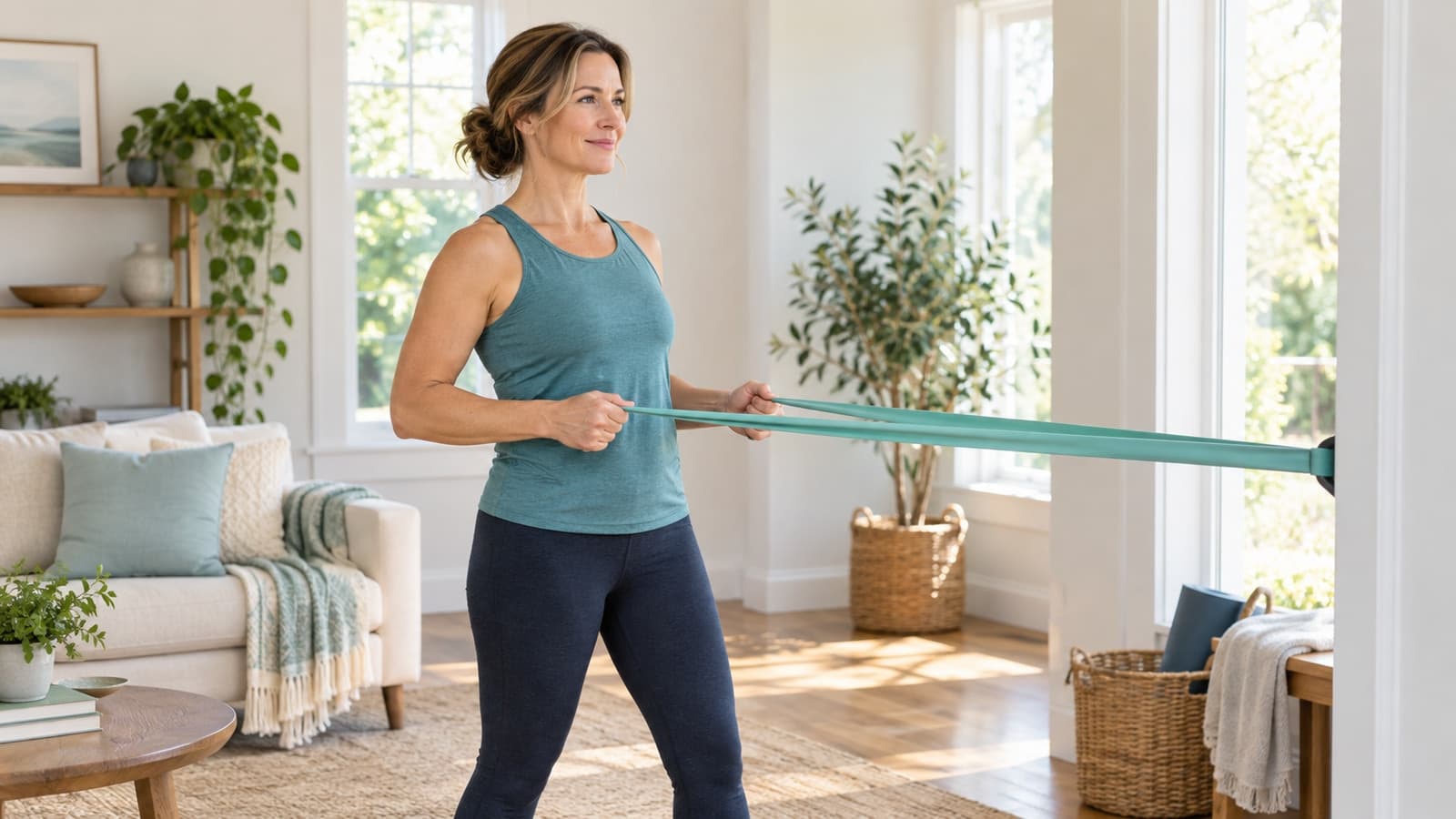
You might notice that a resistance band feels easier to control, a walk takes less effort or a movement that once felt awkward is more comfortable. Those observations are useful even when your appearance hasn't changed the way a video promised.
For context on individual differences, read why GLP-1 weight-loss results vary. Pick a routine you can return to; your body doesn't need to follow someone else's map.