










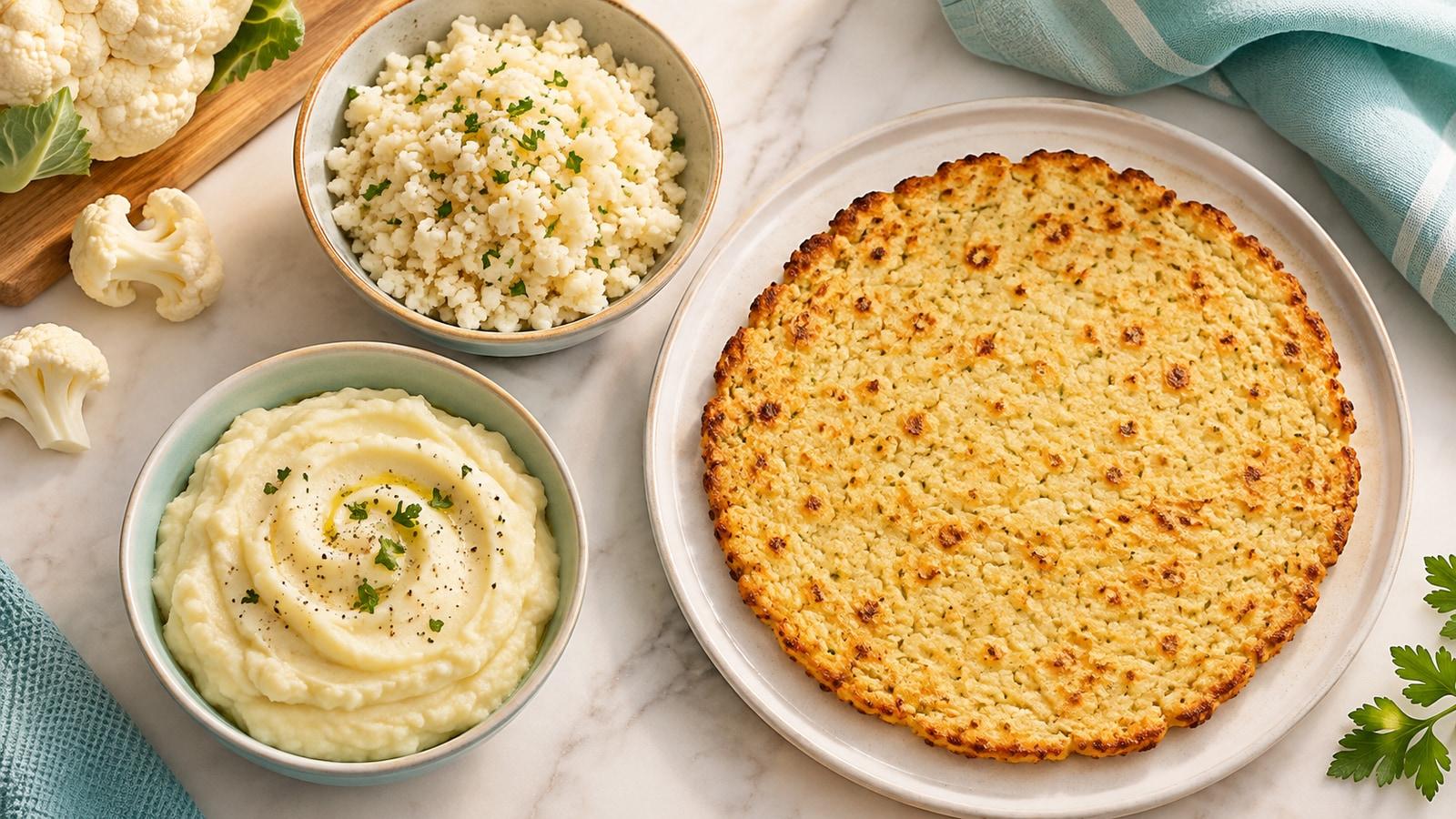
A bag of cauliflower rice and a cauliflower pizza crust may sit a few feet apart in the freezer aisle, but they don't necessarily belong in the same shopping category. One might contain a single vegetable; the other could include flour, cheese, eggs, or several other ingredients.
That isn't a reason to avoid either one. It is a reason to turn the package over before assuming that every product with “cauliflower” on the front will cook, taste, or fit a meal the same way.
Start with what you want to make
Plain cauliflower rice is chopped into small pieces. It can be useful under a saucy dish, mixed with cooked rice, or folded into a skillet meal. The texture is different from a grain, so mixing the two is an option if you like some of each.
Frozen florets are a better fit when you want larger pieces for a side or a soup. A packaged cauliflower mash is already prepared or seasoned to some extent, depending on the brand. Read the heating directions and the ingredients to find out what is in the bag.
A crust has a different job. It needs ingredients that hold together, and the exact mixture varies. Some products include cheese or egg; others use a starch or flour. Pick one because you like the flavor and it works for the people eating it, not because the word cauliflower promises a particular nutrition profile.
Check the rest of the ingredient list
Two bags of cauliflower rice may look similar from the front. One could be plain, while another contains oil, salt, sauce, or other vegetables. A seasoned version can save time, but it may not suit the meal you had in mind. If you're serving different preferences at the table, an unseasoned bag lets each person add their own sauce.
For a mash, check whether milk, butter, cheese, or a plant-based ingredient has been added. If someone has a food allergy, read the full ingredient list and the allergen information on the actual package. Product recipes can change, so a familiar brand is still worth checking.
A cauliflower crust isn't automatically gluten-free or dairy-free. Look for a suitable labeled product if you need one, and check for wheat, milk, egg, or other ingredients relevant to your household. If cross-contact is a concern, ask the manufacturer about the specific product.
Make the serving sizes match before comparing
Check the listed serving size and weight before comparing two products. A smaller number on a mash label may describe a smaller serving than the one on a crust label. Adjust the comparison for the amount you expect to eat, and remember that toppings or a sauce might not be included in the package's numbers.
Our food-label guide explains how to use serving information. For these products, you might compare sodium, carbohydrates, fiber, or protein, depending on the question you brought to the store.
Think about the whole plate
Cauliflower can add a vegetable to dinner, but it doesn't have to carry the entire meal. A bowl with cauliflower rice, for example, might also include tofu or chicken, a sauce you enjoy, and a scoop of regular rice. A cauliflower crust might be a convenient base for pizza toppings and a side salad.
If you need to manage blood sugar or follow a particular eating plan, compare the actual carbohydrate amount and discuss your needs with your care team. “Vegetable-based” doesn't tell you the complete carbohydrate content, and a crust or sauce may contain other ingredients.
The same goes for protein. A cheese-containing crust may list a different amount from plain cauliflower rice, but the product name alone won't tell you how much is in your serving. Use the label and the rest of your meal to decide what works for you.
Look at the cooking directions before checkout
Some frozen products are intended to be cooked before eating. Follow the directions on your package, including microwave standing time if one is listed. That matters even if you plan to cool the cooked cauliflower and add it to a cold bowl later.
Check the equipment and time required, too. A crust that needs an oven may not be the easiest lunch if you only have a microwave. A bag that must be cooked all at once might be less convenient than one you can portion while frozen. Follow the package's storage directions for anything you don't use.
If you're shopping for several meals, compare the package size and price alongside the preparation steps. The least expensive bag isn't much help if it ends up forgotten because you don't have a way to cook it.
Pay attention to how it sits
Some people experience gas after eating cauliflower. If it's a food you haven't had in a while, start with an amount that feels comfortable and notice how it works for you. There are plenty of other vegetables to choose from if cauliflower repeatedly leaves you uncomfortable.
A smaller appetite on a GLP-1 can make the question “What sounds good today?” more useful than a strict food rule. If nausea or other symptoms keep you from eating or drinking enough, talk with your care team. Choosing a different frozen vegetable may make dinner easier, but it won't address a persistent medical problem.