










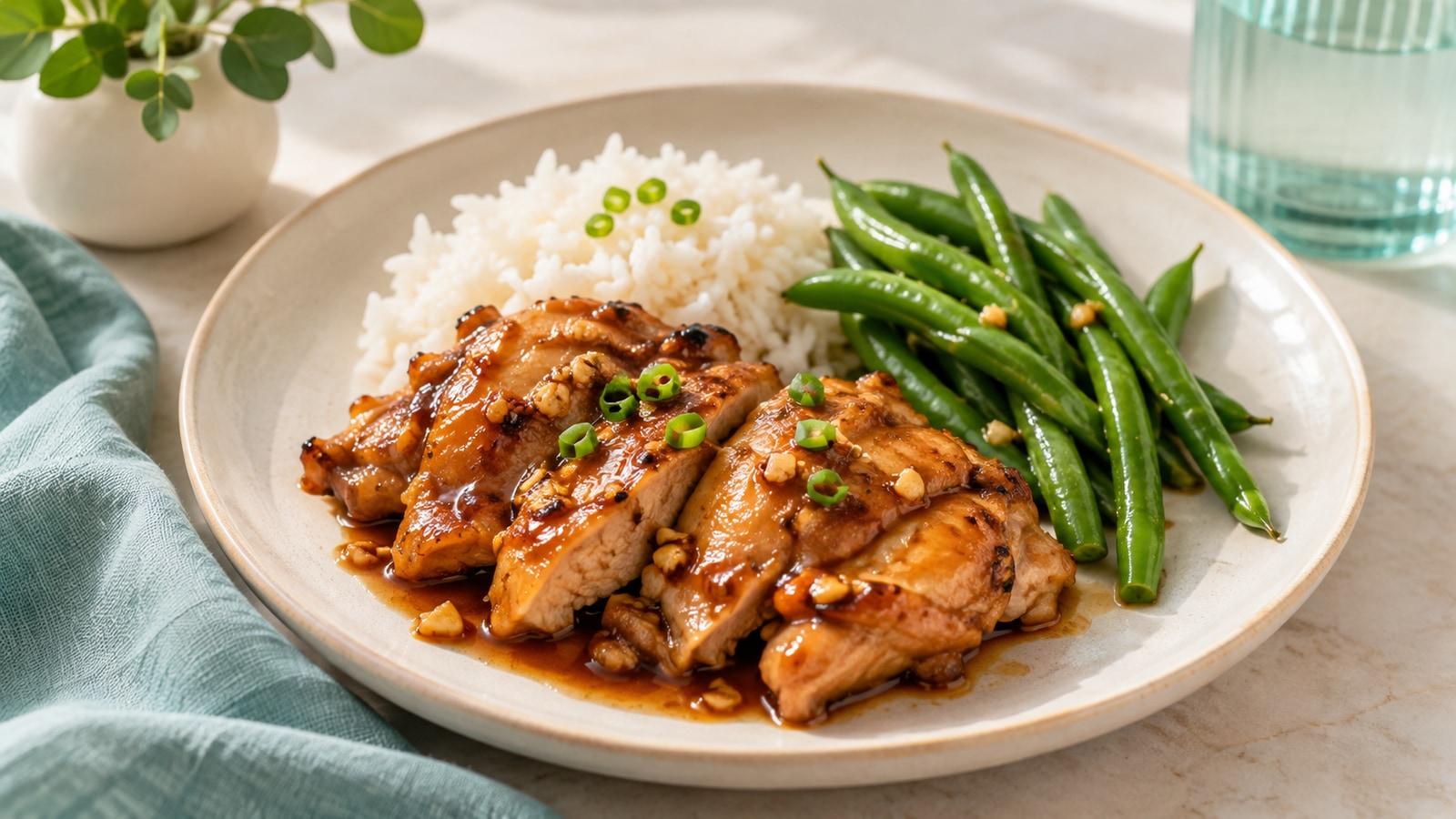
Filipino adobo has many family and regional versions. This home adaptation simmers chicken in a sauce with vinegar, soy sauce, garlic, and bay leaf, then serves it with rice and green beans. The sauce is savory and tangy; the rice helps balance its strong flavor.
You don’t need a long list of ingredients, but you do need a little time for the chicken to simmer. Taste the finished sauce with a clean spoon and adjust it with water if it’s stronger than you prefer.
Ingredients
Makes: about 4 servings
Prep: about 15 minutes
Cook: about 30–35 minutes
- 1 pound boneless, skinless chicken thighs or breast, cut into large pieces
- ¼ cup vinegar
- 2 tablespoons lower-sodium soy sauce
- ½ cup water, plus more as needed
- 3 garlic cloves, lightly crushed
- 2 bay leaves
- Black pepper to taste
- 1 pound green beans, trimmed
- Cooked rice, for serving
- Sliced scallions, optional
Different vinegars and soy sauces have different strengths. Start with the amounts listed and add water if needed. Keep the chicken refrigerated until cooking and prepare the green beans before handling raw poultry.
Prepare and simmer
- Wash your hands and rinse the green beans and scallions under running water. Trim the beans and set them aside on a clean plate.
- Mix vinegar, soy sauce, water, garlic, bay leaves, and pepper in a pot. Cut the chicken on a separate board into similar-sized pieces, then add it to the pot.
- Wash your hands, board, knife, and counter with soap and water after handling raw poultry. Don’t rinse the chicken.
- Bring the pot to a simmer, cover, and cook gently for about 20–30 minutes, turning the chicken occasionally. The thickest pieces must reach 165°F on a food thermometer. Add a splash of water if the sauce reduces too quickly.
- While the chicken cooks, steam or simmer the green beans until tender to your liking. Prepare the rice according to its package directions.
- Remove the bay leaves. Serve chicken and a little sauce over rice with green beans and scallions if you like.
Use a clean spoon to taste the sauce after it has cooked. The sauce has been in contact with raw chicken, so it must be cooked thoroughly; don’t reserve the uncooked liquid for serving.
Find the balance you like
Adobo can be more sour, salty, or garlicky depending on the cook. This version starts with a modest amount of soy sauce and enough water to create a spoonable sauce. If it tastes too intense after cooking, add a little water and simmer briefly. If it’s too thin, simmer uncovered after the chicken is safely cooked.
Garlic cloves soften as they cook. Leave them whole for a gentler flavor or crush them into the sauce for a stronger one. Bay leaves add aroma but should be removed before serving.
A little sauce goes a long way over rice. Put the rest on the table separately so each person can add more. You can also add a squeeze of citrus or chopped scallions to an individual bowl if you enjoy a fresh finish.
Cooking chicken safely
Chicken pieces of similar size cook more evenly. Check the thickest pieces with a thermometer rather than judging by color. If one piece hasn’t reached 165°F, continue cooking and check again.
Use clean equipment for the finished chicken. Wash utensils that touched it while raw, and don’t place cooked food back on the raw poultry board. If you choose to marinate the chicken, do so in the refrigerator, not on the counter.
Cook the green beans separately rather than letting them sit through the whole adobo simmer. You can leave them crisp-tender for contrast with the chicken or cook them longer for a softer side. Follow the package directions if you’re starting with frozen beans.
Make the plate your own
Chicken provides protein, while rice and green beans give the sauce a base and a vegetable side. Serve the components separately if people want different proportions. For a softer meal, cut the cooked chicken into smaller pieces and cook the beans until tender.
Soy is a common allergen, and ordinary soy sauce can contain wheat. If avoiding gluten, choose a suitable labeled sauce. For a soy allergy, select an alternative appropriate for the person eating; it will change the flavor, so adjust the amount gradually.
Brown rice, white rice, or another grain can be used. Follow its package directions. If you have a family adobo recipe, this adaptation can be adjusted to reflect the flavors you already enjoy.
Leftovers
Refrigerate chicken, sauce, and beans in shallow containers within two hours, or within one hour above 90°F. Keep them at 40°F or below and use within three to four days. Cool and refrigerate cooked rice within one hour, use it within 24 hours and reheat it only once. Reheat the chicken and rice to 165°F, and bring the sauce to a boil when reheating. Add a little water if the sauce has thickened in the refrigerator.
Keep fresh scallions separate until serving. Leftover chicken can go into a rice bowl with the beans or alongside another vegetable. The sauce remains strong, so begin with a little and add more to taste.
This is a simple way to explore one version of adobo: let the chicken simmer safely, then adjust the sauce and sides at the table.