










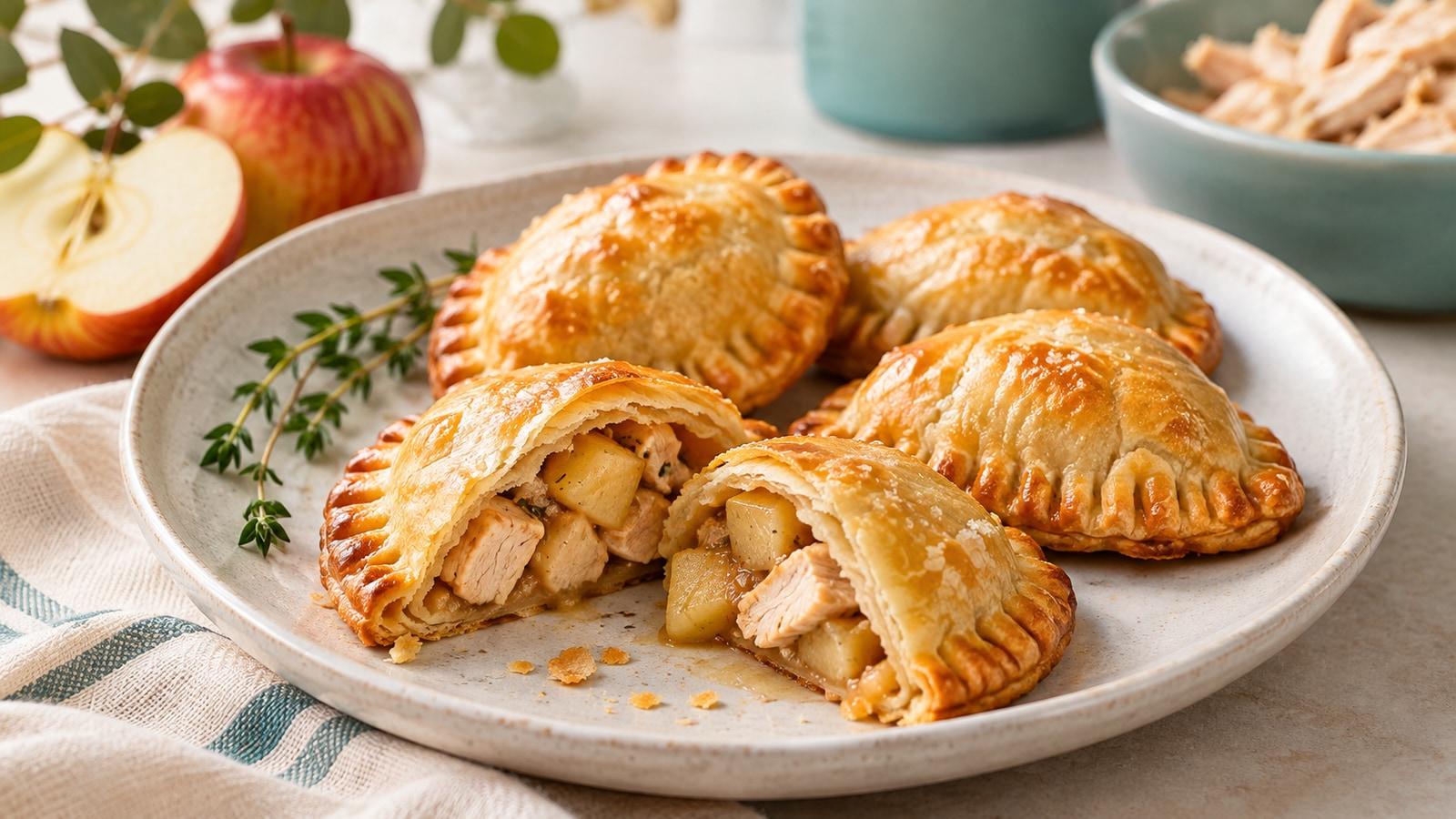
These small hand pies combine cooked chicken and apple in a savory filling wrapped in prepared pastry. They’re useful for a snack plate or light lunch, with a salad or cooked vegetables on the side.
The filling should be thick and cool enough to handle before it goes into the pastry. Use a modest amount in each pocket so the edges can seal.
Ingredients
Makes: about 8 small hand pies, depending on pastry size
Prep: about 20–25 minutes
Bake: according to pastry package directions
- 1½ cups cooked chicken, finely chopped
- 1 apple, finely diced
- ½ small onion, finely diced
- 1 teaspoon olive oil
- ¼ teaspoon dried thyme
- 1–2 tablespoons water or lower-sodium broth, as needed
- 8 prepared pastry discs, thawed as directed
- 1 egg, beaten for brushing, optional
Use chicken that was cooked to 165°F and refrigerated promptly if prepared ahead. Choose a pastry suitable for baking and follow its handling, temperature, and timing instructions.
Make the filling
- Wash your hands and rinse the apple under running water. Core and dice it into small pieces. Dice the onion.
- Warm the oil in a skillet and cook the onion until softened. Add the apple and thyme, with a spoonful of water if needed, and cook until the apple is tender.
- Stir in the cooked chicken and warm the mixture. If using refrigerated chicken, heat the filling to 165°F. It should be moist but not runny.
- Spread the filling in a shallow dish so it cools enough to handle. Put it in the refrigerator promptly if you aren't ready to assemble the pies.
Fill and bake
Heat the oven according to the pastry package. Place a pastry disc on a clean surface and add a small spoonful of filling, leaving a clear border. Fold the dough over and seal the edges according to the package; a fork can help crimp some products.
Put the pies on a lined baking sheet. Brush lightly with beaten egg if using. Bake for the package’s recommended time and temperature until the pastry is fully cooked and golden and the center of the filling reaches 165°F. Let the pies rest briefly before serving because the filling can be very hot.
Raw pastry and egg aren't ready to taste. Clean your hands and tools after handling them, and put the baked pies on a fresh plate.
Keep the filling inside
Dice the apple and chicken small enough that the dough can fold around them. Large chunks can tear a thin pastry disc. Start with less filling than you think will fit; you can serve any extra alongside.
If filling reaches the edge, wipe it away before sealing. Follow the pastry package for whether the edge needs water. Press firmly enough to close the seam without stretching the dough so thin that it tears.
The filling should be moist, not soupy. Simmer off excess liquid before assembly. If it looks dry, add broth a teaspoon at a time. Cooling it enough to handle also keeps the pastry easier to work with, but refrigerate it promptly if you’re preparing ahead.
Apple and seasoning choices
A firm apple keeps more shape, while a softer one breaks down into the filling. Either can work. Use a sweeter apple for a more noticeable fruit flavor or a tart one for a sharper contrast with the chicken.
Thyme is mild; sage or parsley can give a different savory note. A little black pepper is optional. Taste the cooked filling with a clean spoon before it goes into the dough and adjust the herbs if you like.
Chicken provides protein, and apple adds fruit to the filling. A small pie can be a snack; add vegetables or a salad for a larger meal. Sizes vary with the pastry, so serve an amount that suits your appetite.
Allergies and alternatives
Prepared pastry often contains wheat, milk, or egg. These can be allergens, and wheat contains gluten. Check the label and choose a suitable product for the person eating. A gluten-free pastry may need different handling and baking time.
The egg wash is optional. If you leave it off, follow the pastry package for any suggested finish. The pastry may look different, but it still needs to be fully baked.
Storage and reheating
Put any extra pies into shallow containers and refrigerate them promptly. When reheating, check that the filling reaches 165°F. The oven can help crisp the pastry; loosely cover the tops if they darken before the centers are hot.
For travel, keep the pies cold in an insulated bag with a cold pack and reheat when you have a suitable place. Perishable food shouldn’t sit at room temperature for more than two hours, or one hour when it’s above 90°F.
If there's filling left over, chill it promptly and try it over a baked potato the next day. Reheat it to 165°F. A tidy seal matters more than a decorative crimp, especially while you're learning how much filling your pastry holds.