










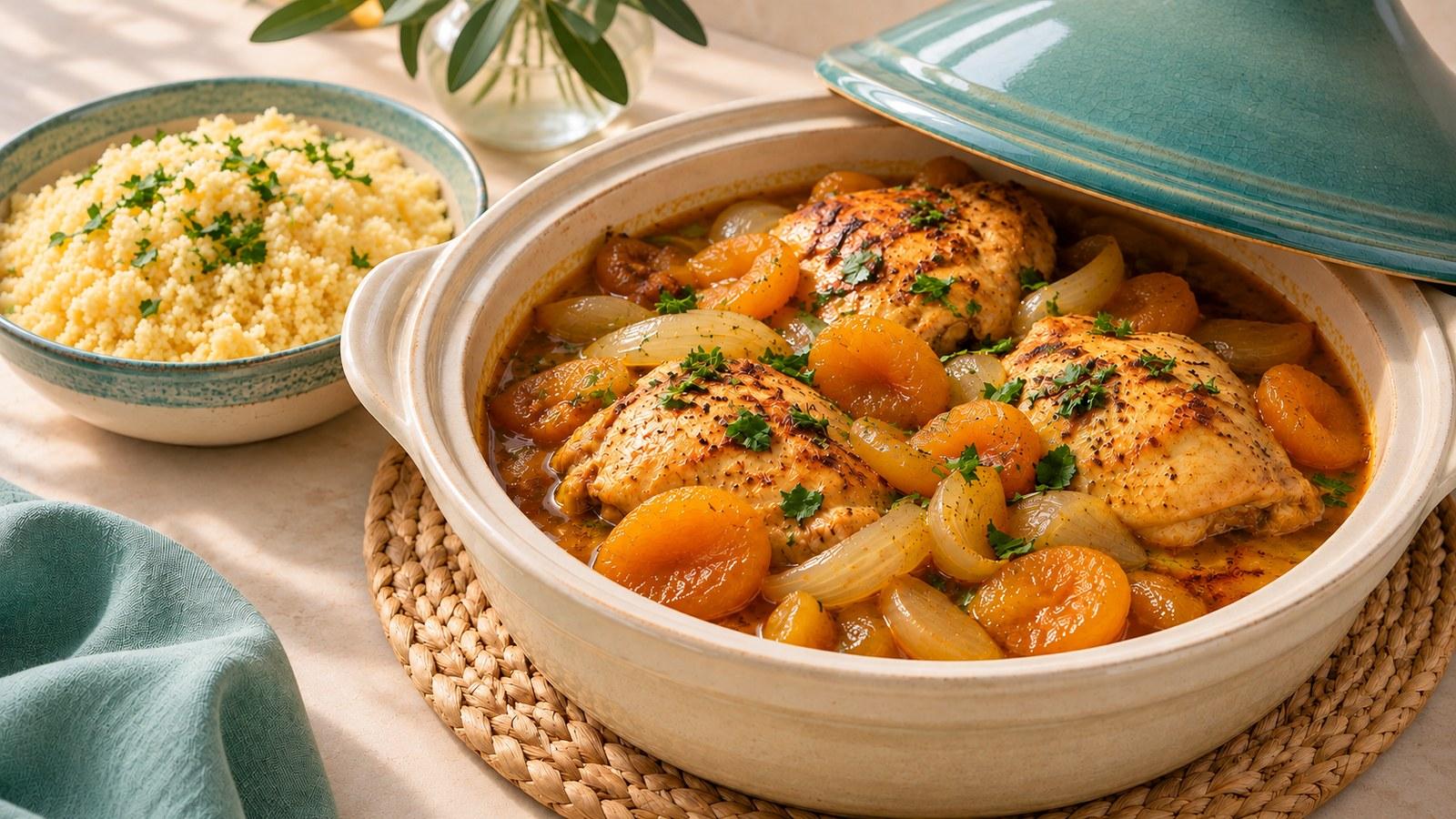
Chicken, dried apricots, and warm spices make a savory-sweet stew that’s especially good spooned over couscous. This home version is inspired by Moroccan tagine dishes and can be cooked in a covered pot if you don’t have a tagine vessel.
Tagines have many variations. Here, the apricots soften in the broth and bring a little sweetness to the chicken and onions. Start with a modest amount and add more at the table if you like a fruitier dish.
Ingredients
Makes: about 4 servings
Prep: about 15 minutes
Cook: about 30 minutes
- 1 pound boneless, skinless chicken thighs or breast, cut into large pieces
- 1 tablespoon olive oil
- 1 medium onion, sliced
- 2 garlic cloves, minced
- 1 teaspoon ground cumin
- ½ teaspoon ground ginger
- ¼ teaspoon cinnamon
- 1 cup lower-sodium chicken broth, plus more as needed
- ⅓ cup chopped dried apricots
- 1 cup dry couscous, or amount needed for 4 servings
- Chopped parsley or cilantro, optional
- Lemon wedges, optional
Choose dried apricots that are soft enough to chop. If they’re very dry, they may need a little more time in the broth. Keep the chicken refrigerated until you’re ready to cook.
Start the stew
- Wash your hands and rinse the herbs and lemon under running water. Slice the onion and chop the apricots before handling raw chicken.
- Cut the chicken on a separate board. Don’t rinse it. Wash your hands, board, knife, and counter with soap and water after contact with raw poultry.
- Warm the oil in a wide pot over medium heat. Add the onion and cook until soft. Stir in garlic, cumin, ginger, and cinnamon for about 30 seconds.
- Add the chicken and broth. Bring to a gentle simmer, cover, and cook for about 15 minutes. Add the apricots and continue cooking until the thickest chicken pieces reach 165°F. Add a splash of broth if the pot becomes dry.
- While the chicken cooks, prepare couscous according to the package directions. Serve the stew over couscous with herbs and lemon if desired.
Use a clean utensil and plate for the cooked chicken. Don’t rely on the outside color or the simmering liquid alone; check the thickest pieces with a food thermometer.
How the flavors come together
The onion softens into the broth, while ginger, cumin, and a little cinnamon provide warmth. The cinnamon should be subtle rather than sweet. If you’re unsure, start with a small pinch and adjust next time.
Adding the apricots after the chicken has begun cooking keeps them from disappearing entirely into the sauce. If you prefer them very soft, add them earlier. Larger pieces will remain more noticeable; small pieces spread the sweetness throughout the pot.
The sauce should be loose enough to spoon over couscous. If it’s too thin, simmer uncovered briefly after the chicken is safely cooked. If it’s too thick, add a little broth or water and warm it through. A squeeze of lemon at the table can balance the sweetness.
About the pot and couscous
A tagine is also the name of a traditional cooking vessel. This recipe uses an ordinary covered pot for convenience, so it won’t reproduce every aspect of cooking in that vessel. Keep the simmer gentle and check the liquid occasionally.
Couscous products differ in size and cooking time. Follow the package directions and fluff it with a fork before serving. Most couscous is made from wheat and contains gluten. If you avoid gluten, use a suitable labeled alternative such as rice and check the broth and seasonings.
If you use a traditional clay vessel, follow its manufacturer’s care and heat instructions. Some cookware requires special preparation or a heat diffuser; an ordinary pot is the simpler choice if you’re unsure.
Make a plate that suits you
Chicken provides protein, and couscous gives the sauce a grain base. Add cooked carrots, greens, or a salad if you want another vegetable. You can put the stew and couscous on the table separately so each person chooses the balance they prefer.
For a softer meal, cut the cooked chicken into smaller pieces and simmer the apricots until tender. For more texture, leave the fruit in larger pieces and add fresh herbs after cooking. A few toasted almonds can be a garnish if they fit your needs, but tree nuts are a common allergen and are entirely optional.
If dried fruit isn’t your favorite, use a smaller amount. The stew can still have a pleasant savory flavor from onions and spices without a strong sweet note.
Leftovers
Refrigerate the chicken, sauce, and couscous in shallow containers within two hours, or within one hour above 90°F. Keep them at 40°F or below and use within three to four days. If serving rice, cool and refrigerate it within one hour, use it within 24 hours, and reheat it only once. Reheat to 165°F, checking the center of the chicken and stirring the couscous so it warms evenly. Add a little water if the grains have dried out.
Keep lemon and fresh herbs separate until serving. Leftover chicken and apricots can also go over rice or alongside roasted vegetables. Use clean utensils, and keep the cooked food refrigerated until you’re ready to warm it.
This adaptation is easiest when the onion softens first, the chicken simmers gently, and the couscous is prepared while the pot finishes.