










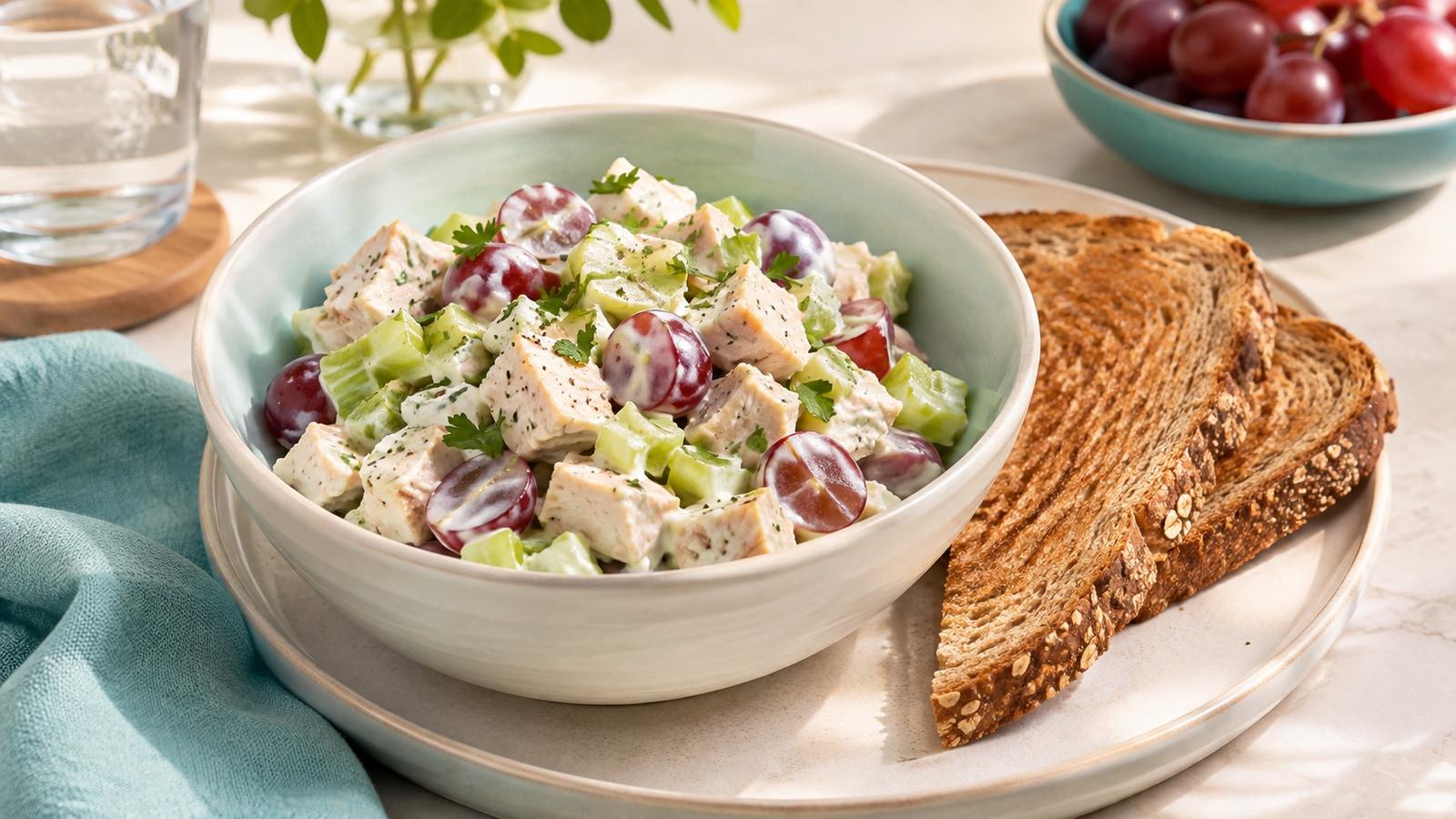
Chicken salad doesn’t have to be heavy or complicated. This version combines cooked chicken with juicy grapes, celery, and a tangy yogurt dressing. It’s a useful way to turn a safely stored chicken portion into a lunch that can go on toast, over greens, or into a container for later.
The mix of soft chicken, crisp celery, and fruit is the point, so keep the pieces small enough to share a bite. Add the dressing gradually; you can always stir in another spoonful.
Ingredients
Makes: about 3 servings
Prep: about 15 minutes, using cooked and chilled chicken
- 2 cups cooked chicken, diced or shredded
- 1 cup seedless grapes, halved or quartered
- ½ cup finely diced celery
- ⅓ cup plain yogurt
- 1 teaspoon Dijon mustard, optional
- 1 teaspoon lemon juice, optional
- Black pepper to taste
- Optional: chopped parsley, lettuce, toast, or crackers
Use chicken that was cooked to 165°F and refrigerated promptly. If you’re starting with raw chicken, cook it safely and chill it before making a cold salad. Keep raw poultry away from produce and clean the board, knife, hands, and counter after handling it.
Mix the salad
- Wash your hands. Rinse the grapes and celery under running water, then cut them into small pieces.
- In a bowl, stir the yogurt with the optional mustard and lemon juice. Add a little pepper.
- Fold in the chilled chicken, grapes, and celery. Add a spoonful more yogurt if the mixture seems dry.
- Serve immediately or cover and refrigerate. Add parsley, lettuce, toast, or crackers when you’re ready to eat.
Cut grapes into pieces appropriate for the people eating them. For young children or anyone with swallowing concerns, follow the food-texture advice given by their care team. The salad can also be chopped more finely if larger pieces are awkward.
If the chicken is very cold and firm, use a fork to separate it before mixing. Shredded chicken absorbs dressing differently from neat cubes; neither is the wrong choice. The goal is a filling you can scoop without it becoming soupy.
Choosing the yogurt
Plain yogurt gives a tangier dressing than mayonnaise. A thicker yogurt may need a teaspoon of water or lemon juice to loosen it; a thinner one may require less. Taste the dressing before mixing it with the chicken so you can adjust the mustard or pepper.
If you want a richer flavor, replace part of the yogurt with mayonnaise. Check labels for ingredients relevant to allergies: yogurt contains milk, and many mayonnaise products contain egg. A suitable dairy-free alternative is possible, though its flavor and protein content may differ.
Grapes supply sweetness, so the dressing doesn’t need a lot of additional sweetener. If grapes aren’t available, a small amount of diced apple or pear changes the flavor and can provide crunch. Add softer fruit shortly before serving so the salad keeps the texture you like.
Celery leaves are usable too: rinse and chop a few into the dressing if you enjoy their stronger flavor. If you prefer less crunch, dice the stalks very finely or use a smaller amount and serve extra vegetables on the side.
Build a lunch around it
Spoon the salad onto toast, tuck it into a pita, or serve it over lettuce with crackers on the side. The chicken provides protein; the bread or crackers can make the meal more substantial when that’s what you want. A piece of fruit or a cup of soup can round out the plate.
If you’re packing lunch, put the salad in a sealed container and keep it cold in an insulated bag with ice packs. Pack bread or crackers separately to prevent them from becoming soggy. Assemble the sandwich when you’re ready to eat.
For a smaller appetite, start with a few spoonfuls and save the rest safely. If you take a GLP-1 medication, the portion that feels comfortable may change from day to day. Contact your care team if nausea persists or makes eating and drinking difficult; this salad is a meal option rather than a treatment.
Know the age of your chicken
Chicken salad can generally be kept in a refrigerator at 40°F or below for three to four days, but that doesn’t mean older chicken gets a new storage period when you mix it with yogurt. Consider when the chicken was originally cooked. If you’re uncertain about its age or how it was stored, start with freshly prepared chicken.
Refrigerate the salad promptly, within two hours of preparation or within one hour if it has been exposed to temperatures above 90°F. Use a clean spoon each time you serve it, and don’t leave the bowl on the table for a long afternoon. Chicken salad does not freeze especially well.
The separate components make this lunch easy to adapt. Keep extra grapes and celery for another meal, and mix only the amount of chicken salad you expect to use while it’s at its best.