










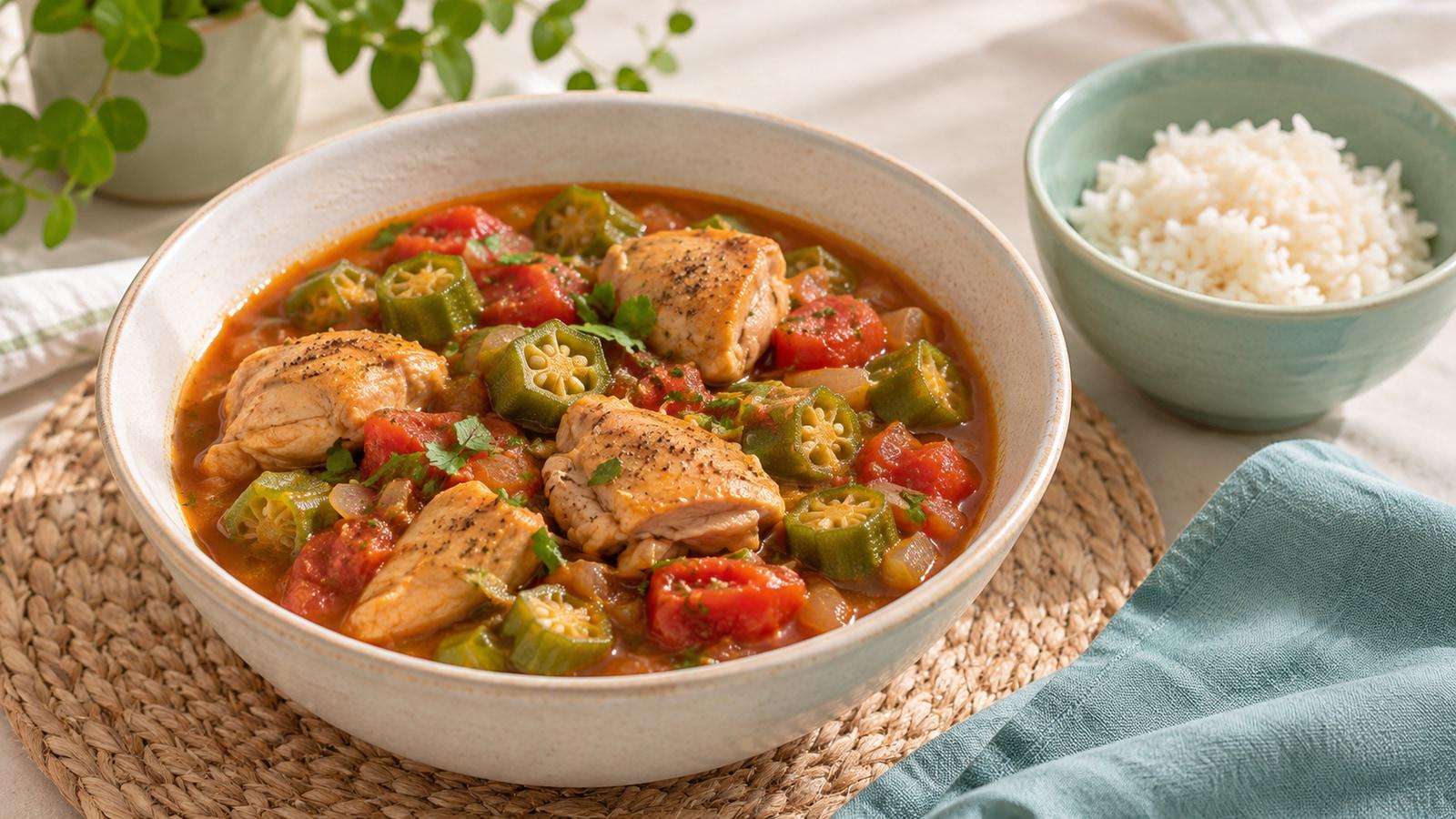
Chicken and okra simmer in a tomato broth for a simple, savory stew. Serve it over rice or with bread to catch the sauce. The okra adds its own texture, and you can cook it a little longer if you prefer it softer.
This is a flexible home stew rather than a single traditional recipe. Keep the seasoning mild, then offer hot sauce at the table for anyone who wants more heat.
Ingredients
Makes: about 4 servings
Prep: about 15 minutes
Cook: about 30 minutes
- 1 pound boneless, skinless chicken thighs or breast, cut into pieces
- 1 tablespoon olive oil
- 1 small onion, diced
- 1 bell pepper, diced
- 2 garlic cloves, minced
- 1 can (14–15 ounces) diced tomatoes
- 1 cup lower-sodium chicken broth, plus more as needed
- 2 cups sliced okra
- ½ teaspoon dried thyme
- Cooked rice, parsley, or lemon wedges, optional
Fresh or frozen okra can work. If using frozen, follow the package cooking directions and allow for a different texture. Keep the chicken refrigerated until you’re ready to cook, and cut the vegetables before handling raw poultry.
Prepare the ingredients
- Wash your hands and rinse the pepper, fresh okra, and any garnish under running water. Dice the onion and pepper. Trim the okra stems and slice the pods.
- Cut the chicken on a separate board into similar-sized pieces. Don’t rinse raw chicken. Wash your hands, board, knife, and counter with soap and water after handling it.
- Warm the oil in a pot over medium heat. Add onion and pepper and cook until softened. Stir in garlic and thyme briefly.
Simmer the stew
Add the chicken, tomatoes, and broth to the pot. Bring to a simmer, cover, and cook for about 12–15 minutes. Add the okra and continue simmering until the okra is tender and the thickest chicken pieces reach 165°F on a food thermometer.
The time depends on the size of the chicken pieces. Check more than one piece, and add a little broth or water if the pot becomes too thick. Serve over rice with parsley or lemon if you like.
Use a clean serving spoon and don’t return cooked chicken to a plate that held it raw. If the okra needs more time after the chicken is cooked, keep the stew at a gentle simmer and check the texture again.
Getting comfortable with okra
Okra can make a broth slightly thick and silky as it cooks. Some people enjoy that texture; others prefer it less noticeable. Slicing the pods into larger pieces and adding them later gives them less time to break down. Smaller slices and a longer simmer make the texture more pronounced.
Choose tender-looking pods when buying fresh okra. Wash and dry them before slicing. If you use frozen okra, it’s already cut in many packages; follow the label’s cooking instructions rather than assuming it is ready to eat.
Tomatoes and a little lemon add brightness. Keep the lemon on the table if you want people to adjust their own bowls. A pinch of smoked paprika can add depth, while hot sauce can stay separate for those who like heat.
Check the chicken
Chicken pieces should be similar in size so they cook at roughly the same pace. A food thermometer is the reliable way to check the thickest pieces; color and texture can be misleading. The safe minimum for poultry is 165°F.
Chicken provides protein. Thighs may stay more moist during a simmer, while breast meat is another option. Either way, keep the heat gentle and add enough liquid that the stew doesn’t catch on the bottom.
If you use leftover cooked chicken, refrigerate it promptly after its first cooking and reheat it to 165°F when adding it to the stew. Don’t leave it on the counter while the vegetables cook.
Serving ideas
Rice makes a useful base for the tomato broth, but bread or another grain works too. Add a side of greens or a salad if you want more vegetables. Serve the rice separately if people prefer different amounts.
For a softer meal, cut the cooked chicken into smaller pieces and simmer the okra until tender. If you like more texture, keep the vegetables in larger pieces and add them later. The bowl can be adjusted without changing the basic ingredients.
If you want more liquid, add broth and warm it through. For a thicker stew, simmer uncovered for a few minutes after the chicken is safely cooked. Taste with a clean spoon before adding salt; canned tomatoes and broth vary in sodium.
Store and reheat
Refrigerate the stew promptly in shallow containers. Cool and refrigerate cooked rice within one hour, use it within 24 hours, and reheat it only once. Bring the stew to a rolling boil when reheating, stirring evenly, and heat the rice to 165°F. Add water if the sauce has thickened.
Keep fresh herbs and lemon separate until serving. Leftovers can go over rice or alongside a baked potato. The okra may soften further after storage, which makes the next bowl a little different from the first.
Start with a mild pot, check the chicken with a thermometer, and let everyone add their own finishing touches.