










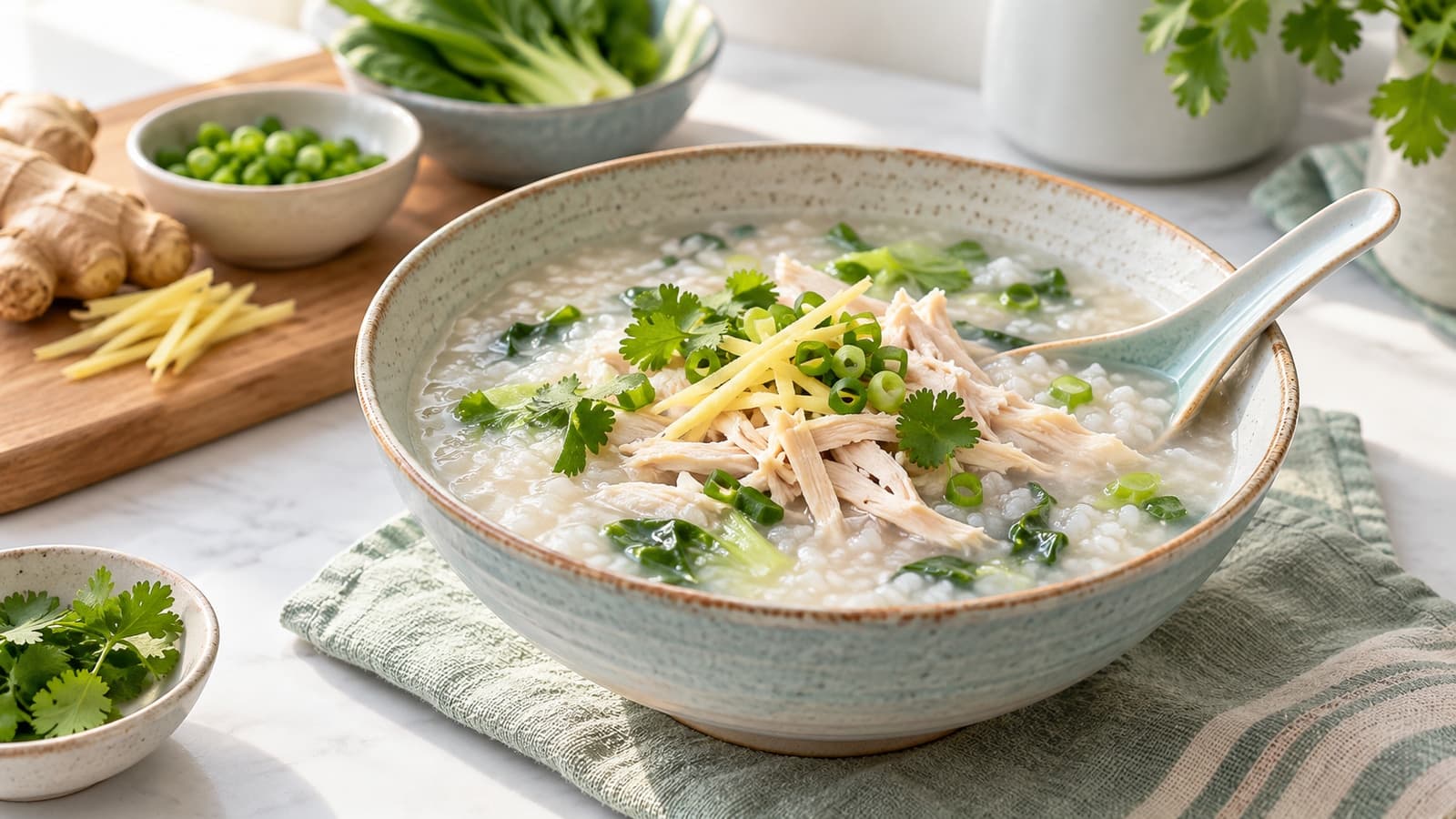
Congee is a rice porridge with many names and family versions. Some bowls are thick enough to hold a spoon upright; others are closer to soup. This one pairs the soft rice with chicken, ginger and vegetables, with toppings offered separately.
If you grew up eating congee, you may already have a favorite way to make it. Consider this a flexible idea, not a replacement for the version you know.
Start with rice and broth
Choose the rice you like and a broth or water for cooking. You’ll also need cooked chicken, a little fresh ginger and vegetables such as carrots or spinach. Check the broth label if you have an allergy or prefer to limit sodium; ingredients vary.
A stovetop pot with room for plenty of liquid works well. Add rice and broth, bring to a boil, then lower the heat and simmer gently. Stir occasionally and add water if the mixture becomes thicker than you want. Keep an eye on the bottom of the pot so the rice doesn't catch.
The rice is ready when it has opened up and the porridge is as soft as you like. Different rice types and amounts take different lengths of time. If you want a looser bowl, stir in warm water or broth. For a thicker one, simmer a little longer.
Congee can be prepared in many ways, including with chicken cooked in the pot. This version uses separately cooked chicken so you can choose how much goes into each bowl.
Prepare the chicken and vegetables
Cook raw chicken to an internal temperature of 165°F, checking the thickest part with a food thermometer. Use separate utensils and surfaces for raw poultry, and wash hands and equipment after handling it. Once cooked, shred or chop the chicken with clean utensils.
Cut carrots small and simmer them in the porridge until soft. Tender greens can go in later; cook them to the texture you enjoy. If using frozen vegetables, follow their package directions. Add the cooked chicken to the hot porridge and warm it through before serving.
There’s no fixed amount of chicken you have to add. Put some in the pot, or offer it separately so each person can choose a portion. Chicken brings protein to the bowl, while rice and vegetables add their own flavors and textures. We haven’t calculated a protein total for this flexible version.
Season your bowl
Thin slices of ginger add flavor as the porridge cooks. You can remove them before serving, grate a little into your bowl or leave ginger out altogether. It’s an ingredient, not a treatment for nausea.
Green onion, cilantro or a small splash of a sauce you enjoy can be added at the table. Check sauce labels for ingredients you need to avoid: soy sauce, for example, often contains soy and wheat. Sesame oil is another possible allergen-containing addition.
If a soft texture is appealing on a GLP-1, start with a comfortable portion and keep more available. If you have ongoing trouble eating, persistent vomiting or symptoms that concern you, talk with your care team rather than relying on a particular food to fix them.
Take care with the leftovers
Treat leftover rice porridge as something to chill right away. Spread it among shallow containers in small portions; aim to cool it within an hour, then refrigerate. Eat it within 24 hours and warm a portion only once. Reheating cannot make rice safe if it sat out too long.
When reheating this porridge, bring it to a rolling boil, stir and make sure the chicken is hot throughout; leftovers should reach 165°F. Use a clean thermometer. Reheat only the portion you plan to eat.
For more ideas when texture matters, see meals for sensory preferences. A bowl can be as simple or as dressed up as you want it to be.