










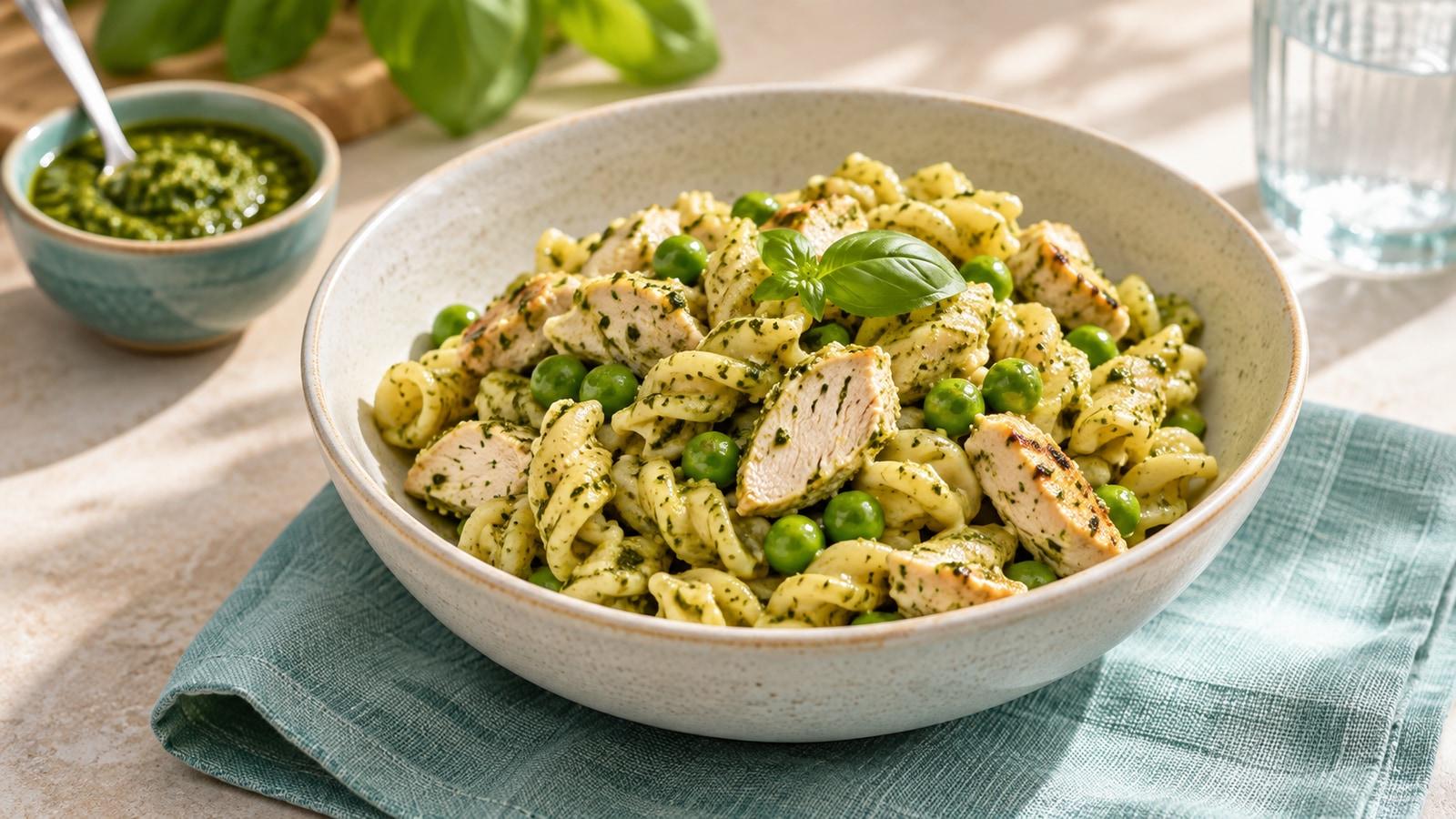
Cold pasta salad is a useful lunch when you’d rather assemble something once than cook again at noon. This version pairs cooked chicken and peas with a little pesto. The sauce does most of the flavor work, so you can keep the rest of the ingredient list short.
The trick is keeping the components safely chilled and adding enough dressing to coat the pasta without making the bowl oily. You can always offer extra pesto on the side.
Ingredients
Makes: about 4 servings
Prep: about 15 minutes
Cook: according to the pasta and pea packages, plus chilling
- 8 ounces dry short pasta
- 2 cups cooked chicken, diced or shredded
- 1½ cups frozen peas
- ¼ cup prepared pesto, plus more to taste
- 1 cup diced cucumber or halved cherry tomatoes
- 1 tablespoon lemon juice, optional
- Optional: chopped basil or grated parmesan
Use chicken that reached 165°F when cooked and was refrigerated promptly. Pesto products differ: many contain milk and tree nuts, and some contain other allergens. Check the label. Wheat pasta contains gluten, so choose a suitable alternative if needed.
Prepare the components
- Wash your hands. Rinse the cucumber or tomatoes under running water before cutting them.
- Cook the pasta according to its package. Drain and cool promptly in a shallow container, then refrigerate.
- Cook the frozen peas according to their package directions. Drain, cool promptly, and refrigerate separately.
- In a large bowl, mix the chilled pasta, chicken, peas, and vegetables. Add the pesto a little at a time, tossing until the salad is lightly coated.
- Add lemon juice or basil if you like. Serve cold, or cover and refrigerate until mealtime.
If you’re cooking raw chicken for the salad, keep it separate from the vegetables and cook it to 165°F, measured in the thickest part. Wash your hands and any board, plate, or utensil that touched raw poultry. Cool the chicken promptly before mixing it into the cold salad.
Choose a pasta that holds the dressing
Short shapes such as rotini or penne are easy to scoop and have places for a little pesto to cling. Follow the cooking directions for the pasta you bought; whole-grain, chickpea, and gluten-free varieties may behave differently. Drain it well so extra water doesn’t dilute the dressing.
If the pasta clumps after chilling, loosen it gently with a fork and a spoonful of dressing. You can add a little water or lemon juice if needed. Start with less pesto than you think you need and taste the finished salad before adding more, since prepared sauces vary in salt and intensity.
Cook frozen peas as directed rather than assuming they’re ready to eat straight from the bag. Cooling them separately helps you control the temperature and keeps them from warming the other chilled ingredients.
Adjust the mix
Chicken contributes protein, pasta provides a grain base, and peas and vegetables add color and texture. A serving can be as small or large as your appetite requires. Pair a modest bowl with fruit or another side, or add more pasta or chicken when you want a more substantial lunch.
Pesto is flavorful even in a small amount. If someone at the table doesn’t like it, keep the sauce separate and let them dress their own portion. The same approach helps when allergies differ; use clean utensils and a sauce that’s safe for each person.
For a softer texture, cut the chicken and vegetables into smaller pieces. Cucumber gives a crisp bite, while tomatoes make the salad juicier. Add them shortly before eating if you prefer the pasta to stay firm.
Pack it cold
Refrigerate the pasta, chicken, peas, and finished salad promptly, within two hours of cooking or preparation, or within one hour if exposed to temperatures above 90°F. Keep the refrigerator at 40°F or below. A shallow container helps hot components cool more quickly than one deep bowl.
Use the salad within three to four days, accounting for when the chicken and pasta were originally cooked. Mixing older leftovers with a fresh sauce doesn’t extend their safe storage window. Follow the pesto package’s after-opening instructions as well.
For lunch away from home, put the salad in a sealed container inside an insulated bag with ice packs. Refrigerate it when you arrive if possible. Keep any extra pesto cold and use a clean spoon to serve it.
A note on appetite
If a GLP-1 medication has made your usual lunch feel too large, begin with a smaller portion and save the rest safely. Some people prefer less rich dressing on a day when their stomach feels unsettled; use the amount that appeals to you. Contact your care team if nausea persists or interferes with eating and drinking.
The salad is easiest to repeat when the components are ready to use: a container of cooked pasta, a safely stored chicken portion, and a sauce you enjoy. Toss what you need and keep the rest chilled for another meal.