










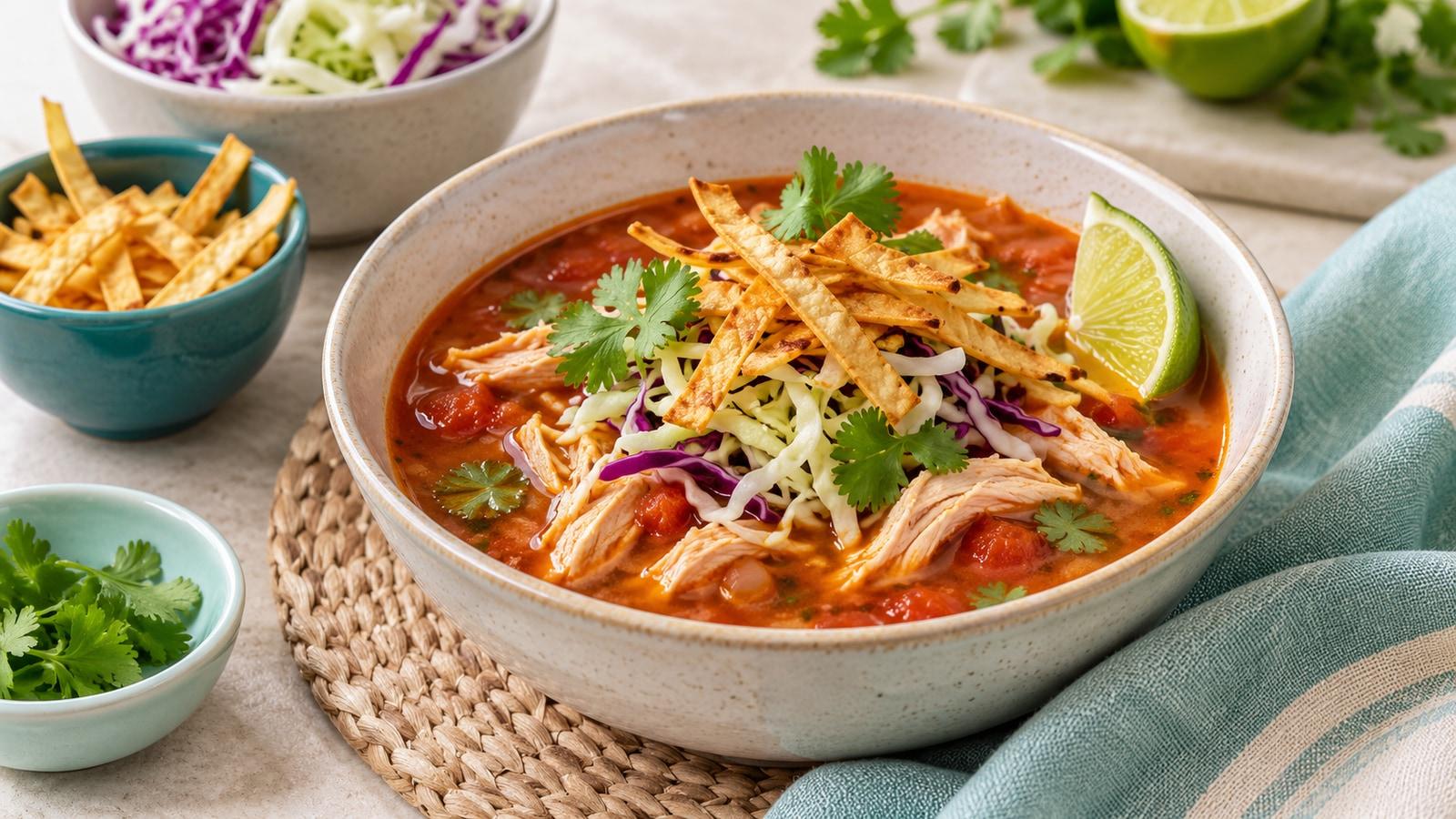
The best part of a tortilla soup might be the strips: crisp when they land on the bowl and gradually softening in the tomato broth. This version adds shredded chicken, lime, and cabbage. Bake the strips while the soup simmers so they're ready at the same time.
Start with safely cooked chicken from a recent meal, or cook it specifically for the pot. A food thermometer helps check when poultry is done before you shred it.
Ingredients
Makes: about 4 servings
Prep: about 15 minutes
Cook: about 25 minutes
- 1 tablespoon olive oil
- 1 small onion, diced
- 1 bell pepper, diced
- 1 teaspoon ground cumin
- 1 can (14–15 ounces) diced tomatoes, with their juice
- 4 cups lower-sodium chicken broth
- 2 cups cooked chicken, shredded
- 1 cup cooked or canned black beans, drained and rinsed, optional
- 2 corn tortillas, cut into thin strips
- 1 cup finely shredded cabbage
- 1 lime, cut into wedges
- Optional: chopped cilantro or a spoonful of plain yogurt
Choose corn tortillas and broth that fit your needs. If you have celiac disease, check labels for gluten and cross-contact rather than assuming every packaged product is suitable.
Prepare the strips and soup
- Heat the oven to 375°F. Wash your hands and rinse the pepper, cabbage, and lime under running water before cutting them.
- Spread the tortilla strips on a baking sheet. Bake until crisp, checking after about 8 minutes and turning if needed. Set aside; the time varies with the tortillas and oven.
- Warm the oil in a soup pot. Cook the onion and bell pepper until softened, then stir in the cumin.
- Add the tomatoes and broth. Bring to a boil, then simmer for about 10 minutes. Add the cooked chicken and optional beans and return the soup to a rolling boil. Check that the reheated chicken reaches 165°F.
- Ladle into bowls. Add cabbage, tortilla strips, lime, and any optional toppings just before eating.
If you’re cooking raw chicken for this recipe, keep it separate from produce and cook it to 165°F before shredding. Wash hands, boards, and utensils after they touch raw poultry. Keep cooked chicken refrigerated until it’s time to add it to the soup.
Keep the toppings crisp
Slice the cabbage thinly and set it out separately. It adds crunch to the soup, though you can simmer it in the broth for a softer bite. Try a little in one bowl before adding it to the whole pot.
Tortilla strips go on last. A small handful adds crunch without needing to cover the entire bowl. If you don’t want to turn on the oven for two tortillas, use a small amount of ready-made crisp tortilla strips and check the label for ingredients you need to avoid.
Lime can make the soup taste brighter, but it’s easier to add than remove. Put wedges on the table so each person can decide. The same goes for cilantro, yogurt, or heat from a favorite pepper.
Make the broth your own
The listed cumin gives the broth a mild base. If you enjoy more spice, add a little chili powder or a chopped mild pepper while the onion cooks. Start with less if you’re serving a group; people can add heat at the table.
Beans are optional. They add another texture and contribute plant protein and fiber, but the soup can still be enjoyable without them. If you don’t eat beans often, start with a small amount and see what feels comfortable.
Serve a bowl with extra tortillas, fruit, or another side if you want a more substantial meal. If your appetite is smaller, start with a cup of soup and keep the toppings nearby. You can always add more after you’ve eaten the first portion.
Packing a second bowl
Transfer extra soup to shallow containers and refrigerate it promptly. The limit is two hours after cooking, or one hour if it has been above 90°F. Chill the cabbage and yogurt separately. Keep the fridge at 40°F or colder, and eat or freeze the soup within three to four days, counting the time the chicken spent in the fridge before it went into the pot.
Store the crisp strips in a dry container so they stay crunchy. When it's time for another bowl, bring the soup to a rolling boil and check the chicken has reached 165°F before adding cold toppings. Use an insulated bag with ice packs to carry a refrigerated portion to work.
If you’re taking a GLP-1 medication, choose the portion and toppings that sound good that day. If nausea keeps you from eating or drinking normally, contact your care team; a bowl of soup isn’t a substitute for advice.
Keep the strip container near the table. Someone will probably want to add a few more halfway through the bowl.