










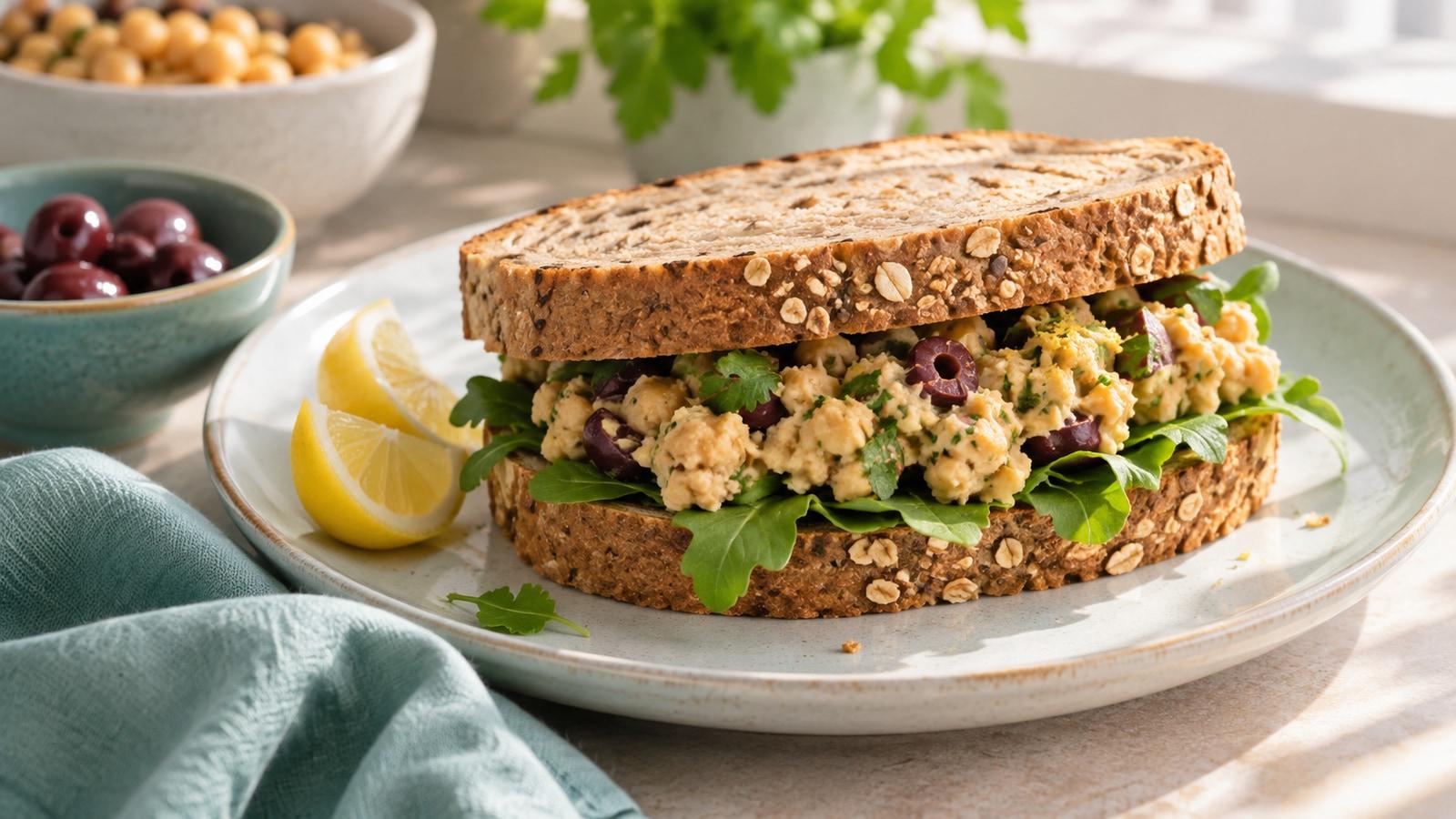
Mashed chickpeas and chopped olives make a savory sandwich filling with plenty of texture. Add greens and a little lemon, then serve it between slices of whole-grain bread or open-faced on toast.
Olives can be salty, so begin with a small amount and taste before adding more. The filling is easy to prepare ahead and keep chilled until lunch.
Ingredients
Makes: about 2 sandwiches
Prep: about 10–15 minutes
- 1 can (15 ounces) chickpeas, drained and rinsed
- 2 tablespoons pitted olives, finely chopped
- 1–2 teaspoons lemon juice
- 1 teaspoon olive oil, optional
- 1 tablespoon chopped parsley
- 4 slices whole-grain bread
- Lettuce or spinach leaves
- Sliced tomato or cucumber, optional
- Black pepper to taste
Use olives you enjoy, and check for pits even if the package says pitted. If using a prepared tapenade instead of chopped olives, check the label: some versions contain anchovies, nuts, or other ingredients that may matter to the people eating.
Make the filling
- Wash your hands and rinse the parsley, greens, lemon, and any fresh vegetables under running water. Dry the leaves gently.
- Drain and rinse the chickpeas. Mash them in a bowl with a fork, leaving some pieces whole for texture.
- Stir in chopped olives, lemon juice, oil if using, and parsley. Add a teaspoon of water if the mixture is too dry to spread. Taste with a clean spoon and adjust the lemon or pepper.
- Spoon the filling onto bread, add greens and any tomato or cucumber, and close the sandwiches. Cut in half and serve.
For an open-faced version, toast the bread and spread the filling on top. Keep extra filling refrigerated in a covered container.
Get the texture right
Mashing about half the chickpeas creates a filling that holds together while leaving some bite. For a smoother spread, use a food processor and add water a little at a time. If the mixture becomes too loose, add a few more mashed chickpeas.
Chop the olives finely so their flavor spreads through the filling. Large pieces can roll out of the sandwich, especially when the bread is cut. A small amount gives a briny taste without making every bite overwhelmingly salty.
Dry lettuce helps keep the bread from becoming soggy. If using tomato, slice it just before assembling or keep it in a separate container until lunch. Toast is useful for a warm, crisp base, but soft bread is fine if you prefer it.
For a sandwich that travels well, spread the filling in an even layer and stop short of the crust. That leaves room for it to shift without squeezing out when the bread is cut.
Flavor choices
Lemon brightens the chickpeas and olives. Start with one teaspoon; add more after tasting if you want a sharper filling. Parsley gives freshness, while basil or dill can take the sandwich in another direction.
Olives and prepared tapenades can contain a fair amount of sodium. Compare labels if that matters to you and taste before adding salt. A pinch of black pepper or smoked paprika can add flavor without requiring a salty sauce.
Some tapenades contain fish such as anchovies. Fish is a common allergen, so read the ingredient list carefully and choose a suitable product. Nuts may also appear in spreads; check for tree nuts and cross-contact when relevant.
What makes it a meal?
Chickpeas provide plant protein and fiber, and whole-grain wheat bread provides additional fiber. Greens and vegetables add color and crunch. A sandwich can be paired with fruit or soup if you want a larger lunch.
You can use a smaller amount of chickpeas and serve the rest later. Portion size depends on the bread, your appetite, and what else is on the plate.
Wheat contains gluten and can cause wheat allergy. Choose suitable labeled bread if needed. If using yogurt or cheese as an addition, remember that milk is a common allergen; keep optional toppings separate for a shared meal.
Pack and store
Refrigerate the chickpea mixture and cut vegetables promptly in covered containers. For the best texture, keep the bread separate and assemble the sandwich shortly before eating. Use an insulated bag with a cold pack if you won’t have a refrigerator.
Perishable foods shouldn’t sit at room temperature for more than two hours, or one hour when it’s above 90°F. Use a clean spoon for each serving rather than returning food that has been sitting out to the main container.
Extra filling can go on crackers, in a tortilla, or beside sliced peppers. Keep it chilled and follow safe storage guidance for cooked beans. Add fresh greens or lemon at the end.
The sandwich is flexible: mash the chickpeas as smooth as you like, use enough olives for flavor, and choose bread and vegetables that make lunch enjoyable.