










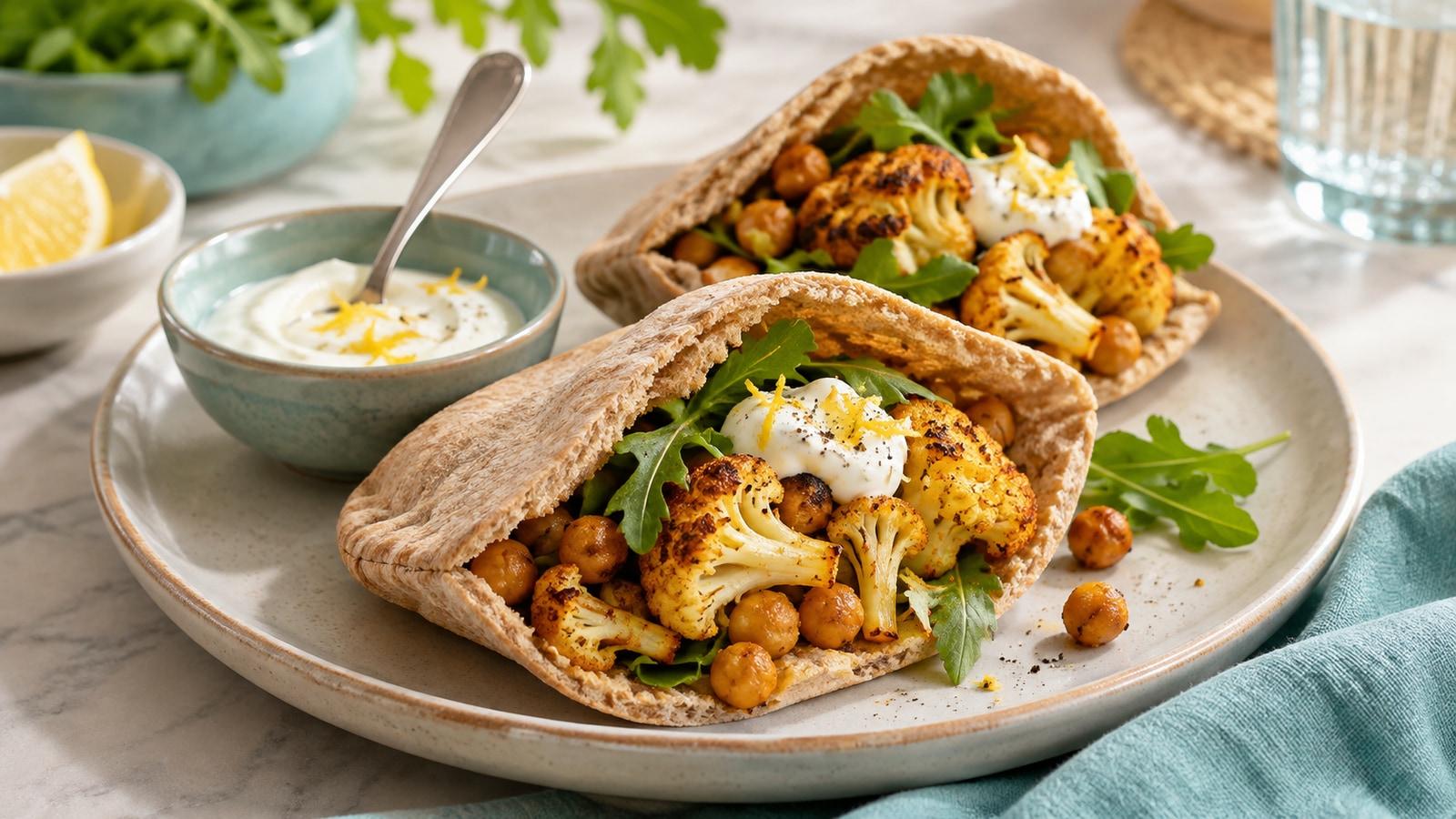
Pita pockets are forgiving: warm the bread, open it carefully, and fill it with a combination that tastes good together. In this version, chickpeas and roasted cauliflower make a warm filling, while a little lemon yogurt adds a cool contrast.
Roast a tray of cauliflower when you have time, then assemble only the pockets you plan to eat. The separate components make it easier to adjust the amount of filling and keep the bread from becoming soggy.
Ingredients
Makes: about 3 servings
Prep: about 15 minutes
Cook: about 25–30 minutes
- 1 small cauliflower, cut into bite-size florets, about 4 cups
- 1 can (15 ounces) chickpeas, drained and rinsed
- 1 tablespoon olive oil
- ½ teaspoon ground cumin
- ¼ teaspoon garlic powder, optional
- 3 small whole-wheat pita breads
- ½ cup plain yogurt or a suitable plain dairy-free alternative
- 1 cup sliced cucumber or chopped lettuce
- Lemon wedges and black pepper, optional
Pita sizes vary. A larger pita can be cut in half and shared, while a small one may make a convenient single pocket. Wheat pita contains gluten; if you need a gluten-free meal, use a suitable wrap or serve the filling in a bowl and check labels for cross-contact.
Roast and assemble
- Heat the oven to 425°F. Wash your hands and rinse the cauliflower and cucumber under running water before cutting them.
- Toss the cauliflower with the oil, cumin, and garlic powder. Spread it on a baking sheet with room between pieces. Roast until tender and lightly browned, turning once; start checking around 20 minutes.
- Drain and rinse the chickpeas. Add them to the baking sheet for the final few minutes to warm, or heat them separately in a pan. Follow the package directions for any product that requires cooking.
- Stir a small squeeze of lemon into the yogurt. Warm the pita according to its package instructions, cut it open carefully, and spread a little lemon yogurt inside.
- Add cauliflower, chickpeas, and cucumber or lettuce. Finish with a squeeze of lemon or pepper if you like.
If the pita tears, put the ingredients on top as an open sandwich or serve them in a bowl with bread alongside. A pocket packed too tightly is more likely to split, so start with a few spoonfuls and add more as you eat.
Make the cauliflower work for you
Cutting the florets into similar sizes helps them become tender at roughly the same time. If some are already browned while others are still firm, remove the smaller pieces and let the larger ones continue cooking. A fork should enter comfortably when they’re done to your liking.
For a softer filling, roast the cauliflower until very tender and mash a few florets with the chickpeas. For more bite, leave the florets intact. A squeeze of lemon can brighten the warm filling, but it’s easier to add at the table than remove from the whole tray.
Cumin has an earthy flavor. Start with a little if it’s new to you; paprika, parsley, or another seasoning can change the direction of the next batch. Check a spice blend for added salt and allergens if those matter to you.
Make the lemon yogurt
Plain yogurt makes a tangy, cool contrast to the warm cauliflower. Start with a small squeeze of lemon, stir, and taste. Add a little more if you like it sharper. Chopped dill or parsley can go in too, or you can leave the sauce plain and offer the herbs at the table.
Thick yogurt is easier to spread inside a pocket; a thinner one can be spooned over the filling instead. Dairy yogurt contains milk, so choose an appropriate plain dairy-free alternative for someone avoiding it and check the label. Keep the sauce refrigerated until serving.
Chickpeas contribute plant protein and fiber. If you’re new to legumes, start with a modest portion and see how it feels. Add a side of fruit, extra bread, or another protein if you want a larger meal; use fewer spoonfuls of filling if your appetite is smaller.
For a lunch that needs to travel, cool the cooked ingredients promptly and pack them separately from the pita. Keep the filling, cut vegetables, and yogurt cold in an insulated bag with ice packs. Assemble the pocket when you’re ready to eat.
Store the components
Refrigerate the cooked cauliflower and chickpeas in shallow containers within two hours, or within one hour if exposed to temperatures above 90°F. Keep the refrigerator at 40°F or below and use leftovers within three to four days, accounting for the age of any ingredients prepared earlier.
Reheat the cooked filling to 165°F before serving warm. Keep yogurt and crisp vegetables cold and add them after heating. If you prefer the filling cold, use it promptly from the refrigerator and don’t leave it on the counter for an extended time.
If you take a GLP-1 medication, choose a portion and texture that feel comfortable that day. Contact your care team if nausea persists or interferes with eating and drinking. This pocket is a meal idea, not a treatment for symptoms.
The best part is that the ingredients don’t have to fit inside the bread. Fill a pita, make an open plate, or use a bowl; the same tray of cauliflower can become several different lunches.