










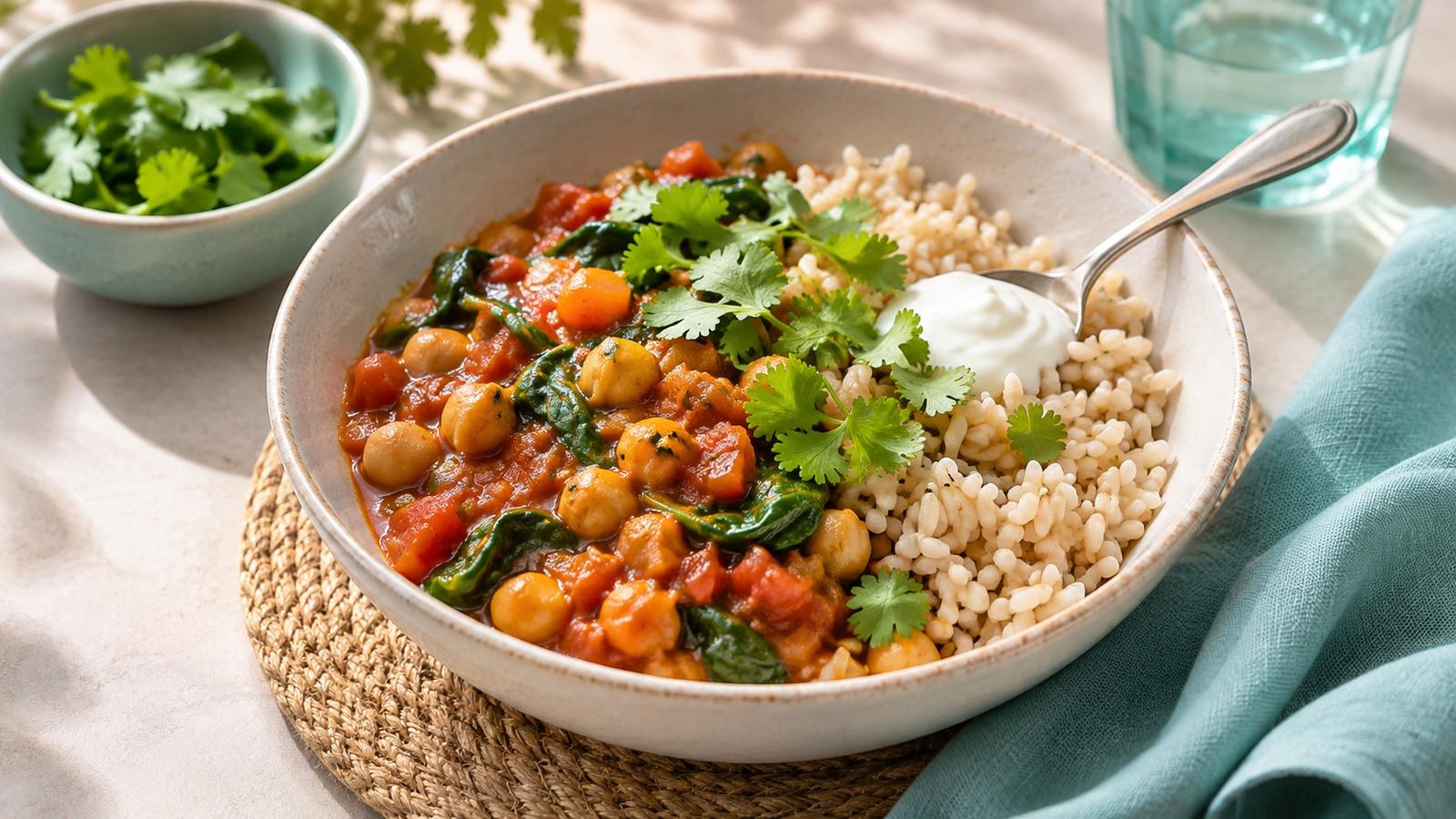
This mild curry is the sort of meal you can make from a can of chickpeas, a bag of spinach, and a few pantry staples. The sauce is tomato-based, with ginger and warm spices. Brown rice gives you something to spoon it over, and a little yogurt on the side is welcome if you like a cool contrast.
“Curry” covers many different dishes and traditions. This is a simple home version, not a claim to represent one particular regional recipe. Use the spices you enjoy, keep the heat where you want it, and let the chickpeas simmer long enough to take on the sauce.
Ingredients
Makes: about 4 servings
Prep: about 10 minutes
Cook: about 25 minutes, plus time for rice
- 1 tablespoon olive or neutral oil
- 1 small onion, diced
- 2 garlic cloves, minced
- 2 teaspoons grated ginger
- 1 teaspoon ground cumin
- 1 teaspoon ground coriander
- ½ teaspoon turmeric
- 1 can (14–15 ounces) crushed tomatoes
- 2 cans (15 ounces each) chickpeas, drained and rinsed
- ½ cup water, plus more as needed
- 4 cups fresh baby spinach, loosely packed
- Cooked brown rice, for serving
- Plain yogurt and lemon wedges, optional
Frozen spinach can stand in for fresh. Follow the package cooking instructions and drain excess liquid if necessary. It has a more concentrated texture, so begin with a smaller amount and add more to taste.
Make dinner
- Cook the rice according to its package directions. Brown rice usually takes longer than the curry, so start it first.
- Wash your hands and rinse the spinach and any fresh garnish under running water. Drain and rinse the chickpeas.
- Heat the oil in a wide pot over medium heat. Add the onion and cook until soft, about 5 minutes. Stir in garlic and ginger for about 30 seconds.
- Add cumin, coriander, and turmeric. Stir briefly, then add tomatoes, chickpeas, and water. Bring to a simmer and cook uncovered for 12–15 minutes, stirring occasionally. Add a splash of water if the sauce becomes too thick.
- Stir in the spinach in handfuls and cook until wilted. Taste and adjust the seasoning. Serve over rice with yogurt or lemon, if you like.
Build a sauce you enjoy
Letting the onion soften before adding the spices gives the pot a savory base. Keep the heat moderate once the spices go in: they should smell fragrant, not scorch. If the pan looks dry, add the tomatoes a little sooner rather than waiting for the spices to darken.
Tomatoes differ in acidity and thickness. If yours make a very thick sauce, add water a little at a time. If the sauce seems thin, give it a few extra minutes uncovered. Mashing a spoonful of chickpeas against the side of the pot can also make the sauce feel fuller without adding another ingredient.
For a brighter finish, add lemon at the table. If you add yogurt, spoon it onto individual servings after the curry comes off the heat. Keeping those additions separate lets each person choose a sharper or milder bowl without changing the tomato sauce for everyone.
Chickpeas, spinach, and the rest of the plate
Chickpeas provide plant protein and fiber, while spinach adds another vegetable to the meal. Canned chickpeas save time; rinsing them removes some of the canning liquid. Lower-sodium varieties allow you to decide how much seasoning the finished curry needs.
If you don’t eat beans often, a modest serving is an easy way to begin. You can keep the rice and curry separate and add more of either to your bowl. A spoonful of yogurt, a piece of flatbread, or sliced cucumber are optional sides, not requirements for making the meal work.
The spinach will look like a lot when you first add it, then reduce as it cooks. Add it in batches and stir each handful into the warm sauce. If you prefer softer greens, give them a little extra time. If you enjoy a firmer texture, stop once they’ve wilted.
A few practical swaps
No brown rice? White rice, quinoa, or a warm flatbread can take its place. Cooking times differ, so follow the package. Thin strips of red bell pepper can go into the pot with the onion for extra color; give them time to soften before adding the tomatoes. For a milder flavor, use less ginger and leave hot pepper out of the pot.
To make the meal dairy-free, skip the yogurt or choose a plant-based version that fits your needs. Check packaged foods for allergens that matter to you. If you use a prepared spice blend instead of the individual spices, start with a small amount because blends can vary in salt and heat.
Saving a portion
Cool the leftover curry in shallow containers and refrigerate within two hours, or within one hour above 90°F. Keep it at 40°F or below and use it within three to four days. Cool and refrigerate cooked rice within one hour, use it within 24 hours, and reheat it only once. Heat leftovers to 165°F and stir so the center warms evenly; add a little water if the sauce has thickened. Keep yogurt or cucumber separate until serving.
You can make rice ahead and portion it with the curry for a quick lunch. Or save the components separately, so one person can have extra chickpeas while another prefers more rice. The practical part is that the pot can accommodate both.