










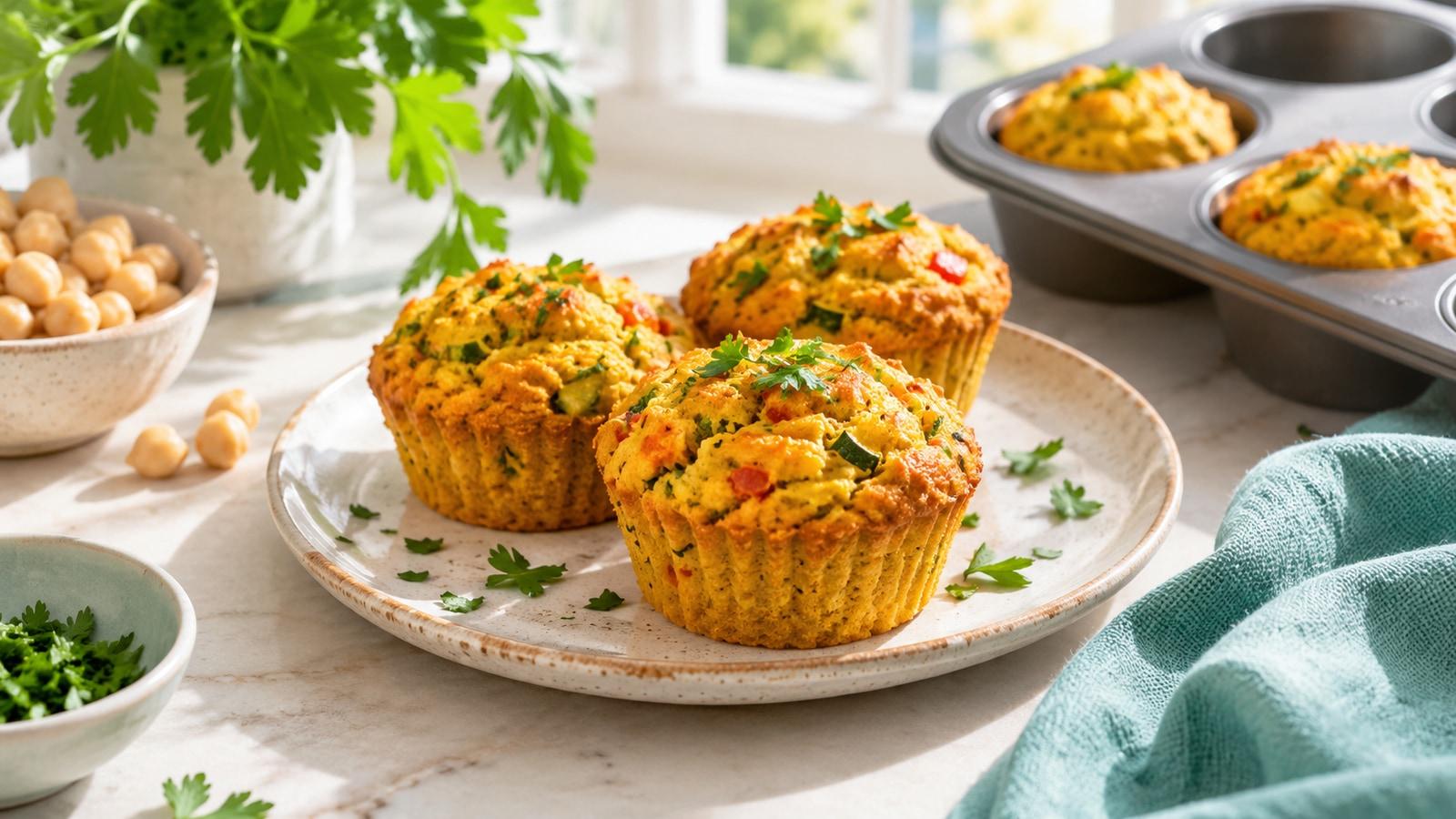
Savory muffins are useful when breakfast doesn’t need to be sweet. These are built around chickpea flour, herbs, and finely chopped vegetables. They’re an idea for a portable breakfast or snack, with yogurt, fruit, or another side if you want a fuller plate.
Chickpea flour behaves differently from wheat flour, so the batter may look unfamiliar. Give it a few minutes to absorb the liquid, and bake the muffins fully before tasting. You can vary the herbs once you know which flavors you enjoy.
Ingredients
Makes: about 8 small muffins
Prep: about 15 minutes
Bake: about 20–25 minutes
- 1 cup chickpea flour
- 1 teaspoon baking powder
- ¼ teaspoon salt, or to taste
- ½ teaspoon garlic powder, optional
- ¾ cup water, plus a little more if needed
- 2 tablespoons olive oil
- ½ cup finely diced bell pepper
- ¼ cup finely chopped green onion
- 2 tablespoons chopped parsley or chives
- Optional: plain yogurt or a dairy-free alternative for serving
Chickpea flour is sometimes labeled gram flour or besan, though products can differ. Check the ingredient list if you have an allergy or need to avoid gluten because of celiac disease. A flour made from chickpeas isn’t automatically protected from cross-contact during processing.
Mix and bake
- Heat the oven to 375°F. Wash your hands and rinse the vegetables and herbs under running water before chopping. Lightly oil eight cups of a muffin pan.
- In a bowl, whisk the chickpea flour, baking powder, salt, and garlic powder. Add the water and olive oil and whisk until the mixture is smooth. Let it stand for about five minutes; add a little water if it becomes too thick to spoon.
- Fold in the bell pepper, green onion, and herbs. Divide the batter among the prepared cups, leaving a little room at the top.
- Bake until the muffins are set through the center and the tops are lightly browned, beginning to check around 20 minutes. A toothpick inserted into the center should come out without wet batter. Allow more time if needed.
- Cool briefly in the pan, then loosen the muffins with a utensil and transfer to a plate. Serve warm with a side you enjoy.
Don’t taste the raw batter. Flour can contain germs before it’s cooked, even when the batter has no raw egg. Wash the bowl, whisk, hands, and counter after handling it.
What to expect from chickpea flour
These muffins are meant to be savory and tender, not as fluffy as a sweet bakery muffin. Finely chopped vegetables distribute more evenly and are less likely to make a large wet pocket in the middle. If your pepper pieces are large, give them another pass with the knife.
The batter should be spoonable rather than a dry dough. Flour brands and measuring methods vary, so add extra water a little at a time if it thickens considerably while standing. Too much liquid can make the centers slow to set; if that happens, give the muffins more baking time rather than serving wet batter.
Chickpea flour contributes plant protein and fiber, although the amount per muffin depends on the product and the final yield. Check the package if you need a specific nutrition value. A muffin can be part of a meal without needing to carry every nutrient by itself.
Ways to serve them
Try one or two muffins with fruit and yogurt, or add them to a plate of cooked vegetables. If breakfast is small because your appetite is lower, start with one and keep another available for later. You can eat a larger portion when it suits you.
Parsley and chives make a mild version. Dill, cilantro, or a little cumin could give the next batch a different direction. Keep the vegetable quantity similar until you know how the batter handles the additions; a packed cup of wet vegetables can change how the muffins bake.
If you avoid dairy, choose a suitable dairy-free side or skip the yogurt. Chickpeas are legumes; anyone with a known allergy to chickpeas or a reaction to the flour should choose another recipe and follow their clinician’s advice.
If your usual breakfast feels too large, serve one muffin first and keep another available. The herbs and sides can change with what you enjoy.
Store a small batch
Refrigerate the muffins in a shallow covered container within two hours of baking, or within one hour if they’ve been exposed to temperatures above 90°F. Keep the refrigerator at 40°F or below and use leftovers within three to four days. Freeze a portion if you won’t use it in that time.
Reheat leftovers to 165°F, checking the center. For a packed lunch, keep the muffins cold with an ice pack until you can reheat them. A yogurt dip should stay chilled separately.
These are a useful candidate for a weekend prep session because the herbs, sides, and serving size are easy to change. Keep the first batch straightforward, then adjust the flavors to your taste.