










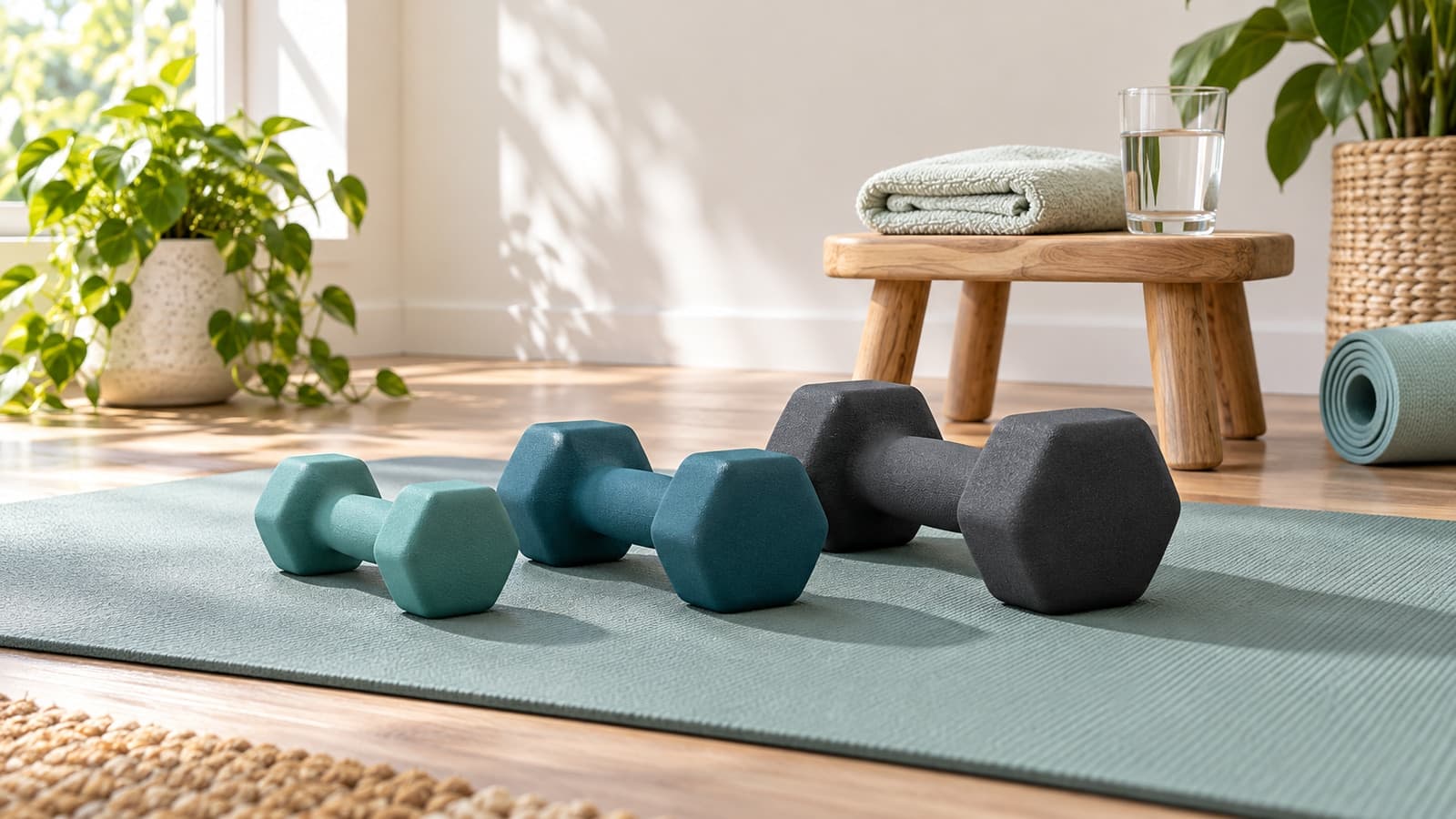
The dumbbell rack can make a simple question feel surprisingly complicated: which one should you pick up?
There isn’t a reliable starting number based on your body weight, age or what the person next to you is using. The right choice depends on the exercise and how it feels in your hands. Start lighter than you think you need. You can always make the next set a little harder.
Choose the movement first
A dumbbell you can carry comfortably may be too heavy for an overhead movement. One that feels manageable with both hands may feel quite different in one. Decide what you’re practicing before choosing the weight.
If the movement is unfamiliar, ask a qualified trainer or physical therapist to show you how to set up and finish it. You can also rehearse without a dumbbell. Check that you have space around you and a stable place to set the weight down. Shoes that feel secure and a clear floor help make the trial less distracting.
For some people, a resistance band, machine or bodyweight version will be a better place to learn. You don’t have to use a dumbbell just because that was the original plan.
Try a small set
Pick up a light dumbbell you can grip and put down comfortably. Try a few slow, controlled repetitions of the chosen movement. Keep breathing and pay attention to whether you can follow the same path each time without needing to jerk the weight or lean awkwardly.
If the first repetition is already a struggle, put the weight down safely and choose a lighter one or an easier variation. If you can do a few repetitions comfortably, you can continue a little longer and notice how the later ones feel. You are checking the setup, not finding the heaviest object you can possibly lift.
A useful starting load gives you some work to do while leaving you able to move deliberately. The last repetition does not need to be a dramatic struggle. For a beginner, a qualified professional can help choose a repetition range that fits the movement and any health limitations.
Adjust one step at a time
If the weight feels easy throughout several controlled sessions, you might try the next small available increment. First make sure you can pick it up, complete the movement and return it safely. Larger jumps between dumbbells may be more noticeable than they look on the rack.
If the next pair is too big a jump, you don’t have to force it. Keep practicing with the current weight, ask whether a smaller increment is available or discuss another way to progress. A machine with adjustable settings or a different piece of equipment may offer a more manageable change.
Keep a note for each exercise: the weight used, how many repetitions you completed and whether anything felt awkward. “Light enough to lower slowly, grip tiring at the end” is more useful than remembering only the number on the dumbbell. Your starting weights may differ across movements, and that’s ordinary.
When today isn’t a good trial day
If you feel dizzy, ill or unusually weak, deal with that before lifting. During GLP-1 treatment, ongoing nausea or difficulty eating and drinking deserves a conversation with your care team. Stop if an exercise causes pain, and ask for an alternative instead of repeatedly testing the same painful movement.
If you have an injury, balance concern or medical lifting restriction, get individual guidance about whether a particular exercise is appropriate. A simple weight choice can still require a different setup for different people.
Our strength-training starter guide covers how to put a short session together. Your first dumbbell is just a starting point, not a verdict on your strength.