










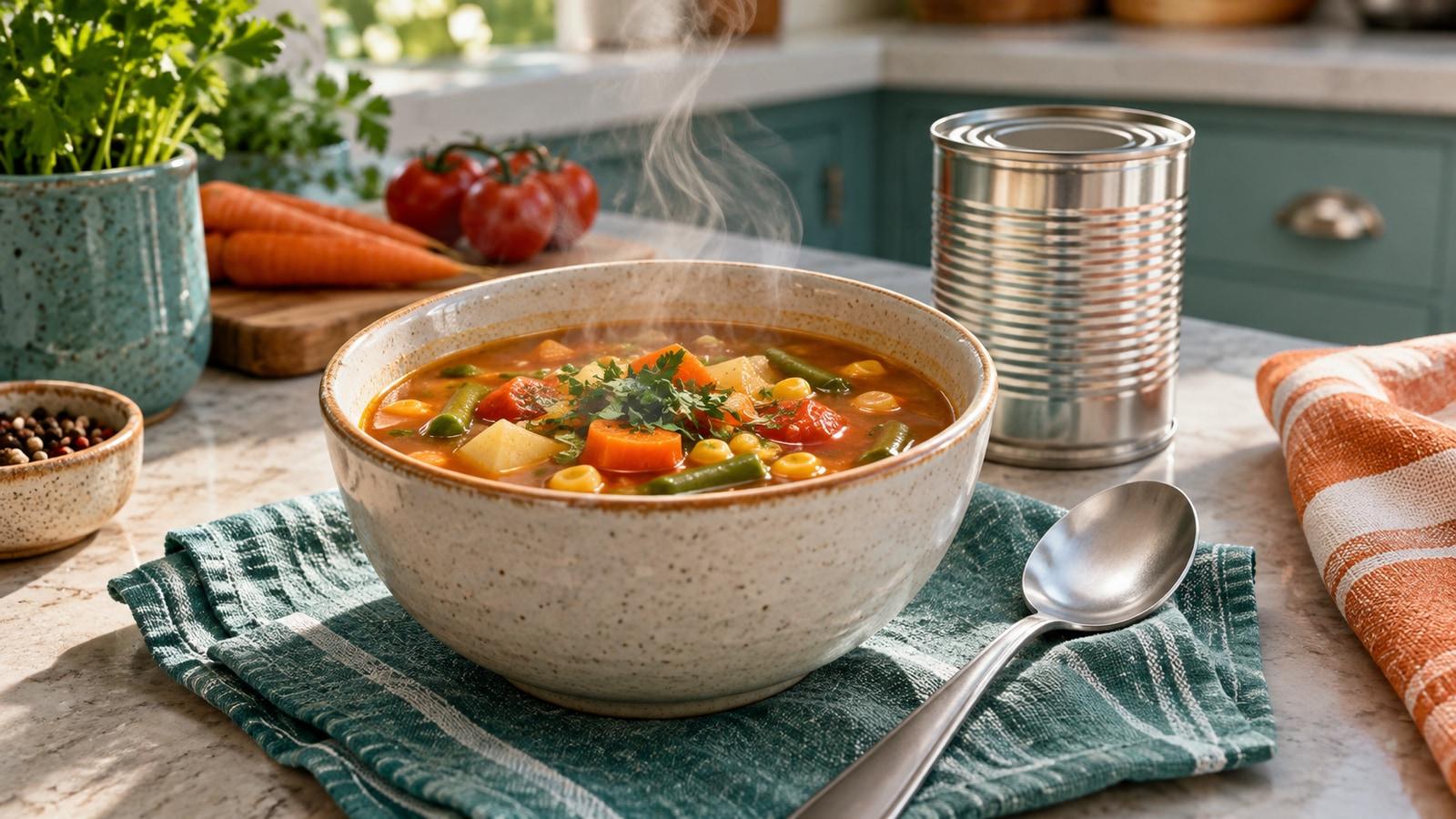
Two cans of soup sit next to each other on the shelf. One lists 680 milligrams of sodium; the other lists 500. The second must have less sodium in your bowl, right?
Maybe. First check what amount each number describes and whether the soup is ready to eat or meant to be diluted. A fair comparison uses the amount you'll actually serve, prepared the way you plan to make it.
Begin with the serving size
The sodium figure on a Nutrition Facts panel is tied to the serving size shown on that panel. One soup might list a cup; another might list half a cup or provide information for the whole can. Looking at the sodium numbers without looking at those amounts can be misleading.
Check how many servings the container holds, too. If you usually eat the whole can and it contains two labeled servings, the sodium in the whole can is approximately twice the per-serving figure. If the label already shows a per-can column, you can use that instead of multiplying.
The serving size isn't a command to eat that amount. It is a reference for reading the label. Your bowl might be smaller or larger.
Is the soup condensed?
Some soups are ready to heat as they come from the can. Others are condensed and suggest adding water or another liquid. Labels may describe the product as packaged, as prepared, or show information for both.
Water changes the volume of the soup; it doesn't remove sodium from the can. If you add water and eat the entire prepared can, you still consume the sodium from the entire can. If you eat only part of the prepared soup, the amount in your bowl depends on how much of the original soup is in that portion.
If you're adding milk, broth, or another ingredient instead of water, check that ingredient too. It can contribute its own sodium. Follow the package directions for preparation, then compare the finished amount you expect to serve.
A made-up comparison
Imagine two hypothetical labels:
- Soup A, condensed: The label lists 680 mg of sodium per half cup as packaged. Add half a cup of water to that portion to make about one cup.
- Soup B, ready to eat: The label lists 500 mg of sodium per cup. Heat one cup as directed.
In this example, one cup of prepared Soup A contains the sodium from the half-cup of concentrate: 680 mg. One cup of Soup B contains 500 mg. If you serve one and a half cups of either prepared soup, multiply the respective figure by one and a half: about 1,020 mg for A and 750 mg for B.
These are invented numbers to show the math, not claims about a particular brand. Actual labels and preparation directions vary. If a label already gives sodium for a prepared cup, use that information rather than diluting the number a second time.
What do “reduced” and “low” tell you?
Front-of-can phrases can help you find options, but they don't replace the Nutrition Facts panel. A reduced-sodium version is compared with another product; it may still contain more sodium than a different soup on the shelf. The sodium line lets you compare the amounts directly.
Taste matters too. If a lower-sodium soup seems bland, you might add lemon, herbs, pepper, or vegetables you enjoy. Check the ingredients in broths, seasoning blends, and toppings if sodium is a concern, since those can change the amount in the finished bowl.
There's no need to find a perfect number before you can eat lunch. The comparison is a tool for choosing among the options available to you, at a price and flavor you like.
Think about the whole meal
Soup can be a meal on its own or one part of one. If a broth-based soup leaves you hungry, you might add beans, cooked chicken, or a sandwich; if your appetite is smaller, a modest bowl with a side can be easier to approach. Choose additions that fit your preferences and any medical instructions.
For someone taking a GLP-1, appetite and portion size may change from day to day. You can serve what feels comfortable and refrigerate the rest promptly. A smaller bowl contains less of the soup's sodium than the whole prepared batch, but it also contains less of its other ingredients. Both facts can be useful when planning the rest of the meal.
If your clinician has given you a specific sodium or fluid plan, follow that individualized advice. Ask a dietitian how to compare packaged foods within it rather than using a general online target.
Save the rest safely
Refrigerate leftover soup promptly in a covered container. Many soups and stews can be refrigerated for three to four days when handled safely. Reheat leftovers thoroughly to 165°F, checking with a food thermometer.
Next time you're at the shelf, compare the serving size, sodium, and preparation directions together. That short check tells you much more about your actual bowl than the largest number on the front of the can.