










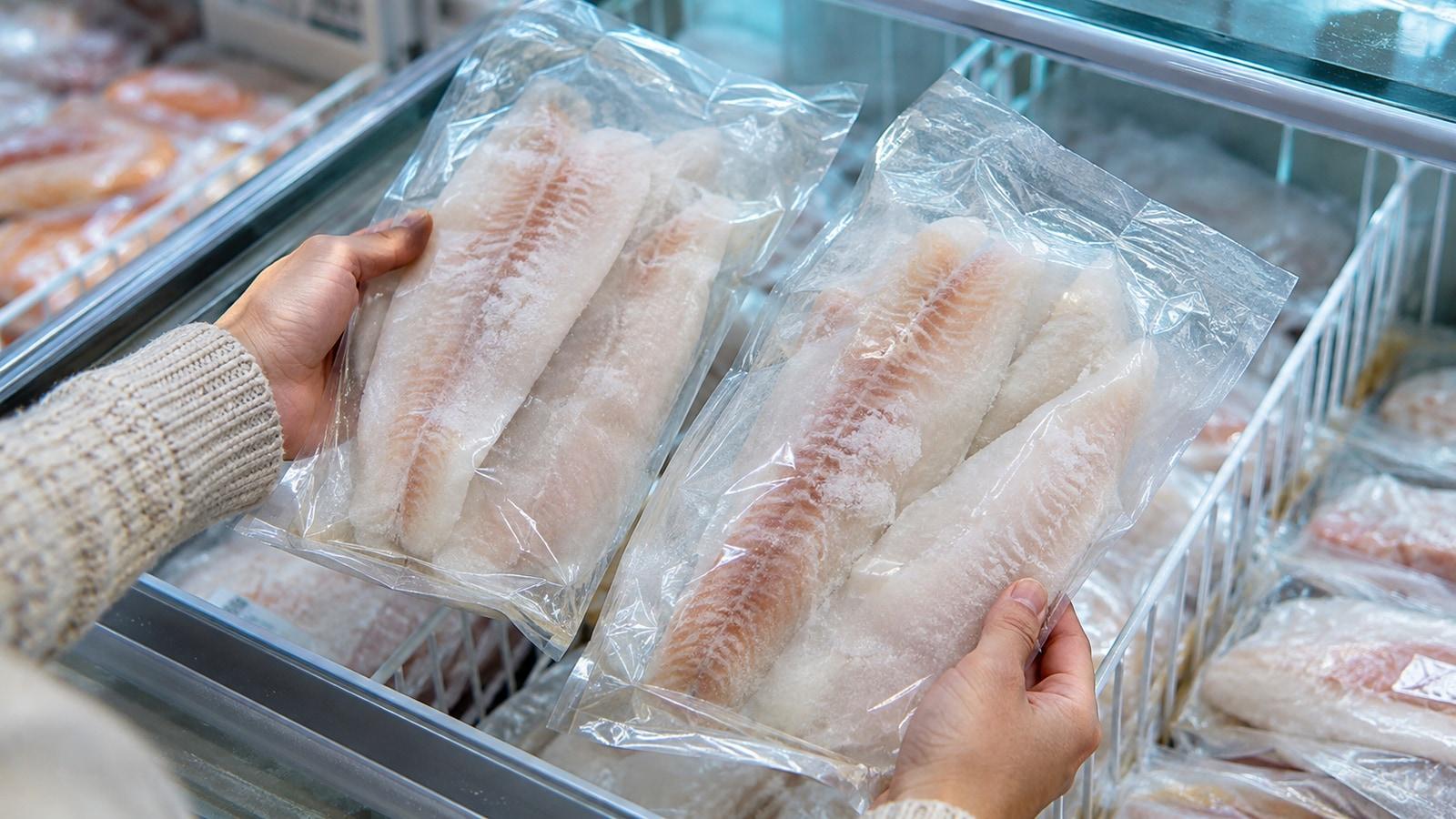
The freezer case has a lot going for it: fish can be ready when you need it, and individually wrapped portions can make it easier to cook for one or two. But the packages don't all contain the same thing. One might be plain fillets; another may include breading, sauce, or a seasoning blend.
Here's how to choose a package that fits your dinner plans, budget, and storage space—and how to handle it safely once you get home.
Start with the fish you like
Salmon, cod, pollock, tilapia, and many other fish can be found frozen. Flavor and texture vary. If you like a milder fish, ask the store's seafood staff or check the package description. If you already have a favorite, there's no need to change it because another fish is having a moment online.
Fish provides protein, and different types provide different amounts of fat and other nutrients. You don't need to calculate the perfect species in the freezer aisle. Consider what you'll enjoy, how you'll cook it, and whether the price works for your household.
If you are pregnant, might become pregnant, are breastfeeding, or are choosing fish for a child, ask your health professional about fish choices and amounts. Mercury levels differ by species. There are lower-mercury options in both fresh and frozen forms, but the particular fish matters more than whether it came from a freezer.
Plain, seasoned, or breaded?
Plain frozen fillets give you control over the seasoning and how much sauce to add. Preseasoned portions can save a step on a busy night. Breaded fish may be the version your family enjoys most. All can have a place in a meal; compare the actual packages rather than assuming the front label tells the whole story.
Look at the ingredient list if you need to avoid an allergen. Fish itself is an allergen for some people, and coatings or sauces may contain ingredients such as wheat, milk, or soy. A product can also have specific preparation instructions that matter for food safety.
On the Nutrition Facts label, check the serving size before comparing sodium, protein, or other nutrients. One brand's serving might be a single fillet while another lists a different weight or number of pieces. If you eat a different amount, the numbers change accordingly.
Look at the portion and price
Individually wrapped pieces can be convenient when you only need one serving at a time. A larger bag may cost less per pound, but it isn't a bargain if it won't fit in your freezer or you won't use it. Check the total package weight, the number of portions if listed, and the price per unit on the shelf tag.
For an imaginary example, a 16-ounce bag costing $8 is 50 cents per ounce. A 24-ounce bag costing $10 is about 42 cents per ounce. The larger bag costs less by weight, but you would still spend more at checkout and need room to store it. The numbers don't account for differences in coatings or sauce, so compare similar products when you can.
If you're on a GLP-1 and your appetite is smaller, a smaller fillet may be a practical starting point. Add a food you enjoy alongside it, such as rice, potatoes, or vegetables, and have more if you want it. Consistently struggling to eat enough is a reason to contact your care team, not simply to keep buying smaller portions.
Inspect the package
Choose packages that are intact and frozen solid. Avoid one that's open, torn, or crushed at the edges. Excess frost or ice crystals can be a sign the product has been stored a long time or has thawed and refrozen. Pick up frozen foods near the end of your shopping trip and get them into the freezer promptly.
If the trip home is long, an insulated bag can help keep frozen items cold. Once home, follow the package's storage instructions. Keep raw fish separate from ready-to-eat foods and clean any surfaces and utensils it touches.
Follow the thawing and cooking directions
Some products are designed to be cooked from frozen; others call for thawing. Follow the directions on the exact package. Some vacuum-sealed fish must be removed from its original packaging before thawing, so check the label before putting it in the refrigerator. Keep raw fish in a clean container away from ready-to-eat foods. For a quicker method, place fish in a leak-proof bag in cold water, or use the microwave's defrost setting. Cook it immediately after either method. Don't leave fish on the counter to thaw.
For raw fish, use a food thermometer to check for an internal temperature of 145°F. If the package gives additional cooking instructions, follow them. Breading can brown before the fish is cooked through, so color on the outside isn't a reliable substitute for checking the center.
Refrigerate cooked leftovers promptly in shallow containers and use them within the recommended storage period. If food has been left out too long, discard it rather than relying on smell to decide whether it is safe.
Choose for the meal you're making
A plain fillet might go into fish tacos; breaded pieces might make a quick sandwich; a seasoned portion might be dinner with a microwaveable grain and a vegetable. None requires a complicated recipe.
The best package is one you can store safely, prepare as directed, and look forward to eating. A few seconds with the label can make the next freezer-aisle decision much easier.