










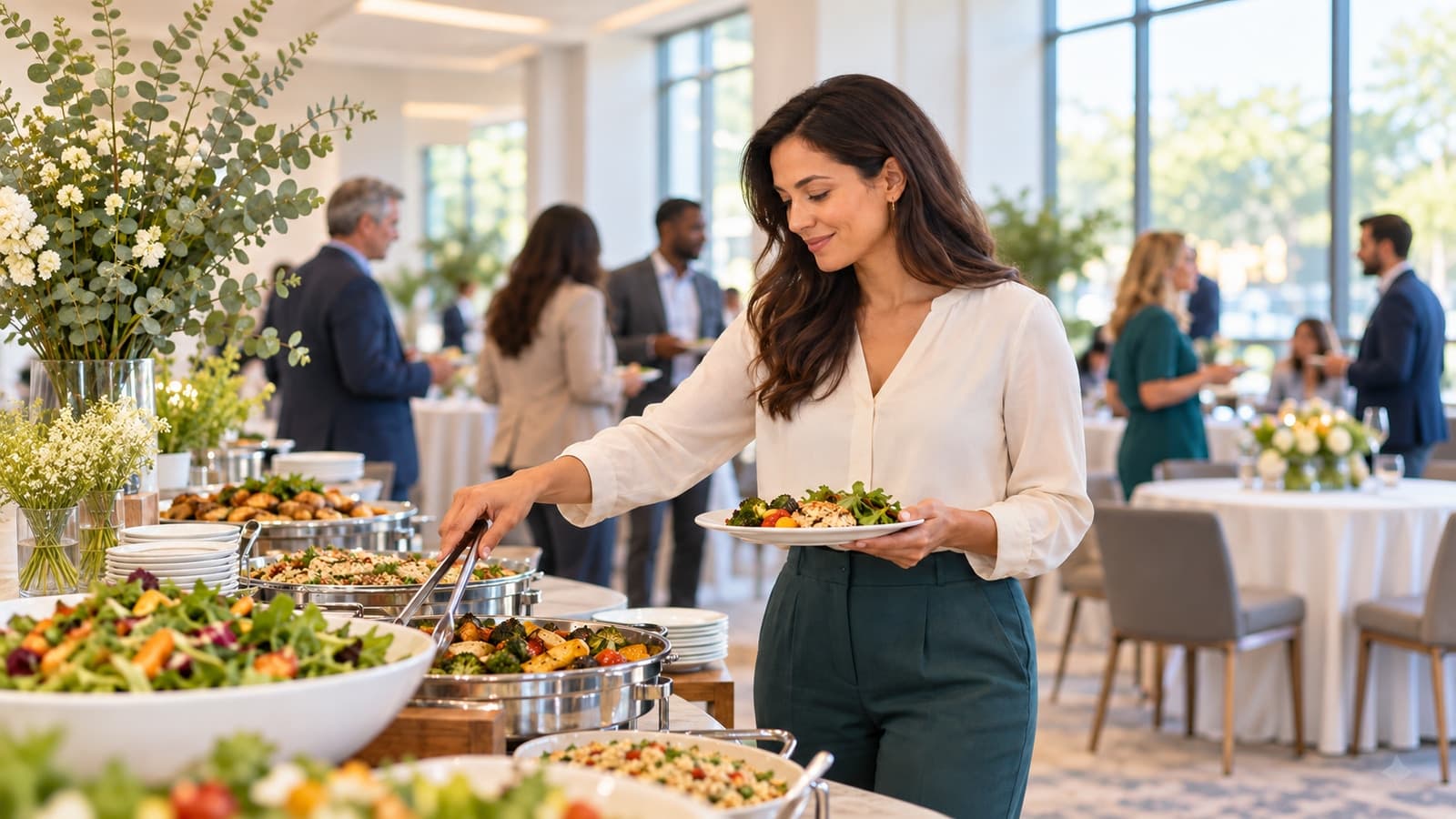
The lunch buffet opens at noon, but your next two sessions run straight through the afternoon. You’re not very hungry yet, and there’s no guarantee the snack table will still be open later.
Look at the schedule before you look at the buffet. A little context can help you decide what to eat now and what backup to keep for later.
Find the next eating opportunity
Check when the next break happens, whether food is offered and whether you can leave the room. A ten-minute break across a large convention center may not be enough time to find a café and get back to your seat.
If you’re taking a GLP-1 and your appetite is smaller, you might start with a modest plate and return for more while service is open. If that’s not possible, choose what sounds manageable and keep a suitable shelf-stable snack in your bag. You can eat later when there’s a break and you’re hungry.
The plan doesn’t have to be identical to your colleagues’. Different schedules, food needs and appetites make different plates normal. You don’t owe anyone an explanation of your medication or what you chose.
Take a lap before filling your plate
When the line allows it, look at the options first. Find a food you enjoy and add others that make the meal appealing. That might be chicken and rice, a bean salad with bread, or a sandwich and fruit. The right combination depends on the menu and your preferences.
If an ingredient or allergen matters to you, ask the catering staff what is in the dish and how it was handled. Shared utensils can create cross-contact, so a dish’s name or appearance may not answer the question. If staff can’t confirm a food is safe for your allergy, use a backup you trust.
You can ask for a sauce on the side or choose a familiar preparation when available. If rich foods have bothered you before a long afternoon, keep that experience in mind without assuming every buffet will feel the same.
Don’t rely on looks for food safety
Hot foods should be held hot and cold foods cold. A serving pan or bowl alone doesn’t tell you its temperature or how long it has been out. If you’re unsure, ask the caterer about handling or choose another option. Don’t take perishable leftovers into a warm meeting room for hours.
For a backup snack, choose something that keeps safely without refrigeration, unless you have a reliable cold source. A sealed snack, whole fruit or crackers may be easier to carry than yogurt or a prepared sandwich. Read the package for storage and ingredients.
Make water easy to reach
Fill a bottle at an available drinking-water station or pick up a drink before a long session. Follow any fluid instructions you’ve been given, and plan a restroom break when practical. If nausea or another symptom makes it difficult to eat or drink, contact your care team for advice.
After a session, notice whether you’re hungry and what’s available. A smaller lunch doesn’t obligate you to make up a specific amount, but it’s useful to leave room for another meal or snack when you need one.
Keep the day in perspective
Conference meals also offer time with people you may not see often. Sit where you’d like, enjoy the conversation and choose food that suits you. If today’s selection isn’t ideal, the next meal is another chance to eat something you enjoy.
Our guide to eating out on a GLP-1 has more ideas for restaurant portions and planning. For the conference, the most useful preparation may be as simple as checking the afternoon agenda.