










Dinner can be the easy part. Getting the lid off the sauce, opening a can or chopping a firm vegetable may be what makes cooking feel like work.
If arthritis or limited grip makes those steps uncomfortable, a few changes to the task may help. You don't need to buy a new set of gadgets or give up meals you enjoy. Start with the part that gets in your way most often.
Find the sticking point
Notice which part of cooking is actually difficult. Is it twisting a lid, holding a thin knife handle, squeezing a can opener or lifting a heavy pan? Each problem calls for a different solution.
For example, someone who dislikes chopping might prefer pre-cut vegetables. Someone else may enjoy chopping but find that a wider-handled knife is easier to hold. On a day when your hands are sore, a ready-to-eat component can be just as useful as a tool.
If a movement hurts or feels unsafe, stop and choose another way to do it. An occupational therapist can help you work through tasks that remain difficult and suggest adaptations suited to your hands and kitchen.
Make packages easier to open
A rubber jar grip, a non-slip mat or a jar-opening aid may help with a stubborn lid. Some people prefer an electric opener. The right choice depends on how much force and movement the device itself requires, so try one before buying if you can.
Look at packaging when you shop. A container with an easy-to-hold lid, a bag that opens with scissors or a smaller carton may be more manageable than a large jar. If a food you like comes in a difficult package, asking someone to help open it is a perfectly good solution.
Once opened, transfer food only if you have a clean, appropriate container and can follow its storage directions. Don't leave a perishable item out while you search for the perfect lid.
Give your hands a better handle
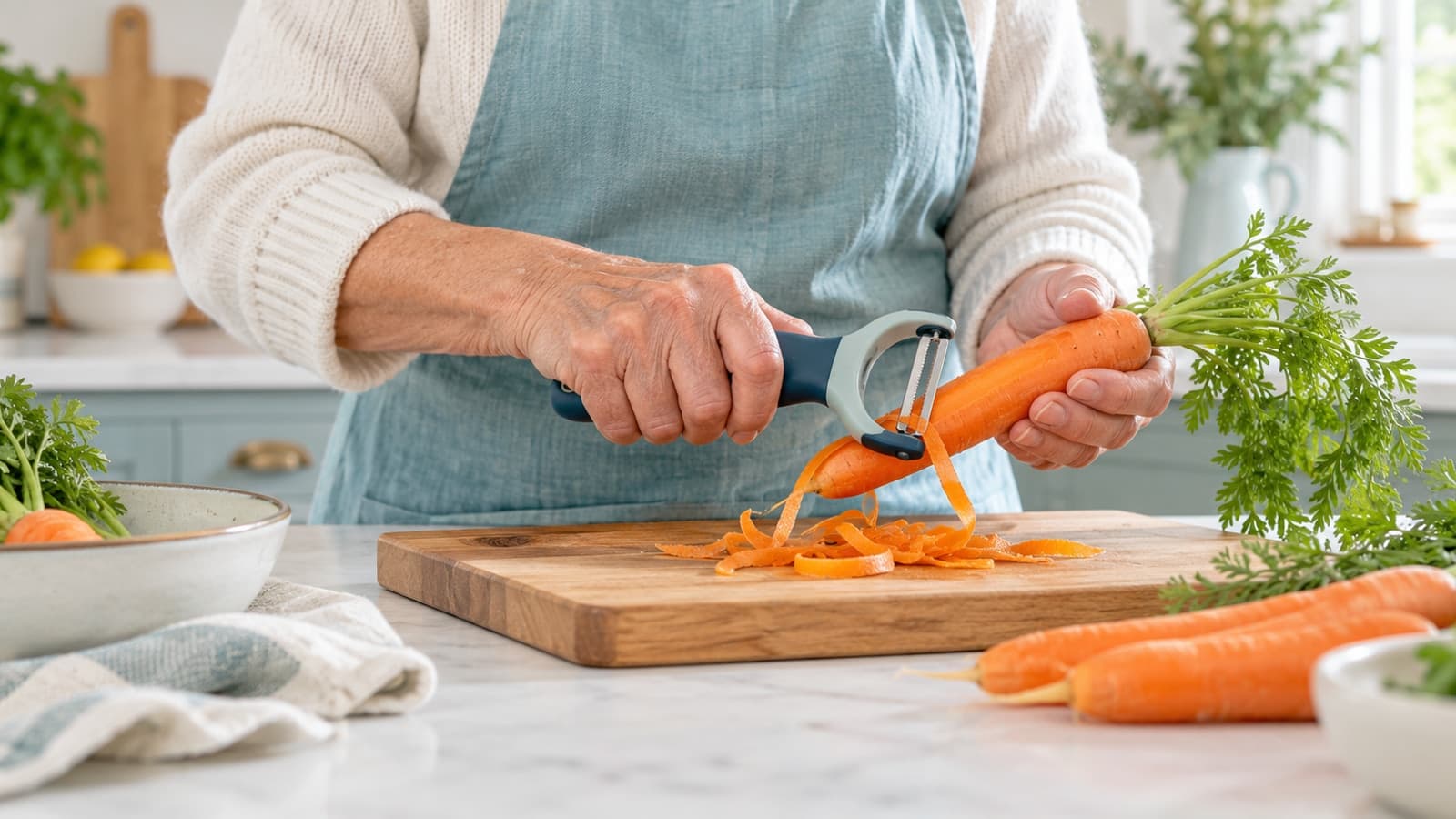
Wider or cushioned handles on peelers and utensils can be easier for some people to grasp than narrow ones. Choose a handle that feels secure in your hand rather than assuming the thickest option is best. A stable cutting board and a clear work surface matter too.
Pre-cut fresh or frozen vegetables, canned beans and prepared ingredients can reduce the amount of chopping or gripping a meal needs. Follow package directions, including any cooking instructions. These options can sit alongside foods you prepare yourself; convenience doesn't make a meal less worthwhile.
Break a longer preparation into shorter steps. You might wash produce earlier, rest your hands, then assemble the meal later. Keep perishables refrigerated between steps.
Think about weight and heat
Before lifting a pan, consider whether you can handle it safely with its contents. A smaller pan, a lighter container or help from another person may be useful. Use two hands when that gives you a steadier hold, and protect yourself from hot handles and steam.
Avoid moving a heavy pot of boiling water just to prove you can. A different cooking method or a serving utensil suited to the task may be easier. Keep sharp blades and hot cookware stable, and use any adaptive equipment according to its instructions.
Keep meals flexible
If you're taking a GLP-1 and your appetite is smaller, you may prefer to prepare a modest first serving and keep other components available. Make enough food for your needs; adapting the work is the goal, not restricting your plate.
Try a low-cook meal on a difficult hand day and save a more involved recipe for when you have the energy or help. Our low-cook meal guide offers a few starting points.
Pick one frustrating task this week and change just that step. If it helps, keep it. If it doesn't, try another approach.