










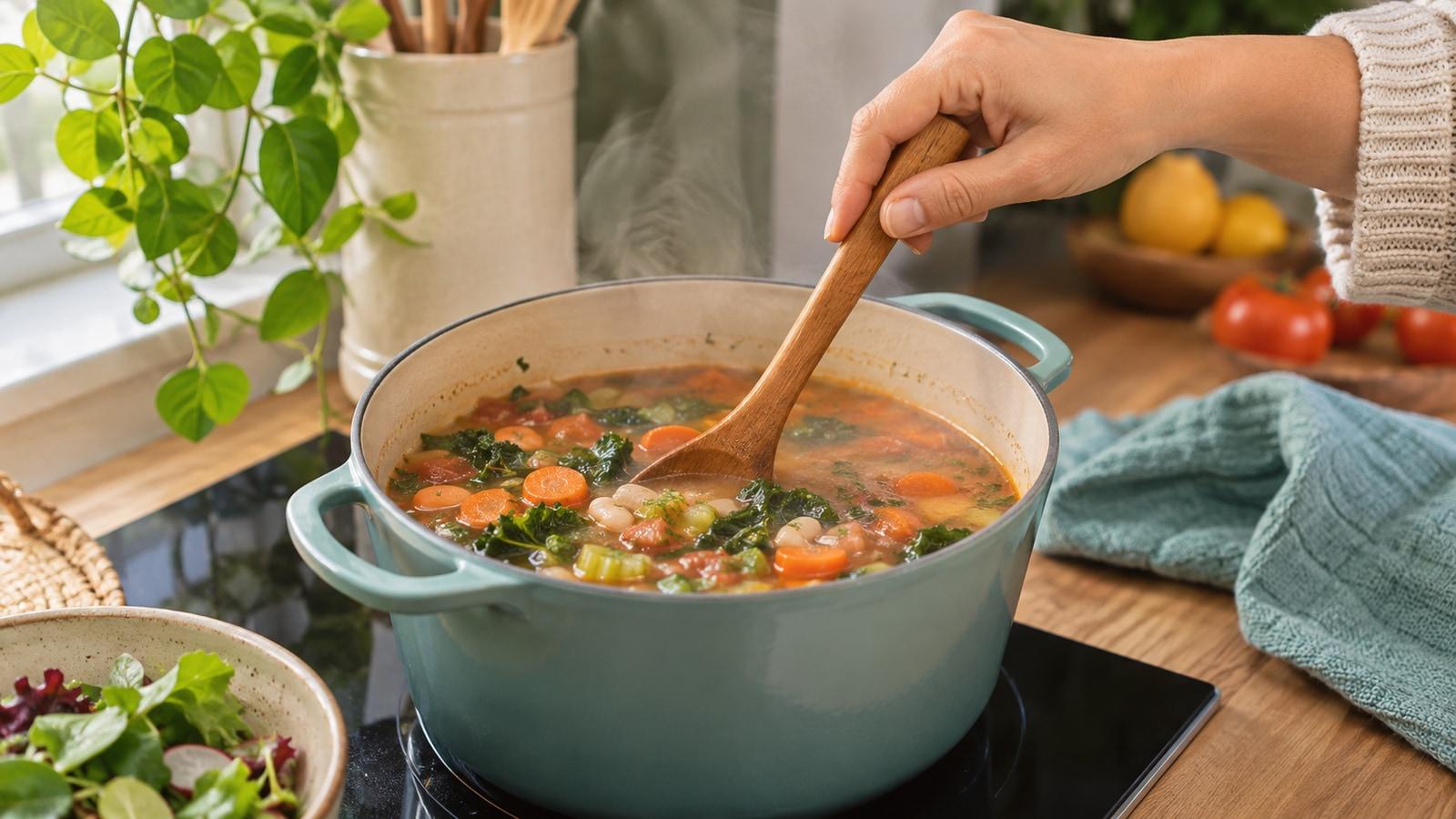
You don't realize how often one hand holds something still until it can't. A jar spins on the counter. A bag of salad refuses to open. Even carrying a bowl and a glass to the table turns into two trips.
If an injury or procedure has temporarily changed what you can do with one hand, dinner doesn't have to look the way it did before. For now, the goal can be a meal you can manage safely, with enough variety to keep eating pleasant. That might mean more prepared ingredients, fewer dishes, or asking someone to help with a particular step.
Start with the tasks, not the recipe
Think about where cooking usually gets stuck. Is it opening packages? Holding a vegetable while cutting? Draining a pan? Lifting a baking dish? Once you know the troublesome step, you can change that step instead of abandoning the whole meal.
For example, a baked potato with cottage cheese and a side of vegetables can become easier if the vegetables are already cut and the potato comes in a package you can open. A sandwich might be simple once the bread bag is open and the filling is in a container that stays put. If opening containers is the main challenge, a friend could help transfer a few items into easy-to-open containers when they visit.
Follow any instructions you've been given about protecting the recovering hand. If you're unsure whether a movement is appropriate, ask your care team. An occupational therapist can help you adapt specific activities to your setup and stage of recovery.
Try a sandwich at one work station
One way to plan lunch is to bring the ingredients to one clear spot before you start. Put a nonslip mat under a plate or use a stable board with a raised edge. Lay a slice of bread against the edge so it has something to rest against while you spread a filling. A plate with a rim may work better for you; try the setup with an empty plate first.
Choose a filling you can open and scoop safely, such as a prepared bean spread or another food you like. Add ready-to-eat sliced vegetables or a piece of cheese, then fold the bread or place a second slice on top. You can serve the parts separately if assembling them feels fiddly. Wash produce that needs washing and keep perishable ingredients refrigerated until you use them.
The important test is whether the package, board, and utensil work with your available hand. If a container spins or a lid won't open, leave it for someone to help with or pick a different food. An occupational therapist can help adapt the setup without putting pressure on the recovering hand.
Keep things steady
A nonslip mat under a bowl or plate can reduce sliding. A bowl with a suction base or a board designed to hold food in place might help with certain tasks. Some people find an electric can opener or jar opener useful; others prefer to avoid cans and jars for a while.
You don't need to buy every gadget advertised for one-handed cooking. If possible, ask an occupational therapist to show you an option or try one before spending money. A device should feel stable and manageable in your kitchen, with the hand you're actually using.
Take particular care with sharp tools and hot liquids. If you can't hold an item securely, choose a different ingredient or ask for help rather than trying to force it. A meal assembled from ready-to-eat foods is a perfectly good alternative to a difficult chopping job.
Make the hot part easier
Moving a full pot of boiling water to the sink can be awkward. Consider meals that don't require draining, or ask whether a cooking basket and a lighter pan would work safely for you. Individual portions may be easier to lift than a large, heavy casserole dish.
If using a microwave, check that the container is suitable and follow the food's heating directions. Let a hot container cool enough to handle, and watch for steam when opening it. If lifting a dish from an oven doesn't feel safe, use a different method or ask someone to help. No dinner is worth a burn.
Put the items you'll need within easy reach before you start, and leave a clear place to set a hot dish down. You can carry food and drinks separately, or eat at a table near the kitchen if moving a loaded plate is difficult.
Build a short list of fallback meals
Think of two or three combinations that use foods you like and require only the tasks you can comfortably manage. They might be yogurt with fruit and cereal, a bean-and-rice bowl with a prepared vegetable, or soup with toast and cheese. Use foods in forms that are safe and practical for your circumstances.
Keep a few of those ingredients available so an exhausting day doesn't begin with another complicated decision. If your appetite is smaller while taking a GLP-1 medicine, a modest portion may be easier to start with. Eating enough still matters; contact your care team if you're consistently struggling to eat or drink.
Cleanup counts too. Soak a dish if needed, let clean dishes air-dry, or use a dishwasher if you have one. And if a friend offers help, give them one concrete task: open these packages, wash this pan, or portion tomorrow's lunch. That leaves you in charge of the meal while making the hard part a little easier.