










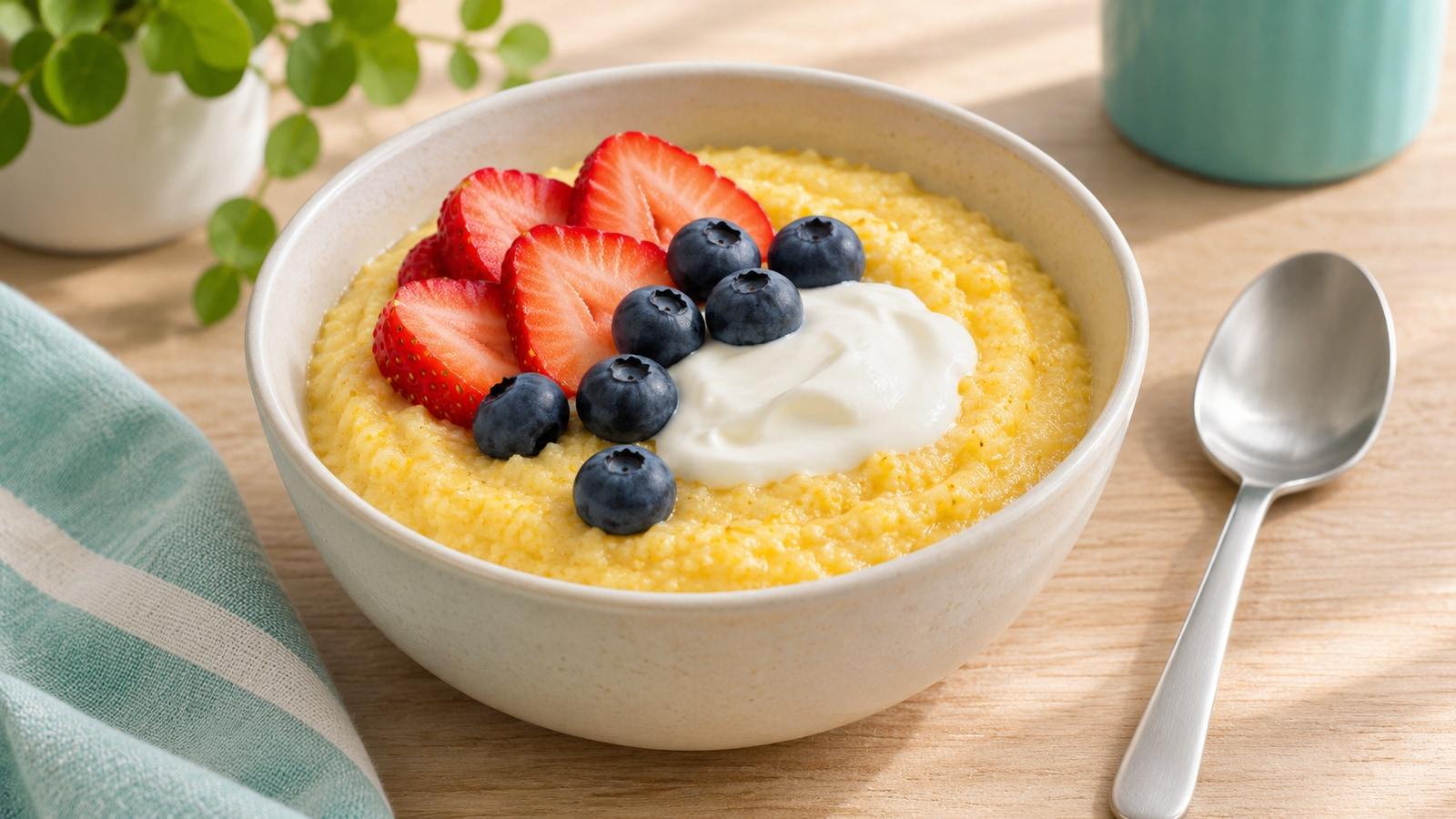
Warm cornmeal porridge is a quiet sort of breakfast: a saucepan, a little stirring and a bowl you can finish with whatever fruit you enjoy. Berries add brightness, while a spoonful of yogurt brings a cool, creamy contrast.
Cornmeal products vary in grind and cooking time. Check the package directions for the type you have and use them as your starting point. The method below is a flexible way to assemble the bowl, not a promise that every bag of cornmeal will behave the same way.
Ingredients
This starting recipe is intended to make about two modest portions, depending on the cornmeal and how thick you like it.
- ½ cup cornmeal suitable for porridge
- 2 cups water, or the amount recommended on the package
- A small pinch of salt
- ½ cup berries, fresh or frozen
- ½ cup plain yogurt
- A pinch of cinnamon or vanilla, optional
- A little honey or maple syrup, optional
Fine cornmeal, coarse cornmeal and instant products may need different amounts of liquid and time. Choose one with clear cooking directions and follow those if they differ from this starting ratio. If you need a gluten-free product, check the package for information relevant to your needs.
Rinse fresh berries under running water just before using them. Frozen berries can be warmed in a small pan according to the package directions. Keep the yogurt refrigerated until you're ready to serve.
Cook the porridge
Bring the water and a small pinch of salt to a gentle boil in a saucepan. Gradually whisk in the cornmeal to reduce lumps, then lower the heat. Cook and stir according to the package directions until the porridge is fully cooked and reaches the texture you like.
Be careful of splatters as the mixture thickens. Use a long-handled spoon and keep the heat low enough for a gentle simmer. If it becomes too thick before the cornmeal is cooked, add a little hot water as the package allows. If it seems too loose, continue cooking according to the directions and remember that it may thicken as it stands.
Remove the pan from the heat and let the porridge cool briefly before tasting. Add a little cinnamon or vanilla if you enjoy it. There is no need to sweeten the whole pot before everyone has chosen a portion.
Add the toppings
Spoon the warm porridge into bowls. Add the berries and a spoonful of cold yogurt to each portion. If you'd like more sweetness, drizzle a little honey or maple syrup over the top.
The yogurt can be stirred in for a creamier bowl or left on top for contrast. If you prefer a non-dairy yogurt, select one that fits your needs and check the ingredients. For a less tart bowl, choose a fruit you enjoy or warm the berries until they soften.
Serve the toppings separately if several people are eating. That lets each person decide how much fruit or yogurt to add and makes it easier to keep the remaining porridge plain for another meal.
If you're serving someone who has trouble chewing or swallowing, follow their individual care instructions. A soft-looking porridge with separate berries or yogurt may have mixed textures that don't fit every prescribed plan.
Make it suit your morning
Porridge can be a small breakfast or part of a larger one. Start with the amount that feels comfortable and add another side if you want it. Yogurt contributes protein, while the cornmeal provides the warm grain base; the exact balance will depend on the products and portions you choose.
Try sliced banana, cooked apple or another fruit in place of berries. Nuts or seeds can add crunch if you enjoy them and don't have an allergy or texture restriction. Add them at the table so each person can choose.
If your appetite is lower than usual, a familiar, mild bowl may sound more manageable than a large meal. Persistent difficulty eating or drinking is worth discussing with your care team rather than trying to solve it with one recipe.
Prepare ahead and reheat
Cooked porridge thickens in the refrigerator. Divide the extra into shallow containers and chill promptly. When you're ready to eat, add a splash of water and stir while reheating to loosen the texture.
Cool and refrigerate cooked porridge within one hour, and keep the refrigerator at 40°F or colder. Use cooked leftovers within three to four days or freeze suitable portions. Reheat to 165°F, stirring so the center warms evenly; add the cold yogurt and fruit afterward.
Label the container with the date. If you're taking a portion away from home, keep the yogurt and cooked porridge cold in transit and use a microwave-safe container when reheating.
The basic bowl is easy to change without needing a new recipe each time. Choose a cornmeal you like, follow its cooking directions and finish it with toppings that make breakfast enjoyable.